8 minutes ago
Krasniqi: Parties deliberately awaited election outcome, coalitions for government could cause frustration in runoff
Periskopi(8 months ago)
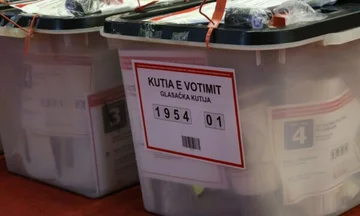
(8 months ago)Vetevendosje Movement leader Albin Kurti has less than two weeks to present the composition of the new government for approval. As the deadline expires on 26 October, analysts note a calmer and more favourable atmosphere for interparty negotiations, after the end of the first run of local elections, on 12 [...]
As the deadline expires on 26 October, analysts note a calmer and more favourable atmosphere for interparty negotiations, after the end of the first run of the local elections, October 12th.
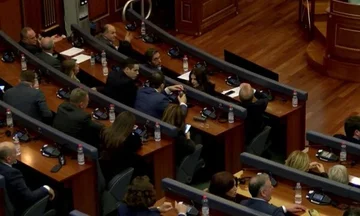
According to them, these elections have also been linked to the long process of constitution of the Parliament, which was completed only late last week, after months of blockade.
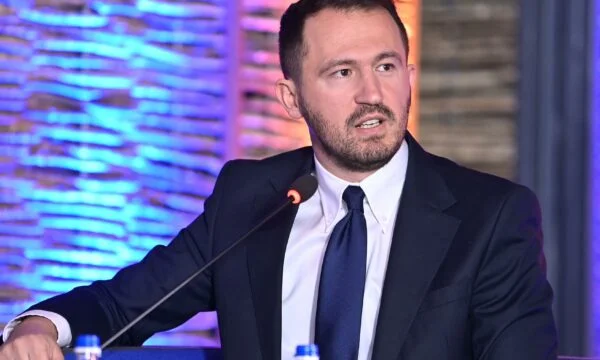
Albert Krasniqi from the Democracy Plus organisation says the parties have been waiting for the outcome of local elections to avoid the impact that could bring about the formation of a central coalition in municipal races.
The options that can be made may increase frustration in other parties not to support them. And, in certain municipalities, where the race is very close, it's very central”, Krasniqi tells Radio Free Europe.
Albin Kurti's Vetevendosje movement won the February 9th parliamentary elections.
A day after the constitution was introduced on October 10th, the country's president, Vjosa Osmani, mandated Kurti to form the new government.
With only 48 seats won, however, Vetevendosje needs 13 more to secure a majority of 61 deputies in the 120-seat Assembly.
Kurti warned that, during this week, it would start talks on government creation, but did not give details about which parties these discussions will be held.
A few days ago, his co-party, Albulen Haxhiu, ruled out the possibility of a coalition with the Democratic Party of Kosovo and with the Serbian List, the Serb community's largest party in Kosovo, but left open the possibility for talks with the Democratic League of Kosovo.
A possible combination between these two parties, especially in light of local election results, is seen as the real scenario even by analyst Krasniqi.
“If the LDK and Vetevendosje reach agreement on coalition at the central level, they can be co-ordinated so that the LDK can have an easier race in Pristina and Vetevendosje does not start all engines to win this” contest, he says.
The preliminary results of the Central Election Commission showed a tight race in Pristina between LDK candidate Progress Rama, and Vetevendosje's one, Hajrula Ceku, by a margin of about 700 votes.
Consequently, the two candidates will face face face-to-face in the second round of local elections, November 9th.
The second round of voting will be held in another 16 municipalities. In some of them, Vetevendosje candidate competes with the LDK candidate, and in some with the PDK's.
Africa Hoti, professor at the Department of Political Sciences at the University of Pristina, expects these two parties to be “part of Vetevendosje's” mathematics to form Government and not other parties, such as AAK and Initiative, “due to the small political power”.
This is a one-way path, as long as they want to move forward towards forming institutions. The alternative would be going to extraordinary elections, which I don't think exists consensus or will among the main political subjects”, says Hoti.
He explains that this stance is also based on the local election results, which, according to him, showed that the “political framework” would not change significantly even after the new parliamentary elections.
Another determining factor for forming the Government, according to analysts, is the post of president.
President Vjosa Osmani's mandate expires in April next year, and according to Professor Africa Hoti, she no longer enjoys the same support she received in 2021 when her list of Guxo joined Albin Kurt's Vetevendosje.
“Which, in turn, brings new circumstances to the negotiating table and the post of president”, he says.
Kosovo's president is elected by the two-thirds majority of the 120 votes.
If the candidate doesn't secure them in the first two rounds, the third is enough for the simple majority.
If not then, the Assembly is distributed and new elections held within 45 days.
“So, I think it's more about the calculations of political parties, which are based on their fear of the government's life expectancy than on the major content differences they have to form a governing coalition”, Krasniqi says.
Kurti said on Tuesday that it has not yet started talks with parties on forming the new government.
If he fails to secure 61 votes by 26 October, President Osmani, within 10 days, should invite parties to consult and, according to its discretion, give the mandate to another candidate who proves he has the parliamentary majority.
The PDK, LDK, AAK and Initiative have sent various signals in recent months for the possibility of co-operation with Vetevendosje, which has expressed willingness to co-operate with non-Serb minorities in forming the government.
Radio Free Europe made an effort to contact some senior LDK officials the party named by Vetevendosje as a potential partner but were not accessible.
Kurti said he would not expect the deadline if talks with any of the parties resulted in success. /periscope/