14 minutes ago
The event that changed the world, 23 years from the September 11 attack on New York
Periskopi(2 years ago)
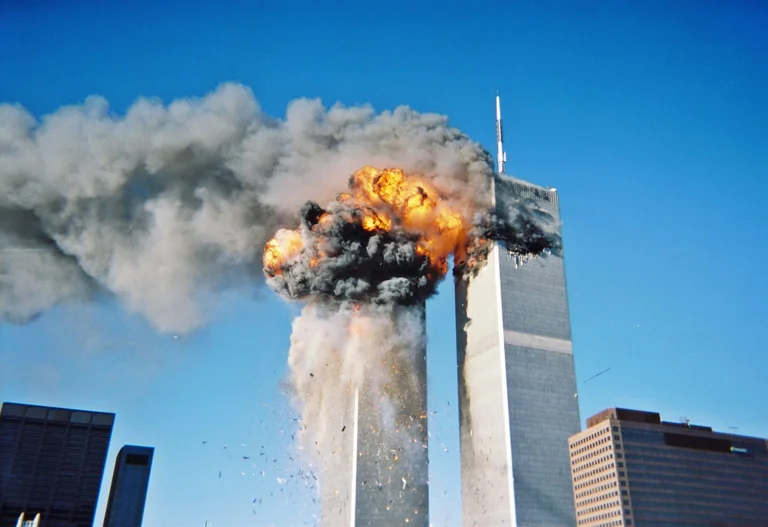
(2 years ago)It's been exactly 23 years since the 11 September 2001 terrorist attacks, when terrorists seized multiple planes, slamming them at the World Trade Center in New York, while others crashed into the Pentagon in Washington. The attacks resulted in the destruction of the Twin Towers, Pentagon damage and the killing of nearly 3,000 people. This [...]
The attacks resulted in the destruction of the Twin Towers, Pentagon damage and the killing of nearly 3,000 people.
This event remains to this day the most deadly act of terrorism in human history as well as the deadliest fall of aircraft of all time.
The attacks were carried out by terrorist organisation Al-Qaeda and resulted in the first and so far single example of calling Article 5 of the North Atlantic Treaty. Consequently, the attacks triggered the US invasion of NATO allies in Afghanistan and Iraq and launched the global war on terror.
On September 11th 2011, 19 al-Qaeda terrorists seized four planes: American Airlines Flight 11, United Airlines Flight 175, American Airlines Flight 77 and United Airlines Flight 93.
The first two planes, which were established from Boston's Logan Airport and on their way to Los Angeles, ran into the Twin Towers.
Flight 77, which rose from Dulales Airport in Washington DC and was also on its way to Los Angeles, crashed at the Pentagon.
Passengers in the fourth plane, Flight 93 from Newark Airport, realized it was a terrorist attack. Passengers fought the kidnappers and eventually managed to smash him into a field in Pennsylvania before reaching his target, which remains unknown to this day.
The terrorist group's motivation for the attack was rooted in a host of different factors, including US support for Israel and India, the presence of American troops in Saudi Arabia, Russia's support for Chechnya and more.
Many of these motives were further highlighted in the “Letra to America” of November 2002, written by then-Al-Qaeda leader Osama bin Laden, who declared a jihad against U.S. in the 1990s.
It is known, however, that American President George W. Bush claimed that Al-Qaeda launched the attack because “they hate us for our freedoms”.
Many also attributed the symbol and religious motivation to the attack.
The immediate effect of the 11 September attacks led to a drastic increase in Bush's popularity and then New York chairman Rudy Giuliani.
The US has made major changes to move towards a new war parade, undertaking extensive monitoring efforts in an effort to improve the fight against terrorism. Examples of this include the 2002 National Security Act and the Patriot Act.
It also led to the beginning of NATO's 20-year invasion in Afghanistan, motivated in part by the desire to capture bin Laden, something that was eventually achieved in 2011.
However, one of the most stable consequences of the 11 September attacks is the sudden focus on the fight against Islamic ideology and terrorist organisations.
The problem of ideologically motivated rebel Islamic groups and terrorism has won a global spotlight, now dominated by countries worldwide that previously had little or no involvement, and countries that have already fought with him, such as Indonesia and the Philippines, are now increasing their own. Efforts to resolve the problem.
But the September 11th attacks also preceded a wave of racism and intolerance against Muslims in the West, on charges of Islamophobia that arose in heaven since then.
In an article in the magazine Pew of 2021, scholar Besheer Mohammed noted that Americans are more likely to say Muslims face discrimination than other groups like Jews or gospel Christians.
While 78 percent of American adults in champions said Muslims face either full “discrimination or” or “isa” in the US, 68 percent said the same about Jews and 44 percent about gospel Christians.
Those who were Democrats or Democratic-minded were more likely to say that Jews and Muslims face discrimination than those who were Republican or with Republican tendencies, but even in the last category, a clear majority agreed that Muslims face discrimination.
Based on data in 2010, a Gallup report from the beginning of this year found that six out of ten American Muslims agree that, in general, most Americans are prejudiced against Muslim Americans.