18 minutes ago
Office: Prisoners' case was not competence of operational directorate, but of zone commanders
Periskopi(2 years ago)
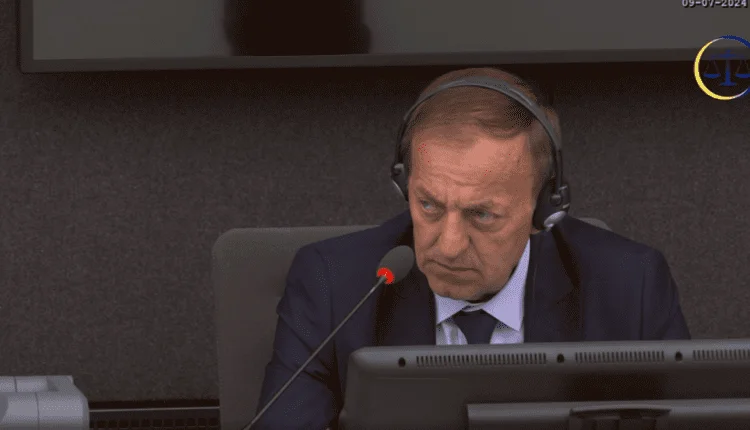
(2 years ago)During his testimony at The Hague, at today's witness hearing witness Bislim Office said the prison issue was not the competence of the General Staff operational directorate. But according to him, his authority belonged to the commanders of the entities or areas operating in a certain territory and then obtained [...]
But, according to him, his authority belonged to entity commanders or areas operating in a specific territory and then obtained the judicial sector, reports the “Justice Trust”.
“Role and the competence of the operational check directorate was not to deal with these issues before. She was in charge of operations. Number 1 is operating units, preparing units, then organizing protection or wide-scale attacks that are aspects of operational and strategic operations -- that is, what happens inside it. It's all under the unit commander who's operating in that territory and who's taken that operation. It is not for the operational directorate to deal with that case and the captive prison. It's the judicial sector that deals with that issue and the adequate command which is moving into that territory”, the office witness said.
Prior to that, an operation was discussed in the Great Bardhe (former-Ballachefci) in which KLA members had taken control of the surface coal mine for which they allegedly imprisoned several Serb miners.
I don't remember getting any info from the deputy commander. I at that time have the duty of dealing only with military aspects”, the witness said in response to the questions of attorney Roberts.
He reaffirmed that it is fair to say that authority for prisoners in war was the commander of the area.
At first, when the Office had entered Kosovo in 98, he said there were many local headquarters that were at the staff level and that their leaders obeyed people to take up arms.
The witness answered when asked whether it is right to say that they did not at the time feel obliged to respond to anyone.
He claimed that such ones had limited knowledge and experience as far as war is concerned. He also confirmed that he had communicated with some of the local staff during that time in Kosovo.
Although he had given instructions and counsel, the witness claimed that they did not have to carry out what he had said.
Significantly, in Roberts' questions, the witness answered that he was a member of the army, Yugoslav, Bosniak and Kosovo's.
Otherwise, Roberts announced that his questions would continue during tomorrow.