10 minutes ago
The new behavioral code touches MPs in the pocket
Periskopi(2 years ago)
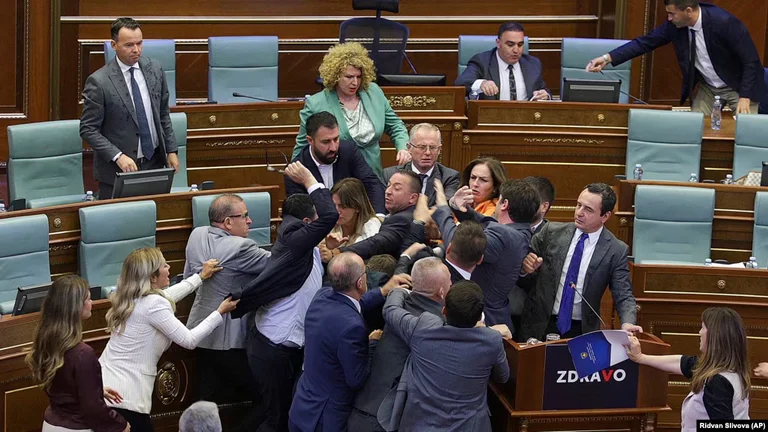
(2 years ago)Up to half of the salary, or over 600 euros a month, may lose Kosovo Assembly deputies if during the plenary sessions and at the Assembly's working troops' meetings use nonparliamentary or physical violence. Such punishments are envisioned in the new draft of the Code of Conduct for Parliament MPs adopted [...]
Such punishments are envisioned in the new draft of the Assembly's Code of Conduct for MPs, adopted in April of this year by the Commission for Legislation, mandates, immunity, Assembly regulation and supervision of the Anti-Corruption Agency.
Approval of such a Code is appreciated necessary by some of the non-governmental organisations that monitor the work of the Parliament, others suspect the Code will influence the improvement of MPs' behaviour.
What do you see in code draft?
In this document, which has provided Radio Free Europe, the Code will reportedly address the conduct of MPs in hearings and commissions, nonparliamentary language, the use of telephones, officials' clothing and other actions prohibited during the exercise of their function.
According to the Code, MPs must refrain from using the unsavory language, hating, insulting, or threatening.
For all inadequacy actions, according to the Code, fine sentences are presented, depending on whether they are serious or easy violations.
A minor offense is considered, the prevention of breeding, after shouting, screaming, and breaking of the word, the use of mobile phones or laptops, and the disrespect of the dress code.
Heavy offenses, on the other hand, are the use of physical violence, the use of words, phrases, or synonymouss that humiliate or violate another's dignity, abuse of position for personal gain, the promotion of hatred, intolerance, violence, or sexual harassment.
In the event of violation of the Code of Conduct, punitive measures are implemented by MPs, beginning with written counseling, then suspended from participation in three plenary sessions and three committee meetings to financial sanctions that amount to 50 percent of the basic salary.
An MP's basic salary in Kosovo is 1.804 euros.
For participation in committee meetings and working groups, they benefit from additions: 20 percent of the basic salary or over 360 euros.
Officials from the Kosovo Assembly told Free Europe Radio that the head of the Assembly will determine when the project-Codi agenda will be set for review. But the date for examining this document has not yet been set.
Who of the “runs” to MPs?
The competent body for the implementation and pronunciation of the measures of this Code is the Council for Ethics.
The council consists of nine members, of whom four members will belong to the parliamentary majority, the three opposition and two other members will belong to non-party communities.
According to the Code, the Council should have a chairman and a deputy chairman, as well as in its composition, gender equality should be reflected.
In the Kosovo Parliament's 2023 work monitoring report, the Kosovo Institute for Justice has noted that sextistic, mizogen, racist and homophobic languages have been used.
This language has also been criticised in the European Commission's 2023 Kosovo Report.
This report reportedly said that “for addition to tension in the Assembly, some MPs used stimulating languages against political opponents, including stereotypes and unsuitable languages.
In an analysis released early in June, called the Code of Bringing Deputies, “focuses on financial penalties shifts focus from the principles of good behaviour and public service to a purely monetary punishment system”.
In this analysis, meanwhile, it is said that the draft-Codi contains provisions that are contrary to the Assembly Rule.
According to current regulations, the types of measures in the event of obstructing the development of the session are: withdrawal and interruption of the word, warning of leaving the plenary hearing and leaving the sessions that are accompanied by financial sanctions with compensation of a plenary session.
Otherwise, such a code, Albania's Assembly approved it six years ago, in 2018.
The same applies to all aspects of the MP's public life in Kosovo and Albania.
In 2019 the Code of Conduct was also approved by the Parliament of Northern Macedonia.