14 minutes ago
Should it be repaired or closed? Dilems for Kosovo A
Periskopi(2 years ago)
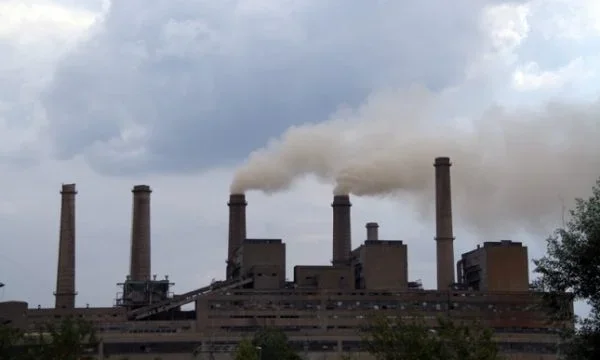
(2 years ago)Not all agree that investments in the Kosova A plant, which the Government of Kosovo predicts, are necessary. Supporters argue they are needed to ensure energy security, but critics point out the impact on air pollution and outdated thermal infrastructure. The Kosova A power plant, which generates coal power, [...]
Not all agree that investments in the Kosova A plant, which the Government of Kosovo predicts, are necessary.
Supporters argue they are needed to ensure energy security, but critics point out the impact on air pollution and outdated thermal infrastructure.
The Kosova A power plant, which generates coal power, is decades old and has two blocks out of office, has been seen closing until 2017 with the Energy Community of Southeast Europe Agreement.
This has not happened, and the current Government of Kosovo has included it in the Energy Strategy 2022-2031, which envisions investments.
Kosovo Energy Corporation, which has under the Kosova A thermal power plant and the other Kosova B thermal power plant management, did not answer Radio Free Europe questions if investments have begun and what their value will be.
Like the Kosovo Economy Ministry, which has drafted the Energy Strategy.
What capacity does Kosova A have?
About 35 per cent of Kosovo consumers depend on the production of the Kosova A thermal power plant.
This thermal power plant consists of five blocks. The first of it, A1, started production in 1962, and the last, A5, in 1975.
Because of its age, two blocks of it don't work at all.
Kosova A and Kosova B with coal both meet 80 percent of Kosovo's per capita needs.
In 2020, Kosovo and other Western Balkan countries have signed the Declaration of the Green Aegean, through which they have pledged that, by 2050, they will end producing coal energy and switch to renewable sources.
Kosovo's 2022-2031 Energy Strategy focuses on investments in these sources, but a part also includes the Kosova A thermal power plant, investments in at least one entity or its bloc, respectively.
The document says that one entity will be renovated by the end of 2024, while the decision on renovation or closing of the second unit will be made later in 2024.
The newly repaired “Unit will work as strategic reserve from 2028 to 2030 and will be available in the heating season, when demand for electricity is higher, or in cases of energy crises”, the document says.
Does Kosovo have alternatives?
For Dardan Abbas, energy policy expert at the Institute for Development Policy in Kosovo, INDEP, investing in old blocks, which would be exploited in times of crisis, is “poor argument”.
He says the priority should have investments in renewable sources, while in cases of alternative crises, countries in the region can be the priority.
“ ... because, Kosovo has already joined the energy market with Albania through stock exchange ALEPEX”, he says, referring to a 2020 agreement.
With this agreement, the two countries, through the Albanian Energy Stock Exchange (ALPEX), can provide energy for each other's consumers, with planning the day ahead.
Zeqir Veseyaj, professor of subject “Environmental Education for sustainable development” at the University of Pristina, the problem of investing in coal power plants, sees it in air pollution.

These Kosovo thermal power plants are among the biggest pollutants in Europe, the group of environmental NGOs in Central and Eastern Europe, “Bankwatch Network”, estimated in 2019.
I have reservations about whether those investments can be productive, with acceptable environmental parameters, in a thermal power plant that has filled more than 50 years”, Vesela says.
“under normal conditions, [Termo power Kosova A] has had to be removed from use, as planned years ago”, he tells Radio Free Europe.
But, former director of the Kosovo Energy Corporation, Arben Djukaj, considers that investments in Kosovo are necessary, since it covers about 35 per cent of the current needs.
Kosovo has limited alternative sources”, Djukaj says.
“Vones in building new units would have long-term consequences for the energy sector, as well as heavy”, he tells Radio Free Europe.
At the Institute for Social Policy “Mousine Koklari” in Pristina, they also estimate that Kosovo has neither financial nor other resources to make a rapid transition to renewable energy.
So it says in a statement from this institute for REL, it is important to invest temporarily in existing thermal power plants, but by establishing electrofils, which would minimize air pollution.
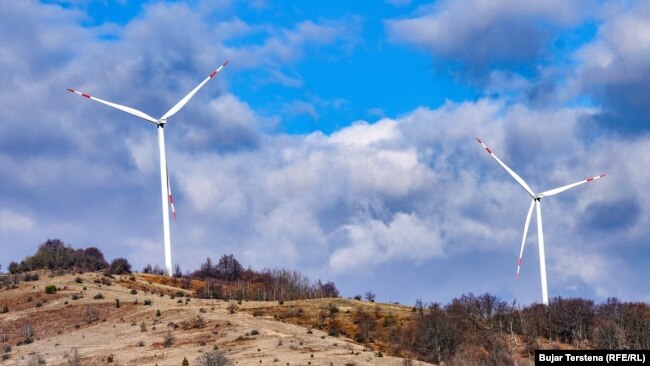
Currently, over 20 percent of Kosovo's electricity is produced from alternative sources, such as hydro power plants, windmills, and sunny panels.
Kosovo Economy Minister Artane Rizvanolli has said earlier that the country's goal is that after 2031, 35 per cent of electricity will be generated from renewable sources.
Why isn't Kosova A closed?
In 2017, when Kosovo A was said to be closed, it was the first to enter the new Kosova e Re thermal power plant.
This project has been revised and postponed several times and has not been completed.
The World Bank, initially, has given him support, but has since withdrawn, claiming he will no longer support the construction of a coal-fired thermal power plant.
Then the winning tender company for its construction, Contour Global, has withdrawn.
Kosovo's electricity needs exceed production capacities, especially during the winter.
Kosovo has the capacity to produce about 800 megawatts per hour, while its needs, in winter days, reach up to 1,300 megawatts per hour.
That difference, it usually imports from outside.