17 minutes ago
New session of UN Security Council for Bosnia 15 May
Periskopi(2 years ago)
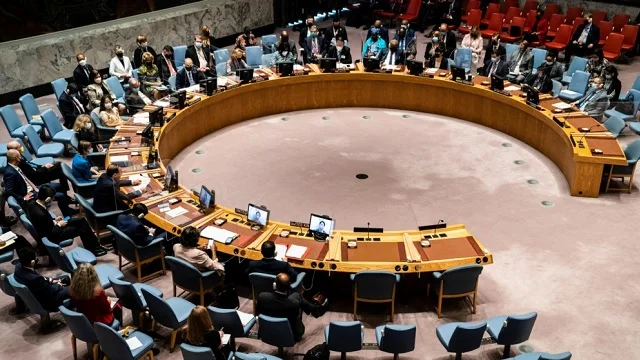
(2 years ago)The UN Security Council has established a debate on Bosnia and Herzegovina for 15 May. It has not been made known what the concrete topic of debate will be, nor who will speak at the session. The UN Security Council, at Russia's request, held one [...] on Tuesday.
The UN Security Council has established a debate on Bosnia and Herzegovina for 15 May.
It has not been made known what the concrete topic of debate will be, nor who will speak at the session.
The UN Security Council, at Russia's request, held an extraordinary session for Bosnia and Herzegovina on Tuesday. Moscow cited the dispute as the reason for the “breach of the security situation and the dangers of violating the Dayton Peace Agreement”.
The debates at the Security Council are under way at the time when Serbia and Bosnian Serb entity politicians, Republika Srpska, along with their ally Russia, are lobbling against the adoption of a UN resolution on genocide in Srebrenica, which is expected to be in order for days this month.
On Thursday, the final proposal for the resolution on Srebrenica was submitted to the president of the General Assembly of the United Nations, Dennis Francis, and all permanent missions at the UN.
In the final proposal for the resolution, which was submitted to Radio Free Europe from the Potocari Memorial Centre, the UN decision “for the July 11th International Genocide Memory Day in Srebrenica in 1995 will be marked annually”.
The UN, as stated in the text, agrees without reservation with any denial of genocide in Srebrenica as a historical fact and calls on member states to preserve the facts”.
In 2007, the International Court of Justice in The Hague named the crime committed in Srebrenica, where more than 8,000 men and boys were killed by the Republika Srpska Army.
So far, more than 50 people have been sentenced to over 700 years in prison for genocide and other crimes in Srebrenica.
Radovan Karadzic, the first president of the Republika Srpska [1992/1995], the predominantly Serb entity, which along with the Bosniak and Croat federation, made up Bosnia, was sentenced to life in prison for genocide and other crimes, including in Srebrenica.
Republika Srpska's army commander, Ratko Mladic, is serving a life sentence for genocide as well.
Despite international courts' decisions, official Belgrade and Republika Srpska authorities deny that genocide was committed in Srebrenica in July 1995, naming only <x0 crime” what had happened. /rel