20 minutes ago
What should you know about elections for the new European Parliament?
Periskopi(2 years ago)
(2 years ago)The elections for the new European Parliament will be held in all 27 European Union member states from 6 June to 9 June. About 370 million citizens have the right to vote throughout the bloc, but not all will come to the polls. According to a recent survey, about 71 percent of [...]
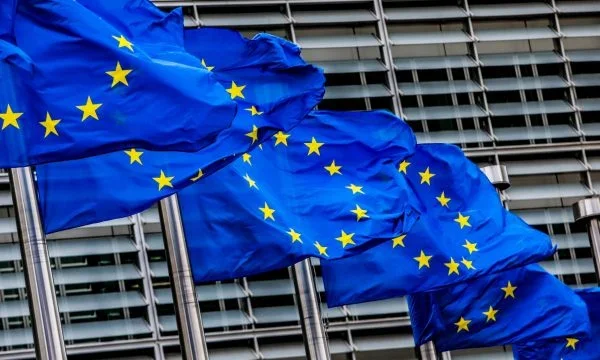
The elections for the new European Parliament will be held in all 27 European Union member states from 6 June to 9 June. About 370 million citizens have the right to vote throughout the bloc, but not all will come to the polls.
According to a recent survey, about 71 percent of respondents are aiming to vote, and that would be an extremely good figure. In previous elections, in 2019, the election appearance across the EU was 50.7 percent.
This figure was valued as good, because it was the first time the number had increased since direct elections for Parliament began to be held in 1979, ending a trend of the ongoing decline in the election rate.
Of course, the selection is very different from place to place. In Belgium and Luxembourg, where casting is mandatory, the election appearance was nearly 90 percent before five years, while in the Czech Republic it was only 28 percent and in neighboring Slovakia only 22 percent.
What do people actually vote for?
EU citizens will elect 720 MPs from all member states, based largely on the size of each country's population. So Germany will mostly send lawmakers to Brussels/ Strasbourg - 96 Eurodeputes - Cyprus, Luxembourg and Malta each.
European democracy is a little bit strange, and among its wonders is that it doesn't have a subx2> population” in Europe, but 27 means that, while elections are called European, they compete in national political parties such as, for example, the social-democrats in Germany (SPD), or the conservative Spanish party Partdo Popular (PP). But once the Eurodeputs are appointed by national lists, they tend to become part of groups, or trans-European political families.
In the 2019-2024 mandate parliament, there were seven such groups, which should consist of at least 23 Eurodeputs from at least seven EU countries. It is expected that these groups will remain, but the possibility of creating new groups cannot be dismissed. The fight for eurodeputs from all sides has already begun and will only grow.
What are political groups?
The largest political group is the centre-right European People's Party (EPP), part of which are the German CDU, and the Polish Civil Platform (PO) followed by the Socialists and Democrats (S&D) which brings together the centre-left Social Democrats. Then there are many other groups, starting with Renew, which collects liberal and centrist parties such as the French president's Renaisance Party Emmanuel Macron.
Then there is the Green Group, which includes green and ecological parties, but also pirate parties and Catalan separatists. The GUE/NGL group collects the communist and far-left parties, while on the other side of the ideological spectrum are the reformists and European conservatives (ECR), which are valued by some as nationalists.
Another group consists of Czech ODS party, the Polish party Law and Justice ( PiS), the Swedish Democrats, the Finnish Party and the Italian Prime Ministers' party, Giorgia Melon, the Italian Brothers.
And in the end is the group Identity and Democracy (ID), which has members like the Marine Le Penny National Movement party, Austria's Freedom Party (FPO) and the League (Lega) of Matteo Salvin. There are also a number of groups without groups who were often part of one of the groups but were expelled and have not yet found a new group. Among them is Victor Orban's Fidesz party, expelled from the EPP group in 2021, or Robert Fico's Smer, who was expelled from S&D last year.
Why do political groups matter?
The importance of political groups in Brussels should not be ignored. They are like a literal family because they care for its members and promote them whenever the opportunity is given.
The older the family, the more time it takes to speak in Parliament. The possibilities are also greater to ensure the post of chairman of an influential committee, the post of president or vice president of Parliament.
The bigger the group, the bigger the chances will be for changing a law to be supported, or that your group's report will enjoy support to approve. Being not part of a group, your impact is zero. In this Parliament families rule.
So who wins?
Nobody, actually. European policies involve building coalitions, after all. In all likelihood, The EPP will come in first again, as it has in any party elections for the European Parliament since 1999. Polls suggest it will win around 170 seats in the new Parliament, which is less than five years ago, and much less than in the past when it regularly won 200 seats.
S&D will probably finish second, as in the past, at about 140 seats, as in 2019. The other five groups are expected to win between 30 and 80 seats each. It seems that Renew and the Green will lose seats, compared to five years ago, while the ECR will earn more. But there may be over 100 eurodeputes, which so far are not part of any group, or political family. Most of them will be populist, so they are likely to become part of ID or ECR, or some other right-wing group to be formed.
Right-wing, big winners?
Yes and no. If we calculate the seats designed for ID, ECR and non-group deputies, who will probably be rightist too, and we'll add The centre-right EPP, then we have 400 seats, so a majority. But wait. The EPP is, first of all, very common with a federalist generation in the European Parliament.
It's been talked about a Eurosceptic supergroup for years, but so far it's never happened, and it's not likely to happen now. Why? It is impossible to solve the problem of being nationalist at the European level. Therefore, many so-called populists are divided into two groups, the ECR and ID, and they will probably create the third one. They might agree that Brussels should have less power.
The fact that Fidesz is still without a family after three years testifies to this, but nothing reflects better between rightists than the early May news, when the German AfD was expelled from the ID group, as one of its leaders said in an interview that not every member of the Nazi SS unit during the Third Reich “is automatically criminal”.
The decision on their expulsion was prompted by Marine Le Pen, who has been trying to soften its image and the party for years, as there are rumors that it might seek to join the ECR in the future.
There are also rumors that Giorgia Melon, whose coming to power years ago sparked fears of some that Italy could flirt more fascism, would try to soften the image even more by uniting its party, Italy's Brothers with the EPP. Therefore, the <x0m>set of rightist” can simply be media hysteria.
Will it affect EU policies?
Here another European wonder arises: The European Parliament is not as if ordinary national parliaments democratically elected, in the sense that Eurodeputs do not propose laws themselves.
In the EU, it is the European Commission that enjoys the right to initiatives and begins the initial drafting of a possible new law. The European Parliament then becomes a co-legister with the Council, in which member states are represented, meaning that they regulate the proposed law, often by shopping with the Commission and the Council for months or years before they reach compliance and make that law throughout the bloc.
The European Parliament is the weakest among these three institutions.
Why would I care about the European Parliament elections then?
Well, this is where it gets really interesting! The European Parliament is striving hard to become important to the average European voter.
In some ways, he has also succeeded. Take the example of the top candidate known in Brussels by the German name Hospitalkandida. This was done for European Parliament elections in 2014 and the post like this: Political groups nominated one person, and if the political group comes first in the election, then its person is nominated for the important post of European Commission president.
Earlier, for that position, as well as for the positions of the president of the European Council and EU foreign policy chief, they placed leaders of the 27 EU member states through secret agreements in Brussels, taking into account not only party ties but also gender and geography. In essence, three positions had to be fought by men and women, to reflect the north-south, east-west of the bloc, with the three largest political parties, normally the EPP, S&D and Renew taking a position each.
This year, Ursula Von der Leyen is seeking to re-elected European Commission president and is the main candidate from the EPP, which, as mentioned earlier, is expected to come out first in the election.
What effect can the European Parliament have on EU foreign policies?
If you are an EU citizen, you should be interested in the European Parliament. It may not be the most powerful institution in Brussels, but it is influential, because it is co-legulator in important policies such as energy, transport, environment and consumer protection.
Some Eurodeputs also improve their skills in Parliament to become senior ministers in their respective countries, while former elites like to end up in the European Parliament, so that's something worth attending.
But if you're not an EU citizen and you're wondering about the role the European Parliament plays in the wider world, then you should know this: The European Parliament does not direct EU foreign policies.
EU and enlargement foreign policies are only in the hands of the bloc's member states and no one else. The European Parliament is not asked about sanctions policies. While it has the final vote to accept a new member state, parliament is not asked at all about any of the initial steps: granting candidate country status, the decision to start talks, open and close over 30 accession chapters.
Furthermore, the European Parliament tends to always be for the admission of a country, so the vote is always the known decision. / REL