20 minutes ago
“Banjska's commands”- What is known about the last weapons seized north?
Periskopi(2 years ago)
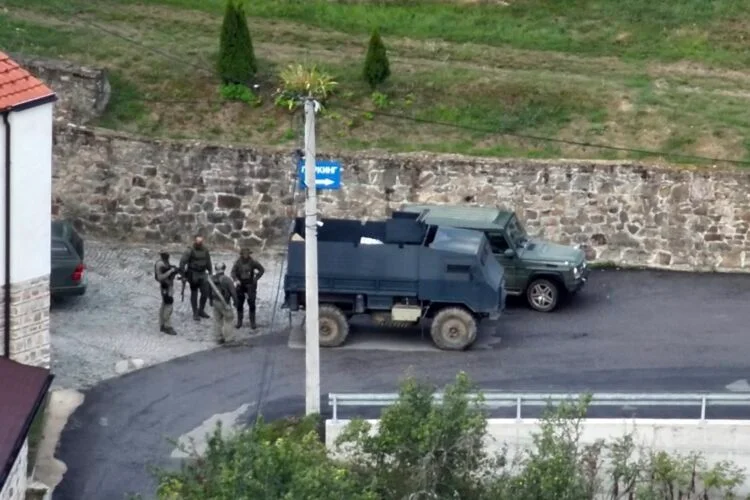
(2 years ago)“It is the fifth depot we found within”, said Kosovo Interior Minister Jhelal Svecla, until presenting an arsenal of weapons and ammunition seized in the country's north on May 14th. In the police action that, as it was said, was initiated by intelligence information, in Serb-run Zvecanin, in majority, [...]
“It is the fifth depot we found within”, said Kosovo Interior Minister Jhelal Svecla, until presenting an arsenal of weapons and ammunition seized in the country's north on May 14th.
On Police action Which, as it said, was initiated by intelligence information -- in Serb-run Zvecanin, dozens of weapons and explosives were seized and thousands of ammunition.
Kosovo authorities said this found weapon may be linked to the September 2023 attack in the village of Banjska in Zvecan.
At the time, an armed Serb group has attacked the Kosovo Police in Banjska, leaving Sergeant Africa Bulnjak dead.
Three attackers have been killed in exchange for the fire.
What is known about confiscated weapons?
Kosovo police and MPB have not provided details on the weapons found in the latest action or its possible origin.
However, the Digital Radio Unit Free Europe has managed to identify the types and production of some of the weapons and ammunition found, based on details from published photos.
Bullets produced in Serbia, BiH
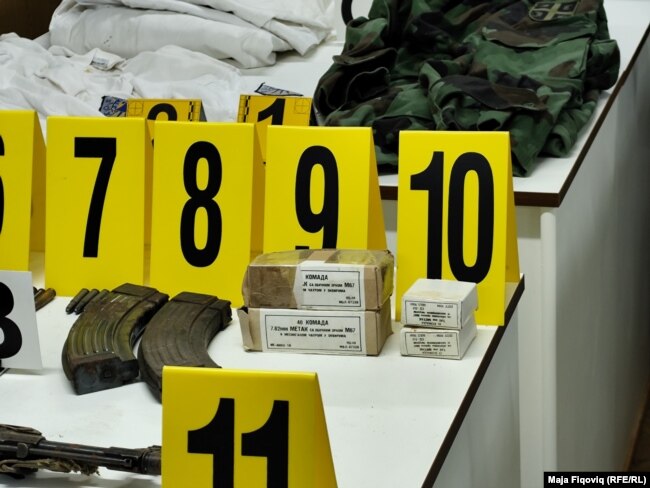
The 7.62m x 39mm calibration ammunition, which was displayed at the facility of the North-Mitrovica Regional Police Directorate, was produced in 1991 at the <x0Prvi Partizan” factory in the town of Uzice, west of Serbia.
These bullets are packed with the strain of SB-515 produced at the “Millan Blagojevicq” in Lucan, Serbia, in 1990.
They're exposed to number 9 after the police action.
Furthermore, the ammunition of the same calibre was produced at the “Igman Zaodad Konjiq” factory in Bosnia and Herzegovina in 1988, in charge of the NNC-08 bar produced at the “Millagoyevicq” factory in 1987.
These bullets are exposed to number 10 in the picture below.
Radio Free Europe has tried to get information from these companies about the seized weapons, but the same have not been responded until the article's publication has been published.
Long arms
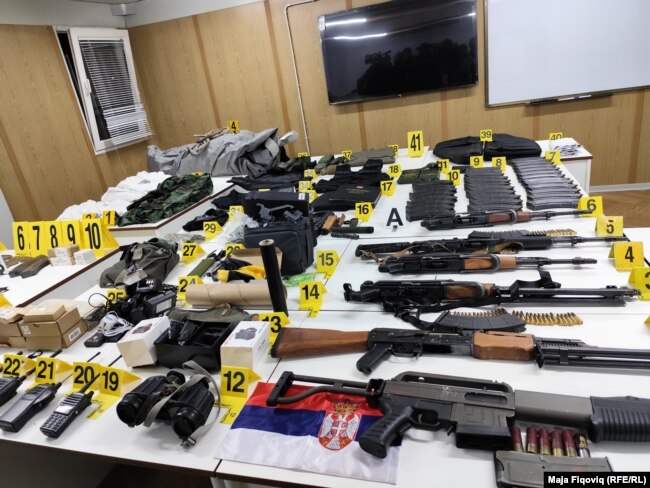
The 7.62mm x 39mmm ammunition seized in the latest action is used, among other things, for weapons “Zastawa M72B1” that was also seized in this action.
According to the specialized page WeaponSysem.net, This rifle started producing in 1973 and is a weapon used as support for the shooting team.
The weapons company “Zastawa”, now located in Kragujevc, Serbia, has tradition of weapons production since 1853.
Their products are exported and resold to dozens of countries around the world.
This weapon is exposed to number 13 in the picture below.
M70 rifle in several variants
The production of this rifle began in 1959, as well as at the “Zastava” factory in the former Yugoslavia. It represents a licensed version of the rifle called Kalashnikov.
By 1970 it was widely used by the Yugoslav Army.
Up to 4 million M70 rifles are believed to have been produced in various versions.
This rifle has been seen on battlefields and conflicts in Afghanistan, Angola, Cyprus, Iraq, Jordan, Kenya, Mali, Rwanda, Syria, Palestinian territories...
It is also used in Bosnia and Herzegovina, Croatia, Northern Macedonia, Montenegro, Serbia and Slovenia, while still being produced at the “Zasawa Oruzje” weapons plant in Serbia.
The company “Zastawa” has not responded to REL's request for information about these weapons.
M70 rifles are exposed to number 2 and 4 in the following picture.
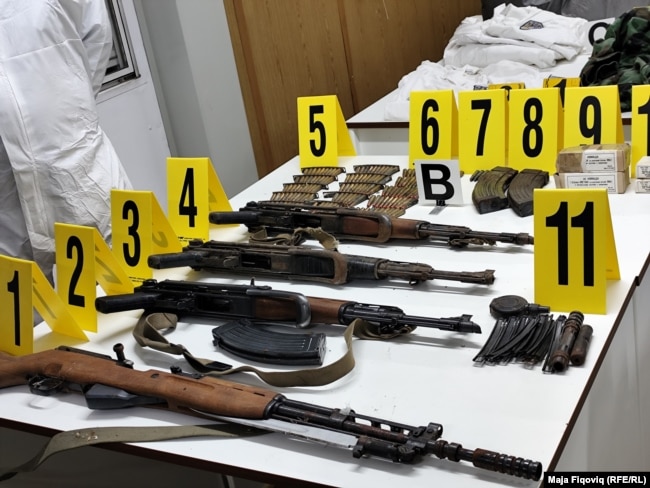
In addition, 62 shock-babes, 1.5kg of plastic explosives and other weapons surveillance devices were seized in the police action.
Exposed to number 17 is a ballistic protective plaque with an anti-trauma layer to protect itself from shooting.
From information seen from the photograph, it is produced by the “Mille Dragiq” factory in Serbia in 2003.
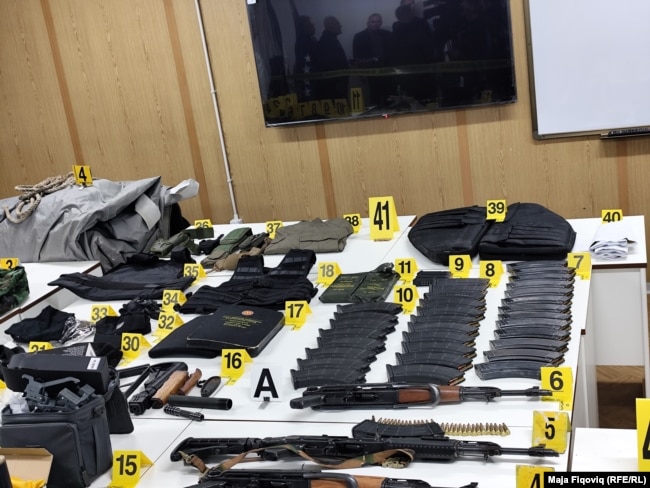
This company in a response to Radio Free Europe has said that only from photography can they not prove it is a product produced by them.
So that we can give our official and professional opinion, we need to have more data and make the physical assessment of the article mentioned by the photo”, says the response to this company.
In addition to the seizure of weapons, Kosovo police have announced that a former Kosovo police official has also been arrested in that action since “allegedly is linked to weapons, which have been found near his” house.
Radio Free Europe Had Analysis Even the first amount of weapons seized after the attack on Banjska.
According to research, in most cases these weapons were also produced in Serbian and former Yugoslav arms factories.
* Photogamer: Weapons confiscated after September attack in Banjska
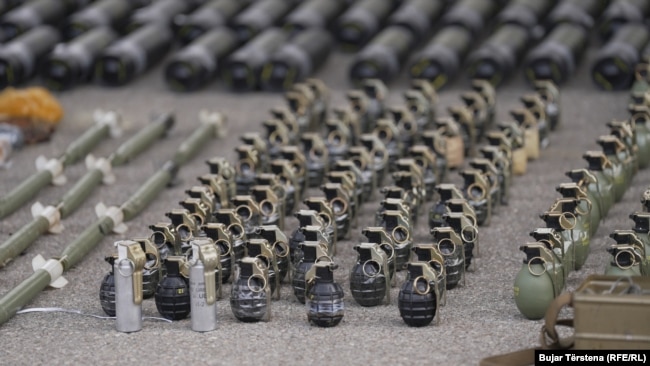
From cartridges to Carblindes Police show the weapons they found in the north
Who is bringing weapons to Kosovo?
Kosovo institutions, but media reports in Kosovo have also raised doubts about Serbia's direct or indirect involvement in northern arming and Banjska's attack, but such has been denied by official Belgrade.
It is clear who stands behind this event, as well as behind other weapons depots, attacks on our officials, KFOR members, journalists and citizens. The same Banjska attack, which is housed in Serbia, is protected and cloned by [Serbian president] Alexander Vuciq”, Minister Svechla had said after the action.
On the other hand, official Belgrade has not responded to the REL's request for comment concerning the latest arsenal of weapons seized in the north.
According to Mentor Vrajolli, director of the Kosovar Centre for Security Studies, it is difficult to verify that Serbia is organisedly sending weapons to the north.
However, it is very difficult to prove the opposite”, he says.
The “It is impossible for all that amount of weapons to enter Kosovo, part of it late production, so that none of the Serbian state has been involved in this 11x1> smuggling, he says.
According to Vryjoll, international security institutions must also play a role in resolving this enzyme.
The whole thing is for the international community to talk openly about this problem and make direct pressure for Serbia not to put a weapon in Kosovo and not try to destabilise peace in the region”, Vrajolli says.
The brunt of the long-standing border of Kosovo and Serbia, as he says, also makes control of possible arms smuggling from Serbia towards northern Kosovo difficult.
In a poll called the Kosovar Barometer of Security, published by the WKSS, in 2023, 77 percent of respondents had said they viewed illegal arms trafficking as a high risk of public safety.
Annie, why are some arrested for the attack on Banjska, there is still no charges filed.
One is expected against former vice president of the largest Kosovo Serb party, Serbian List, Milan Radojic.
He had accepted public Organising the attack, however, continues to be free after leaving Kosovo after the attack. /Radio Free Europe