19 minutes ago
A little nursery, little work for women
Periskopi(a year ago)
(a year ago)One hundred and sixty children's nest promised the current Government of Kosovo in 2021, when it took office. The stated purpose of this investment was to facilitate women's access to the labour market. Three and a half years later, progress in this regard remains limited, and as a result, many women are unemployed. [...]
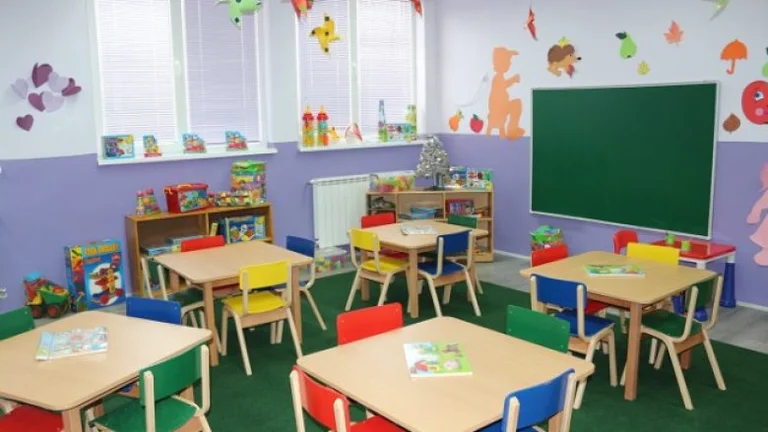
One hundred and sixty children's nest promised the current Government of Kosovo in 2021, when it took office.
The stated purpose of this investment was to facilitate women's access to the labour market.
Three and a half years later, progress in this regard remains limited, and as a result, many women are unemployed.
According to the country's Statistics Agency, under 20 percent of women are employed.
In October, the World Bank released a report on the Western Balkans, where, among other things, said the lack of labour force due to migration poses a challenge for Kosovo.
It could compensate for increasing women's participation in the labour market, but “prevents the lack of child care services”, the report said.
The example of this is Teuta H. from Pristina.
With her high-school economics over, she's been down for 13 years because she's had to take care of her two daughters.
At a paid private shelter, he says there was no economic opportunity to send them. Her husband works and pays about 600 euros a month.
I've only been working on weekends for a year when girls and in - laws can be cared for. I clean a few houses, and with the money I get, I help the family”, Teuta says.
Only five new nests were built
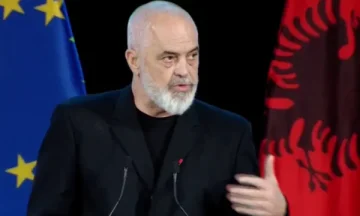
On the day his government's programme was voted out, on May 7th 2021, Kosovo Prime Minister Albin Kurti said that “will build 160 new children's nests throughout Kosovo”.
Today, that promise is still far from fulfilled.
In response to Radio Free Europe's interest, the Ministry of Education, Science, Technology and innovation (MASHTI) said 62 items of public pre-school institutions are functional in Kosovo, while dozens are in the process of founding or adaptation.
New nesting “Five are built; six schools are adapted to gardens; 24 nests are in the process of construction;11 are in the process of adaptation; and another 13 are in the tender process”, the written response says.
It does not specify when they are expected to end, nor do the specific number of nests in towns and villages, but it is pointed out that 164 private nests are also functional.
There is a solution, but there is no readiness
Population registration data in 2024 shows that over 132,000 children between the ages of 0 and 5 live in Kosovo.
According to Statistics Agency data for 2023, over 31 thousand children of this age have been enrolled in nurserys.
Shkumbin Misini, professor of economics at a private college, says the number of nests is markedly small compared with the number of children.
As a more serious problem, he sees the lack of public nests in villages.
As their numbers increase there, he says women's employment would increase, considering that there are many productive businesses in those areas.
The state must take initiatives for nesting in rural areas. In the event of lack of funds, public-private partnerships can be implemented to provide quality services”, Misini says.
These initiatives, according to him, would also provide women with opportunities to integrate into the labour market in rural areas, where the number of unemployed is high.
Similar thoughts separate Adela Berisha from the Kosovo Women's Network. In the absence of funds, it says that co-operation between the public sector and the private sector could easily be established.
We have the example of Pristina, where some nests function through public-private partnership”, according to it.
In such cases, Berisha says the municipality can pay some of the money for the child and the rest of the parent, while the care centre can pay educators' salaries.
With such a solution, she expresses her conviction that both employment and the welfare of women would increase.
Traditional Norma has influenced a woman to carry her family care burden... but to be employed, she has to wait until the children are raised”, Berisha says.
According to a report that has published its organisation this year, women are evidently less looking for jobs than men. According to the report, 77% of women are not looking for jobs, while 23 percent require, apart from 51% of the men who are not looking for and 49% seeking.
The women's largest employment, according to Misin, would bring a series of economic benefits from better family budget planning to increased state budgets through tax payments.
“Women's employment would also help lower the level of migration, as it would raise the standard of living for certain families, making them more economically stable. Currently, many families face difficulties because only one of their parents is employed, which then drives them toward migration”, Misini says.
European Union Statistics Office data shows that between January and July of this year, on average over 550 Kosovars have sought asylum in European countries every month.
Last year, there have been a total of 3,045 applications by Kosovars for EU asylum.
In the absence of workers mainly because of migration, businesses from Kosovo have recruited workers from Turkey, Bangladesh, Nepal, India and the Philippines in recent years.
Kosovo is on the verge of parliamentary elections, which will be held on February 9th of next year.
Whether new power will increase the number of child care services remains to be seen. / REL/