24 minutes ago
Nic: With US withdrawal, Germany must engage more seriously in Balkan conflicts
Periskopi(2 years ago)
(2 years ago)Milan Niic, from the German Council for Foreign Relations, says the role of the United States in the Western Balkans will be reduced, regardless of who wins the elections there whether Kamala Harris or Donald Trump. Nic says the change in American politics has started since Russia has begun full-scale invasion [...]
Milan Niic, from the German Council for Foreign Relations, says the role of the United States in the Western Balkans will be reduced, regardless of who wins the elections there whether Kamala Harris or Donald Trump.
Nic says the change of American politics has started since Russia began its full-scale invasion of Ukraine in February 2022.
Since then, US <x0) policy in Europe has given priority to support for Ukraine, and everything else has been structured around it”, according to him.
Niic is coauthor of an article that published the German Council for Foreign Relations last week, titled “How can the Western Balkans shake up the US elections”?
Speaking to Radio Free Europe, he says it is time for the European Union, and especially Germany, to engage more seriously in resolving the remaining conflicts in the Western Balkans.
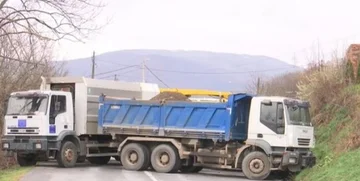
Kosovo's north describes it as the most urgent unresolved conflict.
“We are just a few steps from the serious escalation of the situation in northern Kosovo. So far, it hasn't happened... but there are a few small situations on the ground that can escalate”, says Nic.
Washington accounts for Vuciqi's support for Ukraine
Radio Free Europe: Mr. Nic, considering changing geopolitical landscapes, especially Russia's aggression in Ukraine, what do you think is the most critical challenge facing the Western Balkans today?
Milan Niic: I don't think she's new. It's a long-standing survey in terms of both the region's governance and in terms of insufficient economic progress, or improving people's lives.
This, then, is associated with the continued ecstasy of productive people and the lack of hope for a better future, as well as very slow integration into the European Union.
Radio Free Europe: In an article published last week, the co-author of which you are also mentioned a realistic “conversion” into American diplomacy in the region. Can you explain that?
Milan Niic: Since Russia has invaded Ukraine, US politics in Europe has given priority to support for Ukraine and everything else has been structured around it.
Realistic policy in the Western Balkans implies Washington's support in good relations with key countries, including Serbia, which, in silence, supplies Ukraine with ammunition and weapons and maintains good relations with Kiev without saying so in public.
[Serbia's President Aleksandar] Vuciq, is in regular contact with President [of Ukraine Voldymyr] Zelensky. The US gives priority to this support Serbia offers rather than Vuciqi's policy in the region. It is equally based on other countries or leaders in the Balkans who support the US in this priority.
To get into dialogue between Kosovo and Serbia... The Kosovo government or Prime Minister [Albin Kurti] cannot do much in these efforts [about Ukraine], except rhetoric. And the realistic turn of American foreign policy in this process has long existed.
It is naive to expect the US to rise against the revisionist agendas in the region.
US engagement will be reduced to both Harris and Trump
Radio Free Europe: You mentioned Kosovo. Lately, some American diplomats have warned Prime Minister Kurti of worsening relations between the US and its government, due to some actions that are considered unilateral. Is that dangerous at this time?
Milan Niic: I think the Kosovo government, under Albin Kurti, has learned from Belgrade to do things unilaterally and has decided to create some facts in the north. In this way, she has also focused on maintaining her popularity and power in Kosovo.
So far, this has worked, even at the price of certain diplomatic isolation from its key partners, as has happened before the Berlin Process summit.
Radio Free Europe: The US is only two weeks away from presidential elections. Why do you think this process can shake the Western Balkans, and in what ways do you express yourself in your writing?
Milan Niic: No matter who wins or who will receive the White House leadership for the next four years, the role of the United States in the Western Balkans will be reduced and changed.
Conflicts that remain unresolved, such as the one between Kosovo and Serbia, in Bosnia and Herzegovina and others, including ethnic tensions between societies, will need a more serious commitment from the European Union and Germany.
Radio Free Europe: But does the US have the luxury to reduce its involvement in the Western Balkans, taking into account the unstable situation in the region?
Milan Niic: We are not accepting that there is a gradual US break from Europe's neighbours or periphery of Europe, because its priorities have been found. Not just Asia and Indo-peacemen. The U.S. is also focusing on strategic competition with China. Then there is the war in the Middle East, which is far more important for American interests, and also for domestic politics. You can't compare.
Whoever wins will create a much more focused administration within the country. Engagement in the Middle East for energy and strategic reasons will be far more important than in the Western Balkans.
If Trump wins, there will be more high-level engagement in the Western Balkans, but the focus will be on business interests. If Harris wins, there will be a continuation, a continuing break from the region and more of his surrender to Europeans.
The question is how much are they willing to take on a bigger role, to compensate for the United States? Because, the US is the main partner in dealing with unresolved conflict [in the Western Balkans] since the 1990s. But now, her interest has changed.
The era of liberal intervention, or US as a police officer of the world, is being challenged within the US itself and it will reduce its role in the Balkans.
[Joe] Biden has been the last president to personally commit to politics in the Balkans, he has recognised the leaders.
Now we're going to have less US involvement and we're not ready for this. That means there will be more security risks, especially if NATO is challenged.
The Importance of Germany's Force
Radio Free Europe: So, what should the EU and especially Germany do?
Milan Niic: I think Brussels, under Kaya Callasin, should do more. She and her team would need to pay more attention to developments in the Western Balkans, with some kind of flying diplomacy and direct involvement.
It also depends on Berlin and Paris how they will co-operate with London to compensate for Washington's reduced involvement.
Radio Free Europe: In your article, you especially mention Germany. How important it is for Germany to show that it takes Kuzeytenwende seriously about the Western Balkans, and what actions would be more influential?
Milan Niic: I think what happened at the Berlin Process summit last week was a success and a good example. Germany needs to get more politically involved, get up against certain unilateral moves, deal with governments and leaders one by one, and give priority to what is important to keep the entire region under control and on the road towards some sort of improvement and integration.
Danger from fragile situation in northern Kosovo
Radio Free Europe: What do you think is the most urgent unresolved conflict in the Western Balkans?
Milan Niic: Kosovo's north. There is also the internal situation in Bosnia and Herzegovina, but there is an international diplomatic infrastructure, which I think is quite stable. So, Milorad Dodik [the leader of Republika Srpska], every time he tries to cross borders, he realizes he will lose.
In northern Kosovo, the situation is more fragile. I think there's a waiting game not only for US elections, but also for the outcome of the war or for some kind of development in the war in Ukraine, which will affect the overall European security situation and create a new kind of precedent, even for the Western Balkans.
Radio Free Europe: What do you think is the way out for northern Kosovo?
Milan Niic: In northern Kosovo, more things have happened in the last one or two years than in the past few years. It's a whole new situation. Now it is Kosovo special police that control the situation on the ground. Belgrade is losing because Serbs have withdrawn from institutions. They have erred and do not know how to return.
I think we are just a few steps from the serious escalation of the situation in northern Kosovo. So far, it hasn't happened. I think there's a careful approach from both sides not to happen, but there are few small situations on the ground that can escalate.
Radio Free Europe: Do you think Germany can move things as far as Kosovo is concerned? I remember that, a few weeks ago, he convinced Kurt to return the import of goods from Serbia.
Milan Niic: Yes, he has convinced Kurt to remove the blockade and has found a practical solution to his problem. Of course, elections are coming to Kosovo, and this confrontation with Belgrade is important for Kurti.
But if there is a new crisis tomorrow, who will try to solve it? Who will rush to Belgrade and Pristina? The European Commission? High representative in [EU's] removal, Josep] Borrell? Americans don't.
I think Germany among Quint's powers is the one that still has the capacity, even though she's heading towards her own federal election.