22 minutes ago
At the end of Kurti's term with small wage increases trying to attract public sector workers
Periskopi(2 years ago)
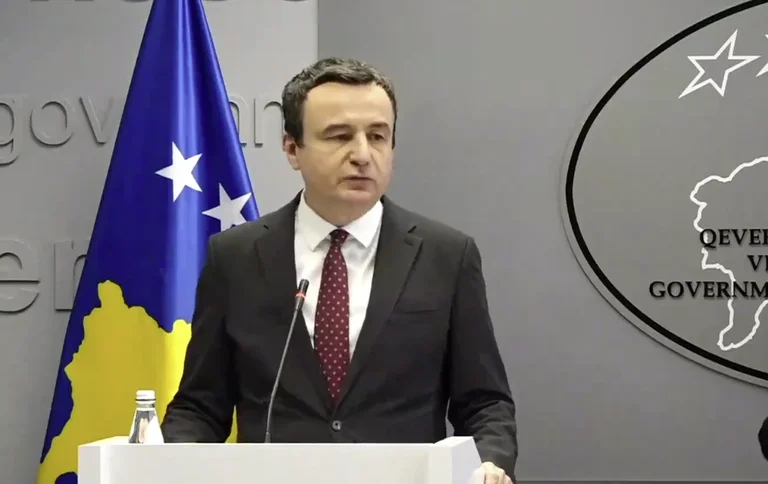
(2 years ago)Prime Minister Albin Kurti, at a media conference, has announced that by 2025, there will be increased cofficiency for the public sector. Kurt first presented the achievements of his government, where he mentioned the support of producers and the support of families he held to have influenced economic growth and the addition of [...]
Kurti has initially presented the achievements of his government, where he cited the support of producers and support for families that, according to him, have contributed to increased economic activity and increased jobs. He has said that wages have been raised every year, as the law predicts, while this time it will not increase the cofficiency, but its unit.
In view of the need to support those with lower salaries, we've gone the best way to raise salaries. We're not increasing the value of the cofficiency, but the coeficient for one unit. By January of next year, the cofficiency will grow for 0.5 units and from July to 0.5 other units. So, someone with a 5.6 cofficiency gets 6.1 in January, and in July it gets 6.6. All employees will be raised wages 55 euros from January, 110 to July”.
He added that Kosovo's economy every year is added by 1 billion euros “this year as we exceed 10 billion and next year we will add 11 billion to”.
For the year 2025 on the expense marks the 2.3 billion-euro level. This wasn't done by raising taxes on citizens and even releasing taxes. The increase in tax revenues we did by fighting smuggling”, Kurti said.
For these years, the BPB has grown this year and will exceed 10 billion and is expected to total 11 billion euros. This year we're going to spend 10 billion next year and 11 billion. We have an increase in jobs and currently have 75 thousand new jobs”, Kurti said.
With the entry into force, next year we will add the budget for salaries. The cofficient's growth will increase next year. The increase for each year should be in the heat of economic growth, and fortunately in our governance we have shown that we know how to rule by pledge”.