10 minutes ago
The Berlin Process: Ten years in EU waiting room
Periskopi(2 years ago)
(2 years ago)The Berlin process was set up to accompany the Western Balkan countries' journey towards the EU. But many of the countries have their way blocked by conflict with each other. Alexandra Tomanic heads the European Fund for the Balkans, a regional headquarters foundation in Belgrade. When planning an activity in Sarajevo, it should [...]
Alexandra Tomanic heads the European Fund for the Balkans, a regional headquarters foundation in Belgrade. When planning an event in Sarajevo, it should be thought twice before inviting even Kosovo participants. For Kosovars, travel is complicated and takes a lot of time, as they must first travel to Skopje to apply for visas. The same goes for Bosniaks who want to travel to Kosovo”, says Tomanic without hiding the disappointment that the visa regime between Kosovo and Bosnia and Herzegovina is still in effect.
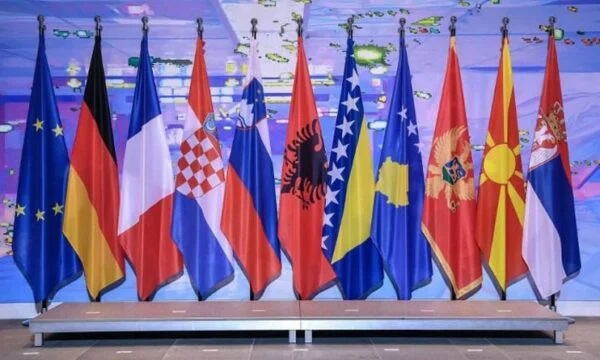
While two years ago, things seemed to improve: In November 2022, the leaders of governments of six Western Balkan countries -- Albania, Bosnia and Herzegovina, Kosovo, Northern Macedonia, Montenegro and Serbia HINA -- signed three mobile agreements, where they agreed to free movement with ID cards, recognition of university diplomas, and some professional qualifications. Until today, the implementation of these agreements has stalled. “This is not the only unfulfilled promise of the Berlin Process,” says Tomanic.
An improvised Initiative
The Berlin Process was initiated in 2014 at the initiative of former German cancerales Angela Merkel to support Western Balkan countries in their journey towards the EU. The president of the European Commission, Jean-Claude Juncker, had earlier announced a “pause enlargement”. Merkel, who was worried that this would bring destabilisation of the region, invited the governments of Western Balkan countries to a conference in Berlin. Participants were the six Western Balkan countries and ten EU countries: In addition to Germany, Austria, France, Italy, Poland, Bulgaria, Greece, Croatia and Slovenia also participated, as did Great Britain, which was part of the EU.
Since 2014, annual summits have been held in various European cities such as Vienna, London, Paris, Trieste, Poznan, Sofia, Berlin and recently Tirana. Each year, host countries added to their own priority, which was accompanied by a ministerial one. Meanwhile, the number of miniatures andmatic meetings is very large. Today, annual ministerials are organised for economic co-operation, youth exchanges, security, digitalisation, green energy, agriculture, ministerial for Roma and ministerial for gender issues. The tenth meeting is being held again in Berlin. Summits at Chancellor Olaf Scholz's office on October 14th have preceded a series of meetings at various forums and at different levels where these and other topics are discussed.
Maintaining EU membership prospects
German analyst from Berlin Bodo Weber sees a positive impact from annual meetings of this process. “Regular meetings of leaders and ministers have become normal,” he says in an interview for DW. This has helped to keep the Western Balkan countries' prospects towards the EU alive. But he finds the Berlin Process has not stabilised regional relations permanently. “Serbia, which does not recognise Kosovo's independence, still follows a regional aggressive policy based on the concept of {Srpski svetić,” says Weber. This nationalist concept, promoted by the nationalist wing of the Serbian leadership, aims to unite Serbs in different Balkan countries, especially Bosnia and Herzegovina, Montenegro and Kosovo.
Alexandra Tomanic's balance is critical: “Ten years after its establishment, the Berlin Process still leaves an improvised impression,”, it says. Although there are numerous formats and meetings, concrete results are missing and many of the agreements reached have not been implemented. “vable to the EU enlargement process, the biggest failure remains the political dimension of co-operation, which has been neglected,” stresses Tomanic.
Many problems in the Berlin Process are not discussed to reach compromises. “In Serbia, democratic structures continue to deteriorate and President Vucic is using the conflict with Kosovo to strengthen his political control,” criticise Tomanic. Vucic does not allow critics of the regime from other countries to enter the country and has weakened the media and freedom of expression. She is disappointed that just in the Berlin Process, no such problems are being discussed: “With importance to leaders is to produce another family test that gives the impression of success. ”
Example of regional co-operation projects: RYCO and Roaming
But there are also successes: Aside from gradual removal of roting internet fees and phone calls among Western Balkan countries, RYCO, the Office of Exchange and Youth Co-operation, is considered one of the exemplary projects of the Berlin Process. To date it has brought together 31,000 young people from the region. In addition, the EU, which is one of the main Berlin Process partners, has made 30 billion euros available to the Western Balkans, about half of them have already been invested in infrastructure, energy and digitalisation projects.
But the main project of the Berlin process: Common Regional Market, still out of operation. The cause is the unresolved conflict between Serbia and Kosovo.
CEFTA Free Trade Agreement
On its 10th anniversary, the Berlin Process aims to reach a new agreement: CEFTA. The regional free trade agreement will closer the Western Balkan countries to the common EU market. In fact, the agreement is not very new because all countries in the region are members of it, including Kosovo, which so far was represented by UNMIK. Resigning the agreement enables Kosovo to be represented in CEFTA by its government.
Shortly before the summit, Kosovo Prime Minister Albin Kurti underwent pressure from the German special envoy for the Balkans, Manuel Sarrazin, and opened Merdare's point to allow the passage of Serbian goods there. The blockade of imports from Serbia exists since June 2023. The Kosovo government had declared it thus wanted to stop smuggling weapons from Serbia to Kosovo. Foreign Minister Annalena Baerbock, at the foreign ministers' feasibility meeting, called it a “historical opening” for the region. But will the CEFTA agreement be implemented in all countries of the region? “Letra is one thing, but works are something else”, Baerbock said before journalists and added that” every day we value the partners of this process”. / DW