27 minutes ago
KDI: MPs were often registered only for hire, 13 per cent of the Parliament plan fulfilled
Periskopi(3 years ago)
(3 years ago)The Kosovo Democratic Institute (KDI) unveiled the analytical report regarding developments during the Kosovo Assembly's spring session, titled “The legislation among many challenges”. Arber Thaci, researchers in KDI, during the data interpretation, said this session has been characterised by many surprises and various content, and lawmakers during this period were accompanied [...]
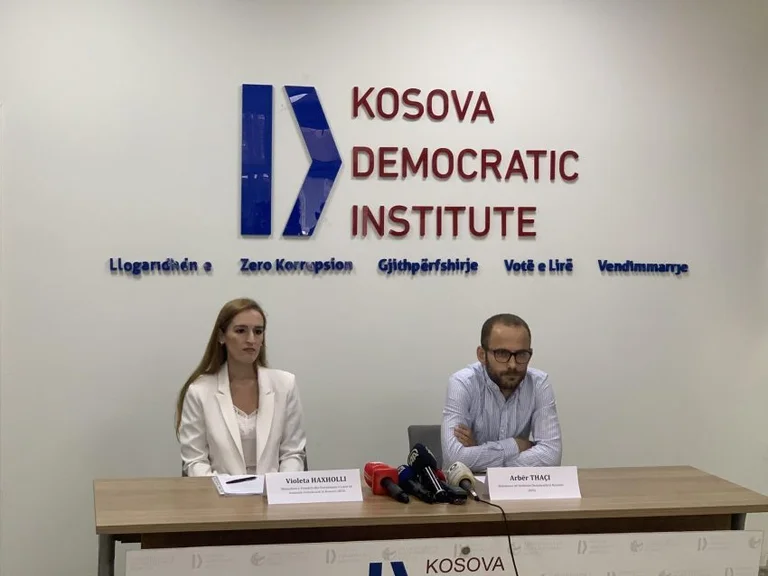
The Kosovo Democratic Institute (KDI) unveiled the analytical report regarding developments during the Kosovo Assembly's spring session, titled “The legislation among many challenges”.
Arber Thaci, researchers in KDI, during the data interpretation, said this session has been characterised by many surprises and various content, and lawmakers during this period were accompanied by many challenges.
During this session, the Assembly held 49 sessions as a whole. Approximately half of them were plenary sessions, while the impasse in handling the parliamentary agenda in the preceding and current year, along with misplanning, prompted the need to develop a large number of sessions' follow-up. In addition, eight extraordinary sessions and two sessions of solemnity were held.
Thaci added that the Assembly during this period adopted a total of 44 bills, 11 of which were international agreements.
Of these, 17 bills were part of the government's 2023 legislative plan, while most of the bills adopted, 27 bills, were on the legislative plan of 2022 and 2021 years. Thus, the Parliament completed 13% of the 2023 legislative plan. On the other hand, 14 bills are still awaiting second reading approval, as they were only approved in the first review during this session”.
Thaci indicated that the lack of quorum has negatively impacted this session, however, the sufficient number of MPs to hold the work of the Assembly has existed all the time, as identified on the official lists.
This proves that the MPs have been careful to register for the afternoon, but have shown irresponsability in regular participation in the Assembly works. This is contrary to the Constitutional Court Act and public interest, which obliges MPs to participate regularly in the work of the Parliament”.
He also noted the frequent use of the non-parliamentarians language, which was not punished by the Speaker of the Parliament, which produced tension in the situation that during July even exceeded physical clashes between MPs and ministers, with such proportions ever seen in the Assembly.
Researcher Violet Hajoll presented the data regarding the Office of the Parliament. According to her, at this session, MPs presented a total of 171 parliamentary questions, the EO reports.
“However, the number of questions was not satisfactory, having a low average for each MP, while 82 MPs posed no parliamentary questions. Mostly questions posed ruling party deputies with a total of 102 questions, followed by opposition parties, The PDK with a total of 45 questions, AAK with 13 questions, the LDK with 10 questions and communities with only 1 question”.
“Prime Minister Kurti accepted 17 questions mainly regarding developments in the north and dialogue with Serbia, for which he offered answers. On the other hand, some of the ministers did not seriously address MPs' questions, especially the Minister of Interior and Foreign Affairs did not answer questions, though they repeated several times”.
Hajoll also spoke of the handling of the Constitutional Reform by the Parliament, positively assessing consensus among political parties for vetting, but indicating the need to maintain consensus and expand support for the process, even among the parties of the communities, not majority, as for the adoption of constitutional amendments for self-tightening is needed by 2/3.
They held a total of 221 meetings, 10 public hearings and 5 field visits. More than 20 meetings were held by the Commission for Economy, the Commission for Health, the Commission for Boards and the Commission for Legislation. Commissions handled about 35 bills. While in terms of monitoring the Government ministers submitted bills and reported 35 times before the commissions, while other top institutional representatives 42 times. Only three commissions held field visits to relevant institutions during this period”.
As for monitoring law enforcement, Hajoll stressed that only two laws were largely monitored by the Assembly -- a figure that is not enough, EO reports.
She also expressed her concern over the lack of transparency of the Assembly towards the public, including the lack of electronic voting, not publishing votes by hand, and not publishing the regular processes of parliamentary and ad hoc collections.
KDI offered several recommendations for the Parliament and MPs, stressing the need for literal session planning, regular participation of MPs in the work of the Parliament, enlargement of consensus and inclusion for the Justice Reform, increased supervision of the executive, addressing the non-parliamentarians language and ensuring the transparency of the Assembly towards the public.