a few seconds ago
Great Interest in Expensive Home Isolation
Periskopi(3 years ago)
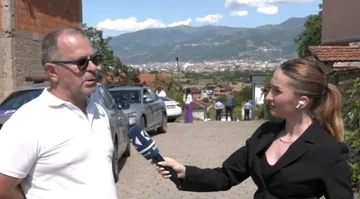
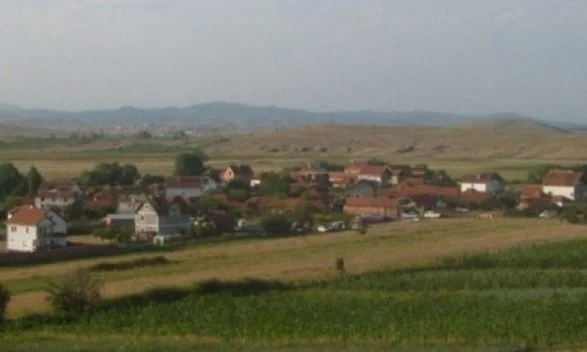
(3 years ago)Naim Pacolli, from the village of Marec in Pristina, is considering the possibility of applying for subsidies from the Government to isolate his home, as by personal means he has failed to make this investment. He tells of Radio Free Europe that 11 years ago he had built the house, but thermal isolation of [...]
He tells Radio Free Europe that 11 years ago he had built the house, but the thermal isolation of the outside walls of the world's house for him was unaffordable.
The external isolation of the walls of the house at that time cost me about 8,000 euros and I didn't make it expensive for me”, he says.
On 8 August, the Government of Kosovo has opened the public call for applications for energy efficiency measures for individual residential homes.
The government will subsidize some 2,000 families to 50 percent of the investment cost, limited to the amount of 5,500 euros.
This subsidy includes the cost of external house isolation, changing windows and entry doors, as well as the isolation of the roof.
A total of 10m euros have been earmarked for the project.
The project is supported by the European Union, within the framework of the IPA programme [Before-membership Tool] The Pako for Energy Support, arranged by the Government of Kosovo and implemented by the Kosovo Energy Efficiency Fund (FKEE).
For Pacolli, who works in a private company, the government's subvention is insufficient, as with its monthly income of 400 euros a month, it has difficulty securing the rest of the means.
The subvention would have to be 70 or 80 percent and there would be categories, for example, for citizens with lower subsidies. For those citizens who stay well in a financial way, this amount is welcome and sufficient, for us in low income, is a bit”, he says.
How much is house isolation?
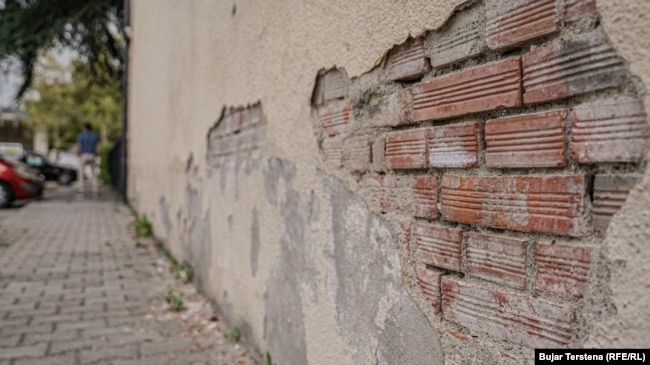
Obliged condition to benefit from the government's subsidy is the thermal isolation of the house's outer walls.
Prices at the market for such services vary.
Mirim Selmani from a private company dealing with isolation of the house's foreign walls tells Radio Free Europe that prices dictate the quality of insulating material.
According to him, one square metre for thermal isolation of the house's outer walls costs between 20 euros and 24 euros, depending on the material used.
Compared to the past two or three years, he says prices are now higher.
“There have been price hikes by 20 percent, materials have been expensive, the cost of the workforce has increased”, he says.
Kosovo Statistics Agency data (ASK) shows that the overall construction cost index has undergone an increase of 3.3 percent in the first quarter of 2023, compared to the first quarter of 2022.
Selmani says that since the launch of the subsidy application, interest in external isolation of the walls of houses has increased.
We had 10 requests to isolate our houses” three or four days ago, he says.
Over 1,000 citizen applications for house isolation
Konjuhi Begins, public relations specialist at the Kosovo Energy Efficiency Fund, says about REL has accepted over 1,000 applications in just one week.
Applications, Conjuhi says, are being treated on the basis of who comes first, served first.
There's a lot of citizens' interest in subsidies. We've begun to examine the applications. The Commission will verify everything. The moment the applicant meets the terms, the beneficiary receives an approval letter with which he can start performing works”, Conjuhi says.
The application to take advantage of this subsidy has all citizens who meet the criteria set by the FKEE.
The application will be open until 25 September 2023.
But the application can be closed even before this date in the event the budget quota is reached.
How important is house isolation?
In a research conducted by the Institute for Development Policy in Pristina (INDEP), it is estimated that construction isolation remains one of the most important factors in boosting energy efficiency and energy performance of objects.
At relatively low cost, basic energy efficiency, according to INDEP, is achieved through external isolation, the setting up of windows two and three-way, as well as the isolation of the roof.
In Kosovo, according to INDEP research, a large number of objects remain without isolation, which leads to large energy expenditures, forcing Kosovo families to consume fourfold of the energy that consumes a European average in a year.
With the taking of some insulating minority measures, this also represents the highest potential for energy measures and benefits, not only in financial terms but also in environmental measures”, says INDEP research.
The Importance of Energy Savings
Statistics show that mostly electricity in Kosovo spends about 40 percent of total consumption.
Kosovo fails to meet all demand for electricity supply from internal electricity generation.
The country has the capacity to produce about 800 megawatts per hour, while its needs, in winter days, reach up to 1,300 megawatts per hour. That difference is imported from outside.
Last year, Kosovo was involved in an energy crisis. The government imposed emergency energy measures, which include electricity savings measures from all institutions.
On April 1st of this year, new electricity tariffs, with 15.4 per cent growth in all consumer categories, have been enacted in Kosovo.