a few seconds ago
What's the coincidence?
Periskopi(3 years ago)
(3 years ago)Genecomastia is a disorder of the endocrine system where the non-cancerogenic growth of the male breast occurs. The breasts of both genders are sensitive to hormonal influences. Of course, these influences reflect to a lesser degree on males, which means that males can also be affected by the same breast disease as [...]
Genecomastia is a disorder of the endocrine system where the non-cancerogenic growth of the male breast occurs. The breasts of both genders are sensitive to hormonal influences. Of course, these influences reflect to a lesser degree on males, which means that even males can be affected by the same breast disease as women, but much less so. The breasts in the males are a vestigial organ. They are composed of fat tissue, a small amount of related tissue, and undeveloped canals.
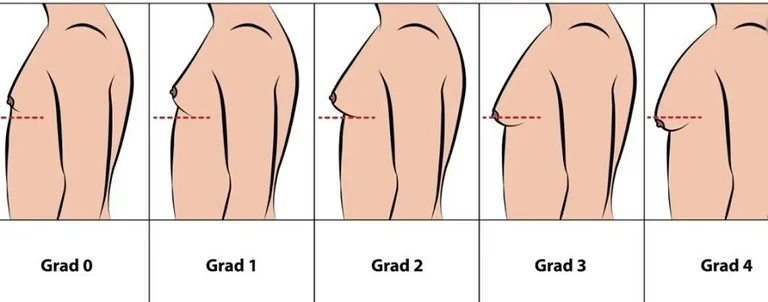
The most frequent problem in male breasts is just gynecomastia, which is an increase of one or both genders in males as a result of epithelial and thermal tissue. As a physical phenomenon, it is presented in the Neonatal period under the influence of mother hormones, in puberty because of the rise in the hormone changes in the body, but it can also occur in old age. If it appears in another period, additional tests must be made. Statistics show that one out of three men under the age of 40 has a problem with some kind of gender.
The cause of gynecomastia may be hypertrophy, or increasing, the lack of breast glands and the collection of deposits in underground fat tissue. At fifty years of age, almost half of the male population has breast enlarged.
The Difference Between Cunecomasty and Lipotasty
The human body preserves fat in a way already determined by genetics. This means that as a result of genetics, some males store a certain amount of body fat in their breasts, thus causing them to zoom in. Despite genetics, if you consume too much fat, your body will have no room to process it all, for this reason, some end up in the shape of fat in the breast-pox. This is called lipomastia.
Ginecomastia is not accompanied by excessive breast fat. It is because of the hypertrophy of gland tissue as a result of the imbalance of testosterone hormones and estrogen. For this reason, he usually appears during puberty or middle age after fifty years of age. It can also be a side effect of the use of steroids, which affect hormone levels. It can appear in an easy or extreme form. A combination of both forms could also occur.
Pathological Genecomastia
Pathological gender is due to a drop in testosterone during test trauma, castrination/sterileization, kidney failure or a metabolic defect in testosterone production. It also appears in the case of the increase in estrogen hormones, which manifest itself as a result of the presence of testicle tumors, lung cancer, over - world gland diseases, liver, thyroid gland (trooxicos). It can also occur with the frequent use of certain drugs, including all cytostatics and narcotics.
Diagnostic assessment
A clinical breast examination is conducted to determine the correct problem.
- Whether it's gynecomast or why you're incommunication (a rise in the suraarellaral fat but not the tissue tissue).
- For conducting the differential diagnosis between gynecomasty and breast cancer (the gynecomasty is mild and flexible and is a little under the arena, two-way (bilathal) to 50% of cases; cancerous tissue is rigid or strong, not below the canola, often one-sided (unila).
Pay attention to the following signs:
Sexual function (impositation, sexual failure).
The size of testicles (small stages show hypogonadism), asimia suggests the presence of the tumor).
Returns (male or female)
If you have a presence of milk or other secretions during breast-pression.
If you have signs of liver disease.
If you have history of taking certain drugs (sspironolacton, treatment of prostate cancer, natural drugs).
Medical Review
Implementation of laboratory tests is the first priority. It usually starts with:
The serum testosterone and the globe associated with sexual hormones (sex-hormones convincing USG globe) (+ testosterone).
Estradil in the serum.
Supplier Hormone (LH) in the serum.
You say serum.
Beta-hCG serum.
Before a decision is made, the ECO of the breasts must first be made, and then full hormonal tests require examination by an endocrinologist. If the endocrinologist concludes that gynecomastia is operational, surgical treatment is conducted in the future.
Surgeryal Treatment of Occupation
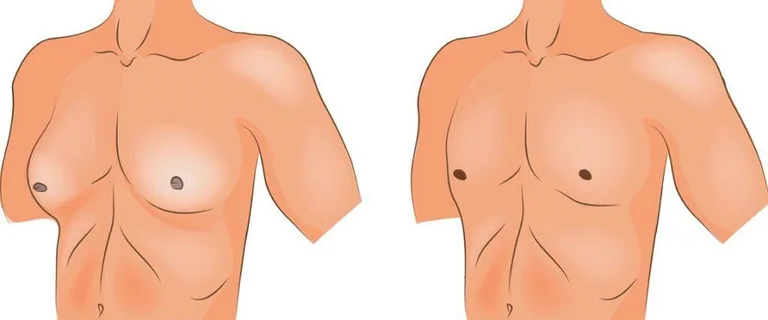
The surgical treatment for gynecomastin refers to removing tissue in the breast area. Depending on the kind of conecomasty, so if it's about lipomist or gnecomast, two operational procedures are possible:
License
Periaroralar exorcation of the breast gland
License is an operational procedure in which, after conducting infiltratement, with the help of a canyon and below the vacuum, the fat component is extracted in the bay area.
The stinging of the gland is a surgical procedure where, after a semicircular cut is done in the nipple area, the breast gland tissue is prepared and then removed. After the extremation of breast tissue, it is necessary to become a pathistological analysis of tissue to establish a final diagnosis.
Posttoperative rehabilitation
After surgery, you need to rest and avoid physical activities. Staying in the hospital after surgery, depending on the patient's overall state, lasts between 1 and 2 days. In the following period, further ambulance treatment follows.
In the post-operation period, it is necessary to place a flexible bandage or a flexible corse to compress the skin in the chest/gir area. The material on the compressive bandage should be kept for a month.
If the patient under surgery for gynecomast is professionally engaged in a job that does not require physical activity, return to work may take place two weeks after surgery. If the patient is professionally engaged in work that requires physical activity, especially the upper limbs, his return to work may take place a month after surgery. With sporting activities or gyms, you may continue a month after your own operation.
The more often asked questions:
How long does the gynecomast operation last?
Operation time is 60-90 minutes.
At what age is it best to perform ?"
Ginecomastia is recommended to do better after puberty - during adolescence.
Do breast - cancer patients have a higher risk of developing breast cancer?
Genecomastia is not a touchy one, that is, there is no scientifically proven connection between gender and the risk of breast cancer development.
What anesthesia is used for the operation of the co-communication?
Depending on the patient's clinical state, the gender can also be performed by local anesthesia if the breasts are not volumeful.
Is the operation painful?
In the post-operation period, analgenetic therapy is performed, which reduces the feeling of pain.

Dr. Zivorad Kocevski
Aesthetics, plastic surgery specialist
* The sponsored art!