a minute ago
Eastern Europe: What about Soviet monuments?

Periskopi(3 years ago)
(3 years ago)Discussions about what to do with Soviet-era monuments have become current in Eastern Europe after the war in Ukraine. A look in Bulgaria. For some Soviet monuments are symbols of the country's conquest by the Red Army and the Stalin regime, while for others they remember victory over Nazi Germany in the [...] war.
Discussions about what to do with Soviet-era monuments have become current in Eastern Europe after the war in Ukraine. A look in Bulgaria.
For some Soviet monuments are symbols of the country's conquest by the Red Army and the Stalin regime, while others remember their victory over Nazi Germany in World War II. But the Russian attack on Ukraine has again sparked discussions on Soviet-era monuments and statues in Poland and Lithuania, where objects such as the Victory Memorial in Riga were hastily removed after the start of the war.
In Bulgaria, public opinions about what to do with the communist era monuments are very different. One of the reasons is that it has not become the enlightenment of the country's communist past. A large part of the population view that time with romantic feelings.
The Red Army's Honor in Sofie
At the centre of these discussions has been placed the giant monument to the Red Army, which stands in a park in the centre of the Bulgarian capital, Sofie, a 40m-high monument set at the bottom of a cobbled-pained mall. At the top of the memorial is a Red Army soldier who has raised a gun to the heads of a peasant and a worker. On the heels of the column three reliefs tell the story of the Red Army.


For about a decade now, the “Nisma association for the collapse of the Soviet Army Memorial” requires the monument to be removed from there. The monument was erected in 1954, ten years after the Soviet Union declared war on Bulgaria. At that time in Bulgaria, any resistance against communist rulers was suppressed.
After Bulgaria's invasion by the Red Army, a communist regime was established in the country. This monument was erected at a time when freedom was lacking, when invaders were called deliverers”, says Martha Georgieva from the monument-breaking association. The aim of this group is to re-regard the population for Bulgarian history. The association sees parallels between the Bulgarian past and Ukrainian current: “An army attacks a country and calls itself a liberation when it wins the war. ”
Bulgaria in World War II
During World War II, Bulgaria was from 1941 to 1944 part of the axis powers, but did not send soldiers to the eastern front and refused to declare war on the Soviet Union. In August 1944, Bulgaria ended the pact with Nazi Germany and declared itself neutral. Nevertheless, the Soviet Union rejected the ceasefire offer. Moscow declared war on Sophie. Just three months after the country's invasion by the Red Army, on September 9, 1944, a communist regime took over, which ordered the killing of 18 thousand to 30,000 people, among whom many religious journalists, former ministers and Laifondis.
Little is known in Bulgaria about this dark chapter in the country's history. A lack to meet, and the removal of the Red Army monument is part of this process, says Marta Georgieva and her team. “We want to depoliticize the square, because this monument is dividing our society,” says Cooper Saparev, also a member of the association. Because of the monument we can't use the square, it's not something about the future, it's about criminal propaganda of the past and it creates great tensions. ”
Since 1993 the City Council decided to remove the memorial. But since then various institutions have opposed the removal of the monument. “We have testified that it is not a cultural monument, and authorities have proved that it is not a monument to soldiers killed --” says Marta Georgieva.
Should it be broken or should it be preserved?
Not everyone agrees with the idea of removing the monument. Many Bulgarians actually think the monument should be preserved: “It is a common memorial site, reminding us that many people lost their lives in that bloody and ruthless war, in that war they did not want to have happened. Their memory should be preserved,” says an elderly woman holding a picture of a family member who lost his life in World War II. It is part of that group of people who gathered at the monument on May 9, the day of victory over Nazi Germany.

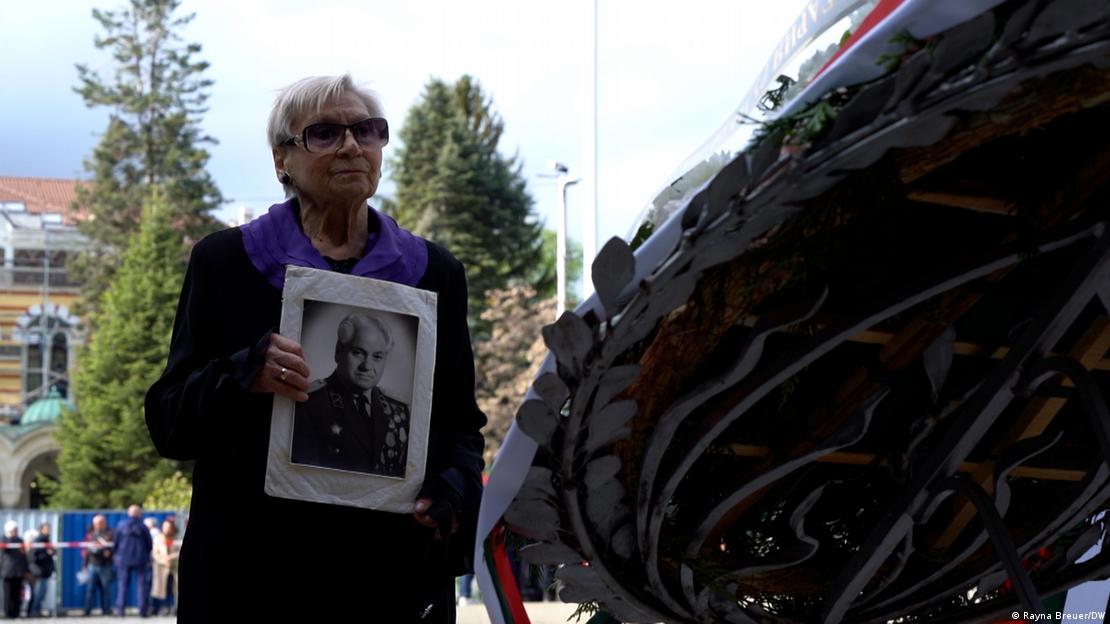
This memorial day is remembered each year in various former communist countries. For those who celebrate this memorial day and wave Russian flags in the centre of Bulgaria, an EU member state, the monument serves as a symbol of the fight against fascism. A war, which they say, is not over: Various members and members of the event express their opinion when speaking to Deutsche Welle, that “West” is the true aggressor in the fight against Ukraine.
Putin's propaganda falls to fertile land in Bulgaria, a country that has not been able to break off Russian influence altogether. Bulgaria has not enlightened its past. The country has taken on little with the revision of history, and disinformations are numerous. Fear of the communist era has not been discussed at all, problematic interpretations of the past are widespread in the country.
The third solution: Changing the Memorial
Another option would be for the monument to be converted into a museum or for the monument to join an existing institution, such as the Museum of Social Art, where numerous portraits of Lenin, Che Guevara, then Bulgarian Prime Minister Georgi Dimitrov and many other top communist figures have been placed. At that time, the art was in the service of propaganda. It was a tool of political power and ideology. The Communist Party merged with the state, and this one-party system controlled every sphere of public, political and cultural life. Art was not excluded from these processes,” says of the curator Deutsche Welle, Nikolai Ustawaliski.

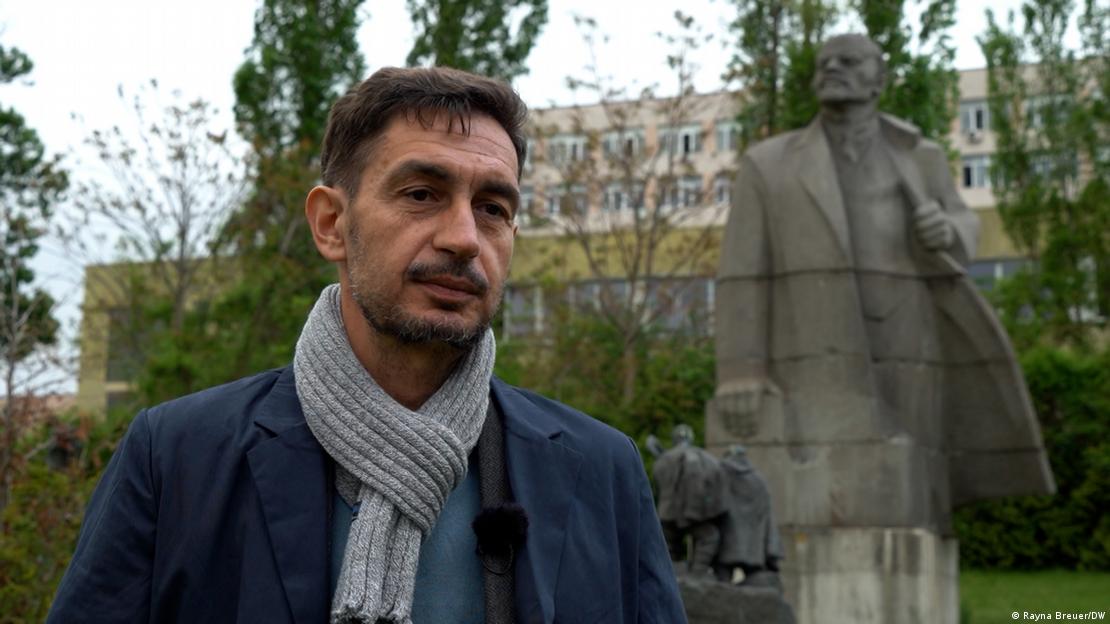
Uswaliski is director of the Museum since 2011 and has attended discussions on the Soviet Army memorial. Since the monument would not take place in the museum park, which is as small as a football field, it mentions another place where the memorial can be established.
The memorial can be divided into parts and placed in Dimitrovgrad, located 220 miles [220 km] south of Sophia. The interesting aspect of sending there is that the city was created in the early years of socialist rule. The city was literally planted. Dimitrovgrad became a symbol of the construction of a new socialist society in Bulgaria,” says Ustvaliski. “Dimitrovgrad is itself a socialist monument, so a monument like that of Sophia honouring a foreign army would go a long way. ”