21 minutes ago
Is there reconciliation between Osman and Kurt for new elections in the north these are the procedures for organisation
Periskopi(3 years ago)
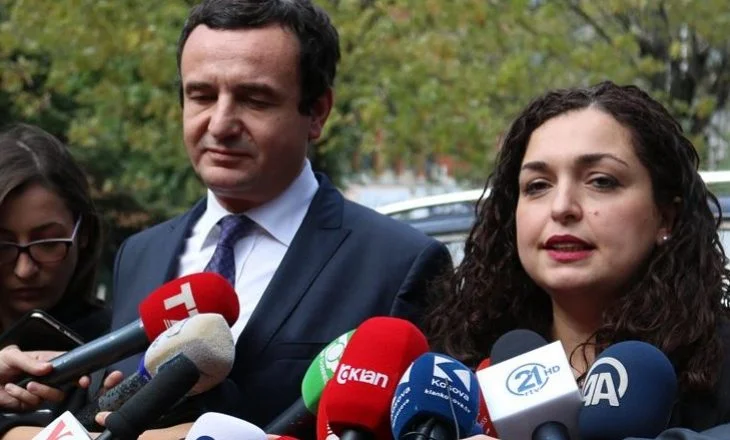
(3 years ago)For the possibility of holding elections in four Serb-run municipalities in northern Kosovo, it seems there is a reconciliation between Kosovo President Vjosa Osmani and Prime Minister Albin Kurti, political connoisseurs Agon Maliqi and Albert Krasniqi say. Keeping elections is being spoken of as an opportunity after pressure from the United States [...]
Keeping the elections is being spoken of as the possibility following pressure from the United States and the European Union for extending the situation in northern Mitrovica, Leposaviq, Zubin Potok and Zvecan.
In these municipalities for five days have protested groups of Serbian citizens, opposing Albanian mayors there. These protests on May 29th turned into violent clashes with members of NATO's mission, KFOR, where dozens of KFOR members were injured, but also protesters.
To get out of this situation from the European Political Community summit in Moldova, French President Emmanuel Macron and German Chancellor Olaf Scholz demanded from Kosovo holding new elections. European Union High Representative Josep Borrell has joined this request.
President Osmani has confirmed that Kosovo is ready to organise new elections in the northern part of Kosovo.
Meanwhile, Prime Minister Albin Kurti said that during a telephone conversation with US Deputy Adviser for National Security, Ion Finer, he must immediately end the violence caused by the <x0) Belgrade-sponsored attacks against security officials” until the new elections in those municipalities.
I don't want to judge this part, whether they consulted it or not. But until there is any denial by the prime minister, what cannot be ruled out is that the president can take unilateral steps, seeing that the situation is coming out of control and that she too has its own political burden, which I am probably using to pressure all sides, including Prime Minister”, says Radio Free Europe's political connoisseur, Agon Maliqi.
Radio Free Europe has also asked the Office of the President and the Prime Minister's Office whether there is agreement between them on new elections, but until publishing this text, they have not responded.
Albert Krasniqi from Democracy Plus (D+) considers there is a reconciliation between the two state representatives (President Osmani and Prime Minister Kurti) to go into organising new elections in northern municipalities, as he says, and to be submitted as an act the resignation of elected mayors.
According to him, there is no scenario or other way out of unnecessary action in northern Kosovo, except that the international allies' proposal is accepted.
The operations in the north have only increased the demand of local Serbs to have an association and will further strengthen competencies, and it is the risk that they already go to the security sector because we have shown that we are not able to govern local Serbs there and they must have autonomous governance”, Krasniqi points out.
Elections, Association of Serb Majority municipalities
According to Agon Maliqi, elections in the north do not make sense unless they produce results, which would help conclude the Brussels and Ohrid Agreement.
The new “elections bring results if there is parallel process and steps forward on the part of the Government of Kosovo for establishing the Association of Major Serb municipalities in Kosovo, because in that case we can have institutions that could implement this accord”, Maliqi estimates.
Elections in four municipalities north of the country (North Mitrovica, Leposaviq, Zubin Potok and Zvecan) are held on 23 April. The mayors of these municipalities, all Albanians, have sworn in 19 May, respectively. These elections were boycotted by the Serb community.
The situation there was tense 26 May, when Kosovo police helped these mayors enter municipal offices despite the resistance of local Serbs.
From the recent elections, chairman in northern Mitrovica has been elected Erden Attic by the Vetevendosje Movement, Lulzim Hetemi in Leposaviq as well as by the Vetevendosje Movement, while from the Democratic Party of Kosovo to Zubin Potok has been elected Izmir Zeqiri, and in Zvecan Ilir Peci.
Democratic Party of Kosovo Chairman Memli Krasniqi tells Radio Free Europe, that neither President Vjosa Osmani nor Prime Minister Albin Kurti “have discussed this topic” [for new elections in northern Kosovo] with the PDK.
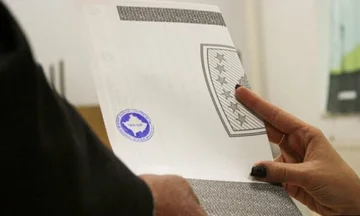
President Osmani, from Moldova, has said that organising the elections allows Kosovo's legal regulation. This, according to her, can be done through a petition signed by 20 percent of the citizens on the voter list who can initiate the process of new elections.
What are the procedures for organising new elections?
In addition to the petition mentioned by President Osmani Eugen Cakoli from the Kosovo Democratic Institute, it shows that the resignation of current mayors is another option.
“There are two legal solutions to have extraordinary elections in the four northern municipalities. The first is to reach any greater political agreement and new leaders resign. While the second option is achieved if 20 per cent of voters rightly sign a type of petition or request was sent to the local municipal Assembly president”, Cacol explains.
Then, Cakoli shows, a voting process should be organised where citizens of relevant municipalities are asked whether they are for or against the dismissal or departure of their mayor, regardless of what the reason may be. It is a mini-referendum that requires at least 50 per cent plus one of voters to vote for the mayors' departure.
In addition to organising new elections in northern Kosovo, the European Union has called on Kosovo to ensure the participation of Kosovo Serbs in the elections and to start work on establishing the Association of Serb-run municipalities.