5 minutes ago
Germany ) centre for NATO's biggest maneuver
Periskopi(3 years ago)
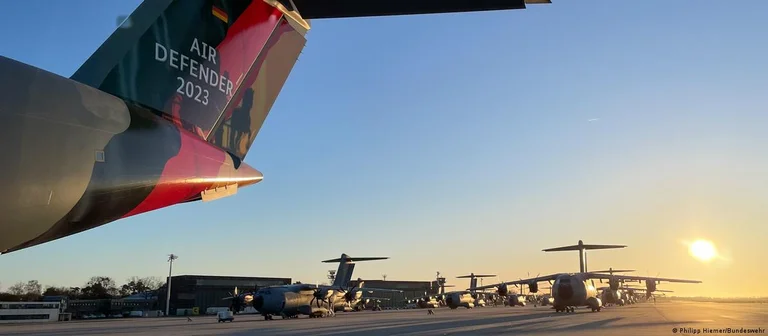
(3 years ago)Air Defender 23 aims to demonstrate that in case of the NATO crisis, it can protect European airspace. The maneuver gets new meaning because of the war in Ukraine. Germany has been chosen as the most logistical maneuver centre in NATO's history for several reasons. Initially because of its geographic location, [...]
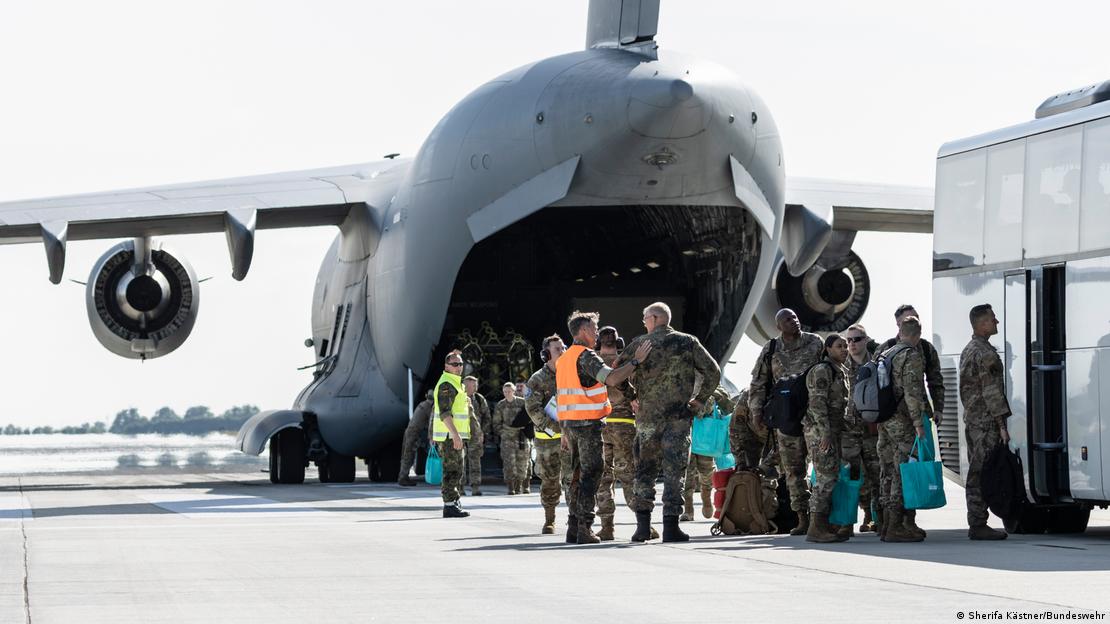
Germany has been chosen as the most logistical maneuver centre in NATO's history for several reasons. Initially because of its geographic location, in the heart of Europe. Further for military infrastructure since the Cold War. In six German military airports, over 240 planes from 25 countries will be deployed for a period of time. Over 10,000 NATO soldiers will participate in the maneuver. In addition to the states of Nato, Sweden and Japan are also participating.
German combat aircraft is present with 70 planes as well as helicopters. Germany is the only country to participate in helicopters in the maneuver. The German contingent is the second largest in maneuver. The first are the United States. They will send 100 aircraft: F-15, F-16 and the most modern aircraft they have, F-35. The US has the largest military infrastructure in Germany. The F-35 planes will be stationed for maneuvering on one of the American bases in Germany, in Spain, at Rheinland-Pfalzi.
With maneuvering, Nato wants to demonstrate that in case of crisis her planes can protect European airspace. The plan to maintain training “Air Defender” has started in 2018. But maneuvering takes on new meaning because of the war in Ukraine.
The Surveillance Space
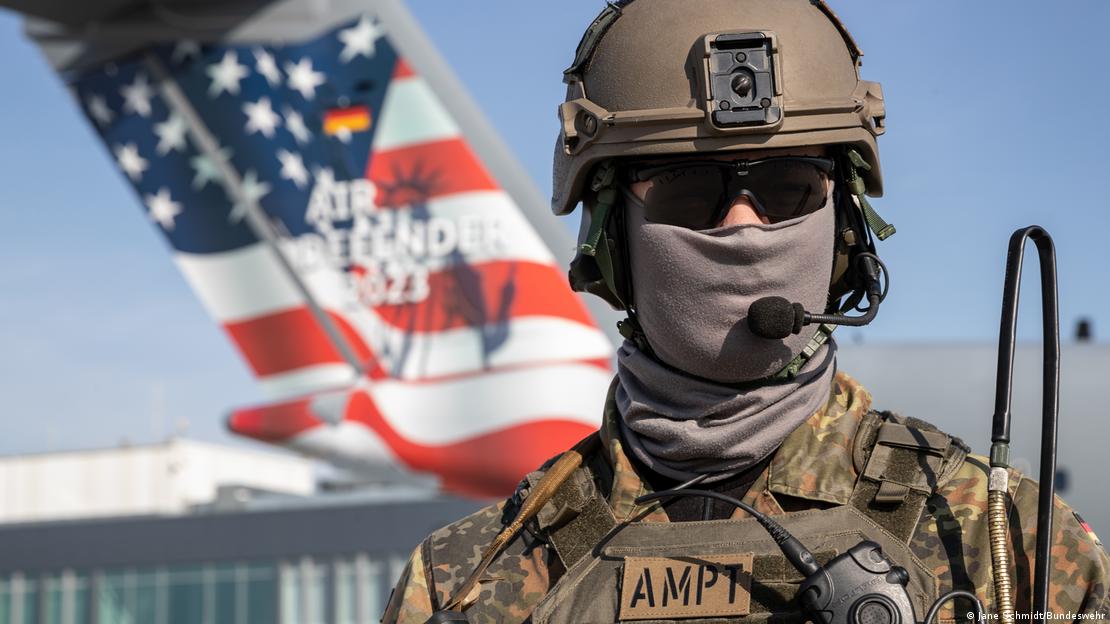
The first American planes arrive in Germany these days. The maneuver starts on June 12th and will last until June 23rd. DW has learned that Germany's sky will be divided into three areas of flight to practice emergency: the area over northern Germany and the Baltic Sea, in the eastern area and in a smaller area in southern Germany. According to German media, about 90 per cent of flights will be conducted in Germany and in coastal border regions, in the North Sea and the Baltic Sea. German Air Force Inspector Lieutenant General Igo Gerhartz said that “alone separate flights” will be conducted near the border with Russia. But he stressed that they will be fully “skenare defensive”. Manufacturra limit “to the protection of Natos” territory.
NATO's maneuver is not just air. There are also exercises on the ground. Lieutenant General Gerhartz told the media that part of the exercise is also “evakim since an airport”. The prepared scenarios also include the support of infantry from air to air and combat against enemy aircraft. But also the capture of medium-range missiles by NATO bombers. Protection from submarines and enemy ships will also be exercised on the North Sea.
Will Germany's airspace be blocked during the maneuver?
Germany's sky is one of the most dynamic spaces of European air transport and the deadlock would feel. It is planned for the designated maneuvering areas to be blocked for just a few hours, each day during the maneuver. They'll be blocked alternately, so not simultaneously. German aeronautics expert Clemens Bolzinger told DW that German air traffic control has a feature compared to other European states. For 30 years, the work of civil and military air traffic controllers has been integrated in Germany. The reason is because German airspace is very popular. In Germany, civil and military flights are co-ordinated daily with each other at normal times, even outside of maneuvers. In France, for example. Air forces regularly block entire areas of flying, scheduled flights, and even normal watches.

German air traffic studies have shown that no cancellations of civil aviation flights are expected. There will be more, several minutes delay “ ”, said. Also, not to affect the calm of citizens, flights will not take place at the weekend or at night. But only day, and only with a three-hour block. The expert Bolinger questioned by the DW added at the same time that “has many factors that could cause delays, such as storms, other weather factors, or many traffic”. Even the German Air Force inspector said that even if there is a time limit for civil aviation, the consequences should be accepted, in the interest of security. Lieutenant General Gerhartz said the “goal of maneuvering is to allow people to continue flying on holiday, in peace and freedom”. So if there are time limits for civilian aircraft, they are expected to be small.