a minute ago
EU leaders seek implementation of agreement towards normalisation of reports
Periskopi(3 years ago)
(3 years ago)The situation in Kosovo and the process of normalising reports between Kosovo and Serbia are expected to be topics that will be addressed next week by the foreign ministers of the member states of the European Union, but also by European leaders during the bloc's summit at the end of the week. So warned diplomatic sources in the EU, having [...]
So warned diplomatic sources in the EU, which have expressed great concern for the recent tensions in Kosovo's inhabited Serb majority north, which, according to them, have also jeopardised the process of dialogue for normalisation mediated by the EU.
At these meetings, according to diplomatic sources, Kosovo and Serbia are expected to be called for the immediate reduction of tensions and the return to dialogue. The two countries are also expected to be warned about the consequences they may face if they do not prove their will for prudent and constructive conduct.
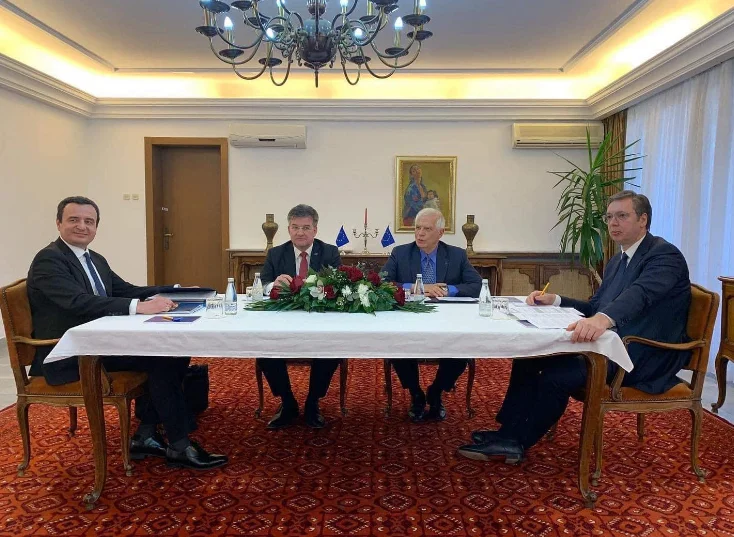
Radio Free Europe has had access to the text of the draft, which is prepared to be adopted at the EU leaders' meeting. The European Council will seek and implement the agreement on the road to normalisation of reports that had been reached in Brussels late February, as well as its implementation Anex, reached in Ohrid in March.
The European Council condemns recent incidents in northern Kosovo and calls for the immediate extension of the situation, given the key elements already displayed by the European Union”, the text says.
“As the next step, continuing the EU facilitated dialogue, and quick implementation of the Agreement on the road to normalisation and implementation of the annex are necessary. Failure to reduce tensions will have negative”, says this text.
The agreement towards normalisation of reports requires the parties to accept each other's documents and symbols, including passports, diplomas and license plates.
Also, this agreement requires that the parties implement all agreements reached so far in the dialogue on normalising relations.
Otherwise, tensions in Kosovo's Serb-run north have increased since May 26th. That day, Serbs began protests against entering the municipal buildings of the young Albanian mayors of Zvecan, Zubin Potok and Leposaviqi, who entered the buildings with the assistance of the Kosovo Police.
Since then, local Serbs have protested in the north, opposing leaders who were elected on April 23rd elections that were boycotted by Serb parties and populations.
On May 29th, protests escalated into violence, with Serbs fighting in Zvecan with NATO peacekeeping mission soldiers in Kosovo, KFOR.
The EU and the United States have submitted to Kosovo Prime Minister Albin Kurti, three tensions-related requests: calming the situation in northern Kosovo, holding new elections in four municipalities in the north, and returning to dialogue for normalisation of reports.
Kurti, meanwhile, has presented a five-point plan, which envisions holding elections. However, he has said that to hold free elections in the north, it needs a legal state.