9 minutes ago
Weber: Without Serbs returning to institutions there could be implementation of agreements
Periskopi(3 years ago)
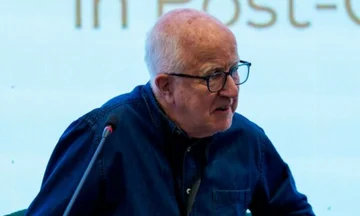
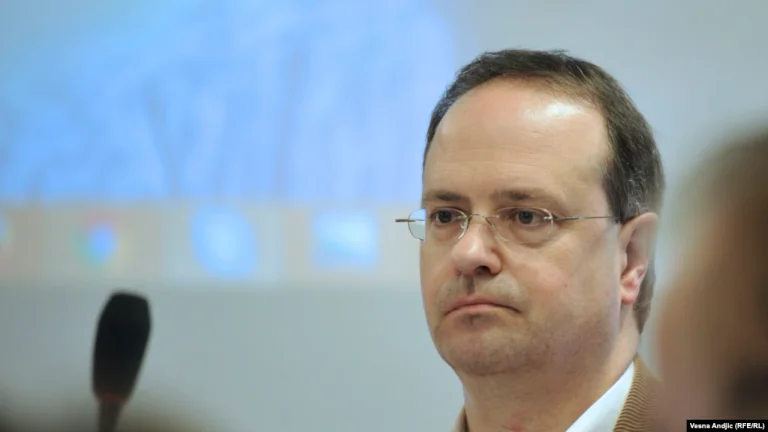
(3 years ago)Bodo Weber, an expert for the Balkans and senior associate of the Council for Democratic Policy in Berlin, thinks Kosovo and Serbia will have difficulty implementing the agreement reached in Brussels, with the current situation in four Serb majority northern municipalities. Weber tells Radio Free Europe that the European Union did [...]
Weber tells Radio Free Europe that the European Union made a mistake when it reached an agreement between the two states earlier this year after the majority of Kosovo Serbs in the north resigned from institutions from November last year and still have no plans for their return.
And that's what we're looking at, not just from the [Bruksel Agreement], but from the agreement on the Implementation Annex at Ohrid”, said Weber.
Kosovo and Serbia, currently, are discussing the issue of establishing an Association of Serb majority municipalities.
On 2 May, the Government of Kosovo rejected a draft state that was introduced to this association, and Kosovo Prime Minister Albin Kurti proposed a <x0-vision <x0ndrate-vision” to this end during a meeting he held with Serbia's president, Aleksandar Vuciq, in Brussels.
His vision, as Kurti says, is based on a Croatian model for national minorities and, as he said on May 11th, is interested in co-operating “to further define this vision for the Serb community in Kosovo”.
Commenting on this Kurt proposal, Weber says the problem lies, not in one model or other of association, but in the whole concept of a one-ethnic union with the risk of misuse by Serbia.
This is the challenge that cannot be solved by any model. So, there must be a middle way between implementing this idea (the Association) but doing it in something that can actually strengthen local governance, but also something that isn't built into a form that can in the future be used as a tool for Serbia to mix in Kosovo's internal affairs”, he says.
According to Weber, the reason why association as such could cause problems is the fact that Kosovo Serbs (most) are led by a Serb-List party that has known ties to Belgrade.
He says democratisation of this community's policy should be done with the intervention of the West.
The European Union's special envoy for dialogue with Serbia, Miroslav Lajcak, visited Kosovo and spoke with Serb citizens and political representatives in the north during the visit.
Lajcak also met with representatives of the Serbian List in Northern Mitrovica.
He said the purpose of his visit to the north was to get” the first-hand information from the people living here to see how they view the situation”.
What I heard bothered me. We must avoid any possibility of escalation and full focus on normalisation”, he wrote in a Twitter post.
After the meeting, the Serbian List announced that Lajcak discussed the political and security situation and that they estimate that Pristina “open issues are resolved with unilateral movements and institutional violence”.
The Serbian list said it does not recognise the election results that have been held in municipalities in the north.
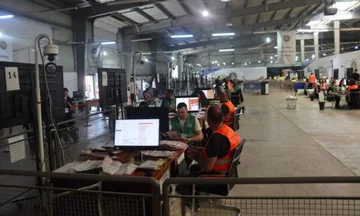
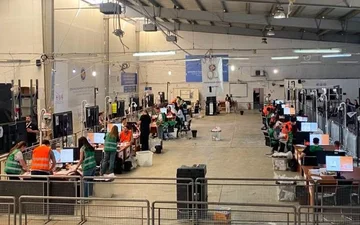
On April 23rd of this year, local municipal elections were held in four Serb municipalities in Kosovo. These elections were announced after the majority of Serbs in that area resigned from Kosovo institutions. Serbs, in general, boycotted the elections, and Albanian representatives were elected through votes from a very low voter exit in four municipalities.
According to CEC data, 1,567 voters or 3.47 percent of the total number of citizens there were eligible to vote.
On May 2nd, in Brussels the latest round of high-level dialogue has been held, between Kosovo Prime Minister Albin Kurti and Serbia's president, Aleksandar Vuciq.
Kosovo and Serbia have been holding negotiations on normalising relations since 2011.
The agreement on the Association of Serb-run municipalities was reached in 2013, but has never been implemented.
Serbia has insisted on broad competencies for this association, while Kosovo has said such ones would jeopardise the functioning of the state.