9 minutes ago
New study sheds light on how the first humans evolved
Periskopi(3 years ago)
(3 years ago)Scientists have discovered an amazingly complex origin of our species, rejecting the argument that modern humans developed from one place in Africa over a period of time. Analyzing the genomes of 290 living people, researchers concluded that modern people descended from at least two populations living together in Africa [...]
By analyzing the genomes of 290 living people, researchers concluded that modern people descended from at least two populations living together in Africa for a million years before expanding across the continent. The findings were published Wednesday in Nature magazine.
There is no single country,” said Eleanor Scerri, an evolutionary archaeologist at the Max Planck Institute for Geoarcheology in Jenna, which was not included in the new study.
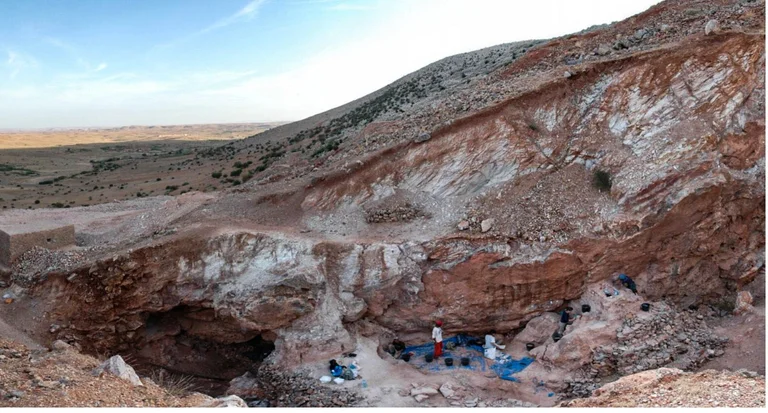
Paleolanthropologists and geneticists have found evidence showing Africa as the origin of our species. The oldest fossils that can be belonged to modern people, dating back to 300,000 years, have been discovered there. That was the oldest stone tools used by our ancestors.
Human DNA also shows Africa. Africans have a large quantity of genetic diversity compared with other people. This is because people lived and evolved in Africa for thousands of generations before small groups of relatively small generation groups began to expand to other continents.
The Discovering of the Past - A Timely Discovery
A underwater island discovered by sea archaeologists on the coast of Florida once had a quarantine hospital and cemeteries for those staying at Fort Jefferson, a civilian war-time military castle.
Down the Drain: Archaeologists have found a pile of stones from an 1800-year-old bathroom in England.
Obsidian Cliff: The use of X - ray technology in the precious stone of the Yellowston monument is helping researchers to discover travel and migration of people thousands of years ago.
A burial place in England: Archaeologists have discovered an ancient coffin in Leeds that can help shed light on the end of Roman Britain and the creation of Anglo-Saxon kingdoms.
Within Africa's vast space, researchers have proposed various countries as the birthplace of our species. Early human fossils in Ethiopia moved some scholars to look toward East Africa. But some lively groups of people in South Africa seemed to have very distant ties with other Africans, suggesting that people could have a deep history there.
Brenna Hann, a geneticist at the University of California, Davis, and her colleagues developed software to conduct large-scale simulations of human history. Researchers created many scenarios of different populations that exist in Africa during different periods of time and then observed which of them could produce the diversity of DNA found in living humans today.
We can ask which types of models are truly reliable for the African continent.Dr. Hen.
Researchers analyzed DNA from a number of African groups, including Mende, farmers living in Sierra Leone in West Africa; Gumuz, a company of hunters in Ethiopia; Amhara, a group of Ethiopian farmers; and Nama, a group of hunter-gatherers in South Africa.
Researchers compared the DNA of these Africans to a British person's genome. They also watched the genome of a 50,000-year-old Neanderthal found in Croatia. Previous investigations had revealed that modern people and Neanderthals had a common ancestor who lived 600,000 years ago.
The Neanderthals expanded across Europe and Asia, combined with modern people who emerged from Africa, and then disappeared some 40,000 years ago. Researchers concluded that a million years ago, our ancestors existed in two different populations. Dr. Hen and her colleagues call them Stem1 and Stem2.
About 600,000 years ago, a small group of people emerged from Stem1 and became Neanderthals. But Stem1 lived in Africa for hundreds of thousands of years after that, as did Stem2.
If Stem1 and Stem2 had been completely separate from each other, they would have accumulated a large number of distinct mutations in their DNA.
Instead, Dr. Henn and her colleagues discovered that they had remained just on average as different as the living Europeans and West Africans are today. Scientists concluded that people had moved between Stem1 and Stem2, mating for children and mixing Their DNA.
The model does not reveal where the people of Stem1 and Stem2 lived in Africa. And it is possible that the groups of these two groups have moved around a lot over the vast length of time during which they existed on the continent. About 120,000 years ago, the model shows, Africa's history changed dramatically.
In southern Africa, people from Stem1 and Stem2 came together, creating a new background that would lead to Nama and other living people in that region. Somewhere else in Africa, a special union of Stem1 and Stem2 groups took place. This union produced a background that would create living people in West Africa and East Africa as well as people who expanded outside Africa.
It is possible that climate unrest has forced people to Stem1 and Stem2 in the same regions, making them unite into single groups. For example, some groups of hunters may have had to pull off the shore while sea level rose. Some African regions became dry, potentially sending people in search of new homes.
Even after these unions 120,000 years ago, people of origin only Stem1, or only Stem2, seem to have survived. The DNA of the Mende people showed that their ancestors were combined with the Stem2 people only 25,000 years ago. “Hen.
She and her colleagues are now adding more genomes from people in other parts of Africa to see if they influence models. It is possible that they discover other populations that remained in Africa for hundreds of thousands of years, ultimately helping to produce our species as we know it today.
Dr. Szerri speculated that living in a network of mixed populations throughout Africa may have allowed modern people to survive while Neanderthals disappeared. In that agreement, our ancestors could maintain more genetic diversity, which in turn could have helped them to endure changes in climate, or even develop new adjustments.
This diversity in the roots of our species may have been ultimately the key to our success,” said Dr. Scerry. /abcnews. al