14 minutes ago
G7 “proclaims enemy” China
Periskopi(3 years ago)
(3 years ago)The G7 leaders sent a strong message to Russia, inviting Voldymyr Zelensky to Hiroshima, however, besides the official Kremlin, another rival who received great attention at this summit was China. Hardest in his rhetoric has been British Prime Minister Richi Sunak, under whom China makes up the largest “sfides [...]
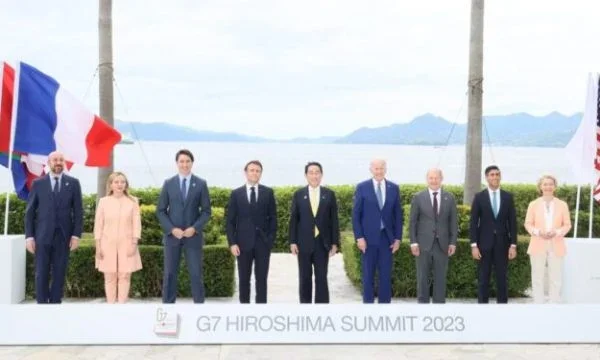
The G7 leaders sent a strong message to Russia, inviting Voldymyr Zelensky to Hiroshima, however, besides the official Kremlin, another rival who received great attention at this summit was China.
The fiercest in his rhetoric has been British Prime Minister Rizi Sunak, under which China makes up the greatest “challenges of our era”, because it is becoming more and more authoritarian within but also abroad. The most important part of their message focused on what they called “economic change”.
It's a balanced action for G7. Through trade, their economies have become inextricably dependent on China, and this dependence relationship has been seen as one of the problems you will have to solve in time.
They have also launched a <x0 co-ordination platform”. This is a new framework for opposing the use of punishment practices for political purposes, as China has recently done. While it is still unclear how this will function exactly, it is likely that countries that help each other by increasing trade or funding to resolve any impasse imposed by China.
The G7 also plans to strengthen supply chains for important goods, such as minerals and semi-compliance, and strengthen digital infrastructure to prevent hackering. This means that the parties will work together to ensure that their technologies, especially those used in military and intelligence, do not end up in the hands of malicious “acators”.
The United States is already doing so with the ban on the exports of chips and chip technology to China, which Japan and the Netherlands have joined. The G7 is making it clear that such efforts will not only continue but will increase despite Beijing protests.
However, when new economic policies were introduced, most of their statements did not directly address China in an apparent diplomatic effort not to exacerbate the relationship.
It is noteworthy that the answer from China has not been missed. It appears to be seeking to establish its alliances with other countries, and late last week, as soon as the G7 summit began, it hosted a parallel meeting with Central Asian countries.
It is still not clear whether the G7 plan will work, but will likely be welcomed by those who have called for a clear strategy to deal with China's violations.
G7 consists of the United States, the United Kingdom, Canada, France, Italy, Japan and the European Union.