18 minutes ago
EULEX head: Request immediate truce
Periskopi(3 years ago)
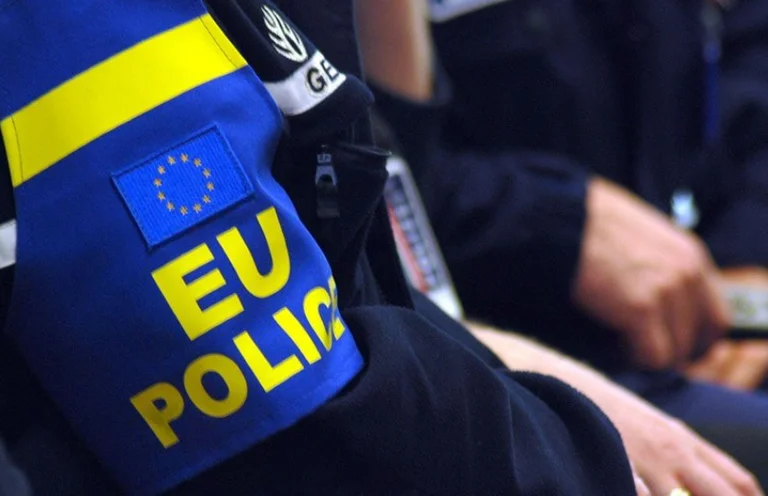
(3 years ago)EULEX chief in Kosovo Lars-Gunnar Wigemark has called for calming the situation in northern Kosovo, where several KFOR members remained hurt by the clashes they had with Serb protesters. Wigermark said acts of violence are not solutions, while added that rule of law is a fundamental issue, writes Reporter Online.net. [...]
Wigermark said acts of violence are not solutions, while added that rule of law is a fundamental issue, writes Reporter Online.net.
I would recommend an immediate ceasefire to all violence, for protesters to withdraw, so that all actors, including Kosovo police, should certainly show restraint. We know there have been concerns about Kosovo police, in particular for special units, but again, these issues should be discussed in a calm and orderly manner.”, he said in an interview for AB C# source files NEWS.
On the other hand, he said there are many elements according to him, strong criminal elements in northern Kosovo that he says benefit from lack of stability.
We know that there are very strong criminal elements, organised crime in northern Kosovo that benefit from this lack of stability, uncertainty, I am convinced that most Kosovo Serbs would prefer not to have these elements.”, he said.
Part of the interview:
I would certainly recommend an immediate ceasefire to all violence, for protesters to withdraw, so that all actors, including Kosovo police, should certainly show restraint. We know there have been concerns about the Kosovo police, in particular for special units, but again, these issues should be discussed in a calm and orderly manner. There has been a security vacuum in northern Kosovo since late last year, since November, beginning with the resignation of all Kosovo Serb police officers, but also the judiciary and four mayors of municipalities, as you know, that is why new elections were made, scheduled at the end of December last year. The elections were then postponed due to security concerns. And we can now see that perhaps some of those concerns were real, though when elections were held in April, they were quite calm. But most or all Kosovo Serbs boycotted the elections. So there's a kind of sequence of events.
I think EULEX helped break the situation at the end of last year, which eventually led to the removal of barricades and so on. The end of this, as I said, should be and eventually be in a phase, sooner than late at the negotiating table under ease, I hope, of the European Union and with the support of all other players. There may be players who want to see a deterioration of the overall situation. And for them, I think we can only condemn their intentions if they want to see people injured, whether they are soldiers or civilians or anyone else, journalists, the media. Today there have been a series of attacks on media teams. I think you mentioned it. Today you too were exposed. And this is just a vicious circle, as we said, a spiritual escalation. So this should stop and instead there should be a positive spiral, let's say, return, first of all, lower tensions, return to peace.
I think that people in northern Kosovo, I noticed this, I said that almost a year ago, they're scared. They're scared. There's been a lot of movement over a year and a half. I think this interview is too short to explain all the reasons, but we've seen some kind of gradual escalation of steps taken. There were attacks more than a year ago on a number of Kosovo police patrols as they were trying to close some of the smuggling routes crossing between the so-called green border there. There were, as I said, allegations against Kosovo special police units for excessive use of force against civilians. There's a long dispute over plates. There have been expropriations of lands belonging to local residents in northern Kosovo in order that, we assume, or we know at least one or two cases, of building new police spaces, which is a source of concern to the local population, saying why should there be more police here? There's nothing to be afraid of, and so on. At the same time, we know there are very strong criminal elements, organised crime in northern Kosovo that benefit from this lack of stability, uncertainty, I am convinced that most Kosovo Serbs would prefer not to have these elements.