4 minutes ago
Erdogan's eventual defeat would be blow to Putin
Periskopi(3 years ago)
(3 years ago)As fighting between Russian and Ukrainian forces continued last month, President Vladimir Putin joined his Turkish counterpart, President Recep Tayip Erdogan, via a video connection to celebrate the derivative of the first nuclear project for non-war use of this NATO member state. Built by nuclear corporation [...]
Built by the Russian state-owned nuclear corporation Rosatom, the massive thermal power plant, $20 billion, it may well symbolize the energy and economic connections the two leaders established during their two decades in power as leaders of their respective countries.
Putin's virtual participation in the grand ceremony may have been fostered by the internal need to show Moscow's influence abroad, rather than to support another authoritarian leader in need.
The April 27th event took place less than three weeks before the May 14th presidential elections in Turkey -- Erdogan's most difficult challenge to date.
Amid deep economic difficulties, polls have shown he is behind Kemal Kilicdaroglu, leader of the centre-left Republican People's Party (CHP).
During the ceremony, Putin hinted delicately at his favourite election outcome, which would have implications for Moscow, Kiev, Washington and Brussels.
The construction of the first nuclear power plant in Turkey and... the creation of a new industry, advanced with high technology from scratch, is another convincing example of how much you are doing, President Erdogan, for your country, to boost its economy, for all Turkish citizens”, Putin said during live transmission throughout Turkey.
“You are able to set ambitious goals and walk faithfully toward their implementation”.
Putin's praise was only the last sign of his support for Erdogan, 69, whose authoritarian rule and anti-Western rhetoric have served Moscow's interests by undermining NATO unity and underestimating sweeping Western sanctions imposed on Russia for its invasion of Ukraine.
Last summer, Russia transferred billions of dollars to the Turkish Rosatom unit for construction work long before the deadline -- a move for which experts said it was aimed at supporting Turkey's unstable currency.
If Kilicdaroglu, a 74-year-old former Democrat who ran the country's social security agency, wins the elections, Putin's support for Erdogan could result in ineffective.
Kilicdaroglu has expressed his intention to restore relations with Europe and the United States, which Erdogan damaged through his political crackdown and involvement in regions such as Syria and Nagorno-Karabaku. A possible victory could result even with Sweden's quick NATO accession -- a step Russia has been insistingly opposed.
Erdogan's “Disphat would not be good for Putin”, said Mark Katz, professor of political science at George Mason University, which focuses on Russia's relations with the Middle East.
“Putin will have no choice but to address Kilicdaroglu if he is the winner. He will have to accept Kilicdaroglu's approach to some extent with the West, in order to discourage him from getting even closer to him”.
Climbing leaders like Erdogan and Putin has been a cause for concern for Washington and Brussels since the beginning of the century, as the pluralistic advances made in the decade following the fall of communism in Central and Eastern Europe have deteriorated. If Erdogan were to lose, it would indicate that democratic forces across the globe are still “alive”, says Steven Cook, a senior associate for Middle East and Africa studies at the New York-based Council for Foreign Relations.
The “would be a blow to that kind of global, populist, whose leader is undoubtedly Putin”, says Cook.
Brotherly Nearness
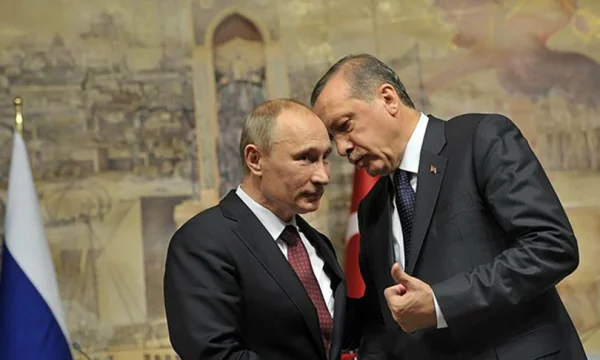
Putin likely met with Erdogan more often than any other foreign leader outside the former Soviet Union. Since Erdogan took over the prime minister's post in 2003, during Putin's first presidential mandate, both have created a strong working relationship, which some have described as brotherly “acre”.
Although Putin and Erdogan have sometimes had disagreements with each other, as in 2015, when Putin accused Turkish warplanes of dropping a Russian fighter plane near the Syrian-Turkish border, which he called a “thic behind his back”, they have also taken opposite positions for various important foreign policy concerns, especially for the invasion of Ukraine by Russia. Ankara has continued to secure Kiev's deadly fears.
However, they are united by their common opposition to what they see as a global order dominated by the West and their shared disdain for some of the values widely supported in the West.
The “they both see themselves as [the leader] disgruntled great powers not respected enough and both have complaints against the West. There they found one another Erdogan and Putin”, Katz said.
Whatever difference existed between them, as long as Erdogan was anti-Western, this was the main thing for Putin”, he said.
Opinion polls have given Kilicdaroglu, which is backed by a six-party alliance -- a slight advantage over Erdogan. If none of the four candidates get more than 50 per cent of the vote, the runoff will be held on May 28th.
During the 2000s, when he served as prime minister, the most influential position in Turkey at the time, Erdogan was popular and the country's economy flourished. However, its popularity has declined, as rising inflation and declining living standards in recent years have affected many voters.
Stressed Relationships
Erdogan's reputation in the West has fallen as a result of his actions, which include turning back democracy, suppressing freedom of speech, weakening government institutions both courts and pursuing what analysts describe as a foreign policy <x0-areggressive” and independent that includes closer ties with Putin, leading to strained relations, both Washington and Brussels.
Following an attempt on the coup of 2016, which Erdogan blamed a US-based clergyman for, he reached an agreement with Putin to buy a Russian anti-aircraft system S-400 of $2.5 billion, which caused US sanctions against the Turkish defence industry.
The United States rejected the acquisition, fearing that the Russian system could enable Moscow to gather intelligence on its F-35 combat technology, which Turkey had ordered and was also helping build it.
Experts suggest that Erdogan may have downplayed the American Government's willingness to impose sanctions on the defence industry, and as a result, felt that he should continue with the controversial S-400 agreement with Russia to avoid damaging his reputation.
In addition to strained relations with the US, Erdogan has also had conflicts with several European Union countries, including France for Turkey's intervention in Libya and Greece and Cyprus for energy deposits and maritime borders in the eastern Mediterranean.
He has even blocked Sweden and Finland's efforts to join NATO in response to the Russian invasion of Ukraine, accusing them of sheltering “of Kurdish terrorist organisations”.
If Kilicdaroglu wins the elections, he has pledged to restore rule of law, approve a parliamentary form of government and address the US issue over S-400.
Analysts predict that he, too, would speed up support for Sweden's NATO entry./rel/