21 minutes ago
Slovakia after the agreement in Brussels: Await constructive approaches to dialogue
Periskopi(3 years ago)
(3 years ago)The Franco-German idea for resolving the problem between Kosovo and Serbia was adopted by the European Union and introduced by Union High Representative Josep Borrell as a proposal that has the support of 27 member states, including those that continue to reject recognition of Kosovo's independence. Monday's meeting in Brussels, Borrell [...]
Monday's meeting in Brussels, Borrell presented both progress and achievement of the agreement between Kosovo and Serbia based on this plan, even though nothing was signed and there was confusion in Kosovo and Serbian opinion about the real result achieved.
But the lack of signing this agreement is causing the disobedience of non-recognising states to change their stance over Kosovo's citizenship.
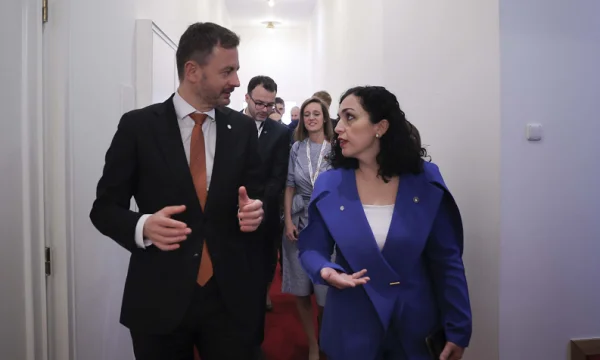
In a response to the Express, Slovakia's Foreign Ministry considers a significant achievement of the parties' reconciliation on the European proposal, but want agreements signed.
The resolution of the recent meeting in the dialogue is an important step towards normalising relations between Belgrade and Pristina. This could be an incentive for further negotiations leading to the legally binding agreement for the full normalisation of their” relations.
For the future of the dialogue, Slovakia shares the same position as the EU.
The “on both sides expects the implementation of all past agreements and a constructive approach to future rounds of negotiations. M. Lajcak and J. Borrell has our full support in facilitating the” dialogue, the answer concludes.
Disobedient is Spain, which last night said that even after this meeting, will not change its position on Kosovo's independence.
“Spain takes its stand for its non-recognition of the unilateral declaration of independence adopted by Pristina in 2008”, it says in that response.
However, Spain's Ministry of Foreign Affairs, saying the issue of Kosovo territory must be resolved with dialogue, has paved the urgency for this issue to be resolved.
We defend the need for the Kosovo territory issue to be resolved through dialogue between Belgrade and Pristina. It is time to make final efforts to resolve the Kosovo issue. We support the EU High Representative's strong interest in resolving the conflict and fully supporting the job of the province for dialogue, Lajcak”.
Just as Slovakia and Spain said the outcome of the February 27th meeting was open, but that there is still work to be done on reaching an agreement on normalising reports based on the EU proposal, which has been welcomed by the European Council in February.
“Although it is positive that both Pristina and Belgrade have agreed to the text of the proposal without any change, there will be no strong agreement without having a clear plan on how to implement”.
Ahead of the February 27th meeting, Emissar Lajcak has held meetings with officials from the five non-recognising countries of Kosovo's independence. On the other hand, Prime Minister Kurti has insisted that from the agreement with Serbia, Kosovo should gain recognition of Spain, Slovakia, Cyprus, Romania and Greece.