33 minutes ago
Precious Corals for “
Periskopi(3 years ago)
(3 years ago)Precious corals are used by collectors for collections, and their price is always rising. This benefits a profitable smuggling network created in the Mediterranean. What you suffer is nature. Mourad Aruaui has dedicated his life to coral. In his small shop located in Tabarca, Tunisia, this artist of [...]
Mourad Aruaui has dedicated his life to coral. At his small shop in Tabarca, Tunisia, this artist turns coral into jewelry. He's managed to give his family a good life for the past 20 years. Everybody works together in the store. Some work in the morning, others in the afternoon,” proudly shows the Tunisian artist. “We make all coral decorations here ourselves, starting with raw materials and finishing with sale. My boys grew up here in the store, so to speak. ”
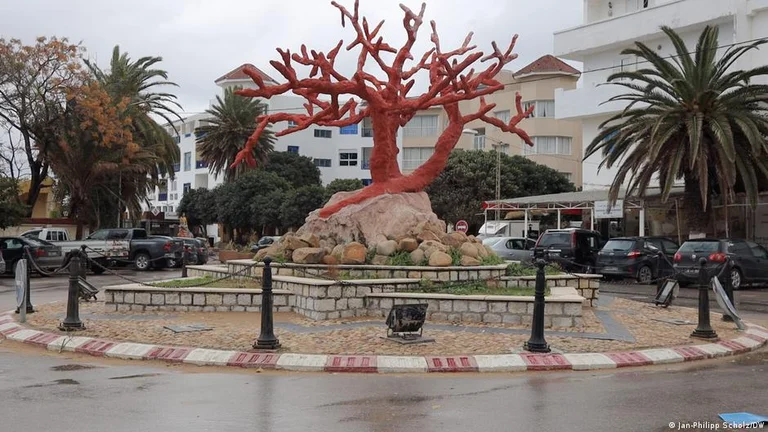
Arfaouis' birthplace, Tbarka, is located on the northern Sunnisian coast of the Mediterranean, about 200km from the Italian island of Sardinia. Everything in this small port city has to do with corals for centuries. But more and more local businessmen are giving up because they lack supply. And when there's a new supply coming from official coral divers from the region, then prices are staggering. Nine out of ten shops have already been closed, local residents show.
 Fear of Coral Extinction
Even Mourad no longer believes his children will continue to deal with this business. Perhaps one day when there is no more coral. They are disappearing”, the artist says by warning. “The small amount of coral now leaves people unable to buy coral ornaments. A precious coral necklace costs thousands. ”
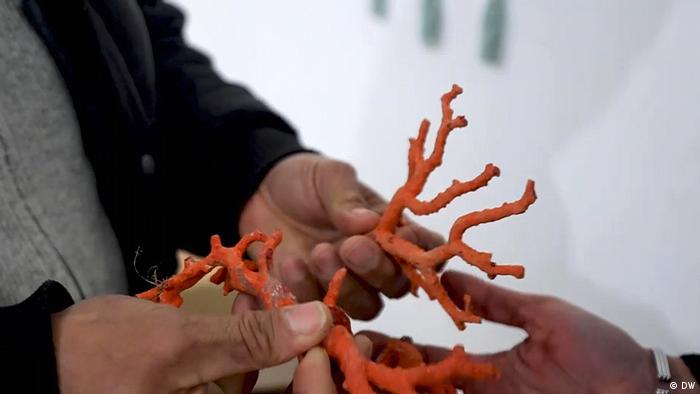
Precious corals, also called red corals, are close - knit creatures and come mainly from the Red Sea and the Mediterranean. They are light - sensitive, so they live mostly in the depths of hundreds of meters of the sea. Because of the important role they play in the local ecological system, they are also called the Mediterranean Red Trees. Since the age of antiquity, the Red Trees have been the first coveted material to produce jewelry. Countless divers have lost their lives in search of them. The Union for Nature Protection, (IUCN), has included precious corals on the list of species endangered by extinction.
For a long time, corals were caught with large fishing nets that destroyed almost everything at a certain point. Since the 1980s, this practice has been banned in most countries. In 2019, the Fisheries Commission for the Mediterranean (GFCM) provided a series of other instructions to preserve precious corals from extinction. Among other things, they allow water immersion to reach a depth of 50 feet [50 m]. In addition, member countries have been urged to develop a system to follow better the origin of precious corals. Even in Tunisia, only dozens of licensed divers are now allowed to catch coral, at least officially.
![Some divers dive deeper than 100 feet [150 m] to catch precious corals](https://static.dw.com/image/64774824_404.jpg "Some divers dive deeper than 100 feet [150 m] to catch precious corals") Some divers dive deeper than 100 feet [150 m] to catch precious corals
Some divers dive deeper than 100 feet [150 m] to catch precious corals
“
Many businessmen from Tabakka repeatedly mention the burly black market of favorite marine life. Fulfilling conditions cannot be controlled and high prices lure many criminals. No one's talking about this <x0gt ghost trade”. So says a current study supported by the European Union, under which precious coral smuggling from the Mediterranean is worth millions of euros each year, and that the most important markets of illegal businesses are North Africa and South Italy.
Finally, interior people from the sector are willing to talk. Salah Byaway has been himself for a long time a diver, always on leave, he says. In the meantime, her age no longer allows her to sink. He gives his boat to other divers. The “of course is highly illegally fished, and this causes big problems,” explains Byui. Particularly in neighboring Algeria do many valuable illegal corals catch up. In some lands the waters no longer have any fish.
In Algeria, where precious corals are also called <x0) red bull's”, and where the rules for their capture are even stronger, an entire ghost industry has been created. According to experts, about 3 tonnes of coral is smuggled here annually, worth an illegal market value of millions of euros. Police have already confiscated trucks in which precious corals were hidden along with the Ecstasy tablets.
“Gati as cocaine”
Food usually passes through Tunisia for shipping worldwide, especially in southern Europe and Asia, where demand is great. In the place where they end up, it's hard to extract their roots “with corals, it's like cocaine,” complains Taucher Byaui. Some time ago we caught an Italian carrying illegally to his coral boat in Italy. Everyone knows this smuggling works here.”
On the other side of the Mediterranean is Torre del Greco. This small center in front of Naples's gates is viewed as the world capital of the illegal coral trade. Many traditional firms here produce valuable coral jewelry. Unlike Tabbarka, the atmosphere here is good, and rising prices of raw materials can still be paid. Companies run by families here supply major international brands such as Gucci and Bulgaria and many luxury goods designers, precious corals are back in fashion.
Even in Torre del Greco very few people speak up about the black market boom of precious corals, fearing that news with negative titles would have a bad effect on business. Except here is Miko Cataldo. His family firm, which deals with sea products, has been in existence for generations, and just as others benefit from the current breath of gold research. Precious corals are required not only for jewelry but also for beauty products in many Asian countries. There they are valued for the health effects.
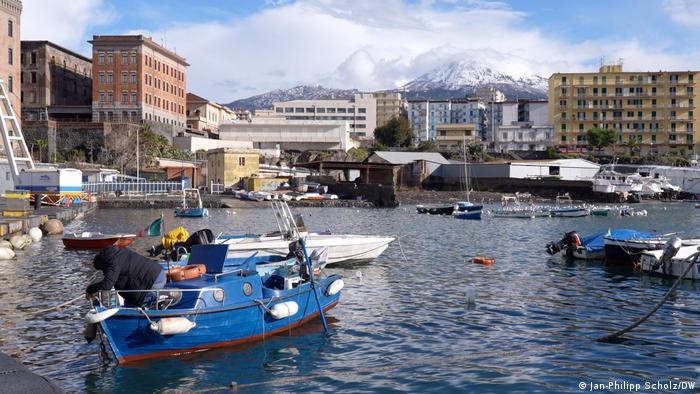 Torre del Greco in Italy is considered an unofficial capital of coral trade
“A type of war “
“We fight every day with illegal trading problems”, the family entrepreneur explains. Criminals even threatened him in his shop because he had the courage to speak up against them. “This is a kind of war,” says Cataldo. Even authorities have not taken the problem seriously at first, he explains. But now Italy has raised its sustainable development flag and developed a national plan for better protection of sea animals. “But criminals always find new ways,” says Cataldo. Now they try harder to smuggle their goods through Spain and France before they reach the international market in Italy.
The Sunnisian artist Mourad Arfaui is sure that the problem with the illegal trade of coral has a reason - that of the thirst for profit. The precious geos like other species threatened by extinction are at risk because we don't give them time to develop. We have forgotten to be patient and to appreciate the riches of the sea,” says Aruaoui. He is deeply concerned about the time he will come after the coral business. Maybe he'll start working with olive wood. Because they are not in danger, but corals are. / DW