a few seconds ago
Few interested in replacing cops in the north
Periskopi(3 years ago)
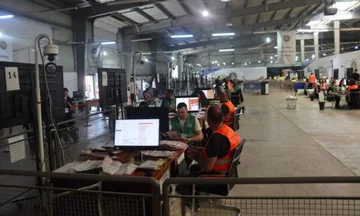
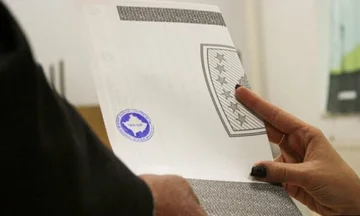
(3 years ago)About 140 members of non-US communities applied in the Kosovo Police Competition for employing new workers in the northern part of the country, inhabited by Serb majority. Of them, 136 meet the conditions and submit to the writing test on February 20. This confirms for Radio Free Europe the deputy director of [...]
This confirms for Radio Free Europe Deputy Police Director Dejan Jankovovic, but without even checking whether there are members of the Serb community among the candidates.
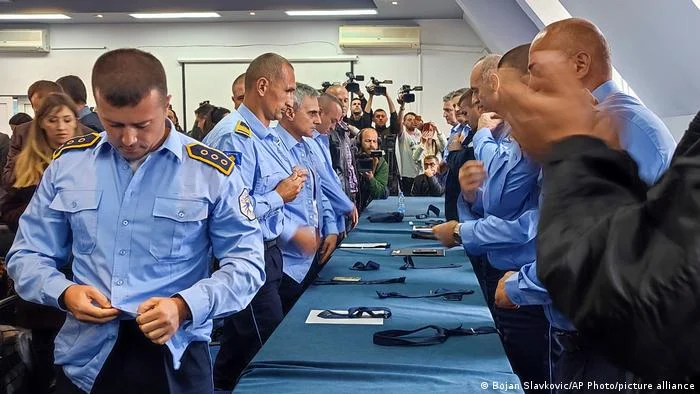
The issue of Serb participation in the Kosovo police in the north is current since November of last year, when over 550 of them have resigned, as a sign of opposition to the Kosovo government's decision to reregister cars with Kosovo Serb license plates.
The competition for the admission of new policemen opened in early January, while then was postponed until February 10th. Meanwhile, a “campaign was launched for the importance of the” competition, which was supported by senior officials from the Government of Kosovo, international institutions and embassies.
“Join the Kosovo Police and contribute to the security of your community. Take advantage of this opportunity, it's in the best interests of your community and of you”, was the message of the head of the European Union for Rule of Law in Kosovo (EULEX), Lars-Gunnar Wigemark, published on social networks under the campaign.
A Kosovo plans to return Serbs to police in the north?
For now, it is not known how more than 400 free positions will be met at the Kosovo Police Directorate for the northern region through new competitions or the return of those who have resigned.
REL addressed the Kosovo Ministry of Internal Affairs with this question, but received no answers.
Neither did the Kosovo government answer REL questions whether there is any plan to motivate the Serb community to become part of the Kosovo Police, or whether it will allow those who have resigned to return.
The Kosovo Police Directorate for the north region has four police stations and three substations covering the cities: Northern Mitrovica, Leposaviq, Zvecan and Zubin Potok, as well as over 175 villages on the territory of these four municipalities.
These police stations, currently, do not function at full capacity because they do not have enough staff and administrative personnel. Last December, however, Kosovo sent units from south to municipalities in the north, which temporarily care for security.
It is mainly about Albanian community police, whose presence is opposed by the local population.
Backing up old cops or accepting young people?
Northern Mitrovica residents, surveyed by Radio Free Europe, have divided opinions about whether the free spots in police should be met with competitions or the return of those who have resigned.
Ivana says that “a community without police supervision cannot be healthy, vital or normal”, but that initially it should be offered the return of former policemen, and then announced the competition for youth.
There is a possibility that people, meanwhile, have changed their minds. If they show indifference, then invite other people to apply. Of course, there are people who need work first and foremost. They would come to work, why not, it's a good job, it's not easy, but it's good. And it should be as soon as it normalizes [this situation], because we will not be able to function for a long time so”, says Ivana.
Jovani says new and young police officers should be introduced to the Kosovo Police.
“Good young people, these retired elderly people, let them retire”, Jovan says, and expresses confidence that some former policemen will also refuse to return.
In fact, one of the conditions for the Kosovo Police Competition is for candidates not to be older than 30.
Members of the Serb community in the north have integrated into the Kosovo Police on the basis of the Brussels Agreement between Kosovo and Serbia, reached in 2013, and most of them are now over 30 years old.
Return “to the base of a political decision”
Dusan Radakovic, director of the Centre for Representatives of Democratic Culture from Northern Mitrovica, says Kosovo should allow the return of Serbian police officers, but on the basis of a political decision.
...and after the police return the amnesty decision is made, so the state does not charge them tomorrow for their departure. Therefore, there should be an amnesty process for those policemen who want back”, Radakovic tells Radio Free Europe.
Earlier, Kosovo Interior Minister Jelal Svecla has blamed several former Serb policemen for the incidents in northern Kosovo.
He, too, has said that about 50 percent of former police officers in the north have worked against Kosovo's interests.
Radakovic says employing new police officers on the basis of the competition will not solve the problem, because in that case, according to him, there will be no experienced Serb police officers and no one who can hold higher positions.
Conditions Set Before Leaving the Institute
In addition to the Kosovo Police, members of the Serb community also left judicial institutions and local administration. This was supported by official Belgrade, and in return several contracts were awarded, under which, besides pay, other issues, such as pensions and health insurance were arranged.
The international community has repeatedly called on Serbs to return to institutions, but also Kosovo to enable this return.
Radakovic says employing new police officers on the basis of the competition will not solve the problem, because in that case, according to him, there will be no experienced Serb police officers and no one who can hold higher positions.
Serbs have conditioned their return to institutions at the time they resigned. Together with political representatives from the Serbian List, the largest party of Serbs in Kosovo, they have asked the Government of Kosovo to withdraw the decision to reregister cars and form Serb majority association.
After the condition for reregistering cars has been met, on the basis of an agreement reached within the dialogue on normalising Kosovo-Serbia relations, it has been insisted on establishing association.
Kosovo and Serbia have reached agreement on this association in 2013, but Kosovo refuses to implement it with the argument that it is not in line with its Constitution.
In recent months, the international community has increased pressure on Kosovo to establish Association, saying all agreements must be implemented.