17 minutes ago
Pandemia leaves long-term consequences to Albanian mental health
Periskopi(3 years ago)
(3 years ago)On the morning of August 13, 2020, Edlira Koca expected her son to leave the main hospital in COVID-19 in Tirana and return home safely, but received the ominous news of death. Doctors had estimated that Jino, 29, had passed the risk of the SARS-CoV-2 virus, but that morning he ended [...]
On the morning of August 13, 2020, Edlira Koca expected her son to leave the main hospital in COVID-19 in Tirana and return home safely, but received the ominous news of death.
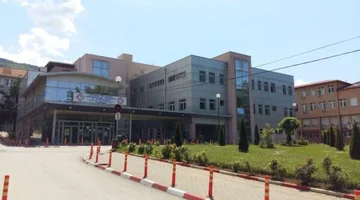
Doctors had estimated that Jino, 29, had passed the risk of the SARS-CoV-2 virus, but that morning he ended his life by jumping from the third floor of the pavilion where he was being treated at hospital “Chiefs Rudqi” in Tirana.
Two and a half years later, his reasons for suicide continue to torment his mother.
Something happened to the last two days, I don't know what she's seen or what she's felt, says Edlira Koca at her home in the city of Durres.
Giino complained that he couldn't sleep and was choked, he had not slept for two days. But the doctor told me that there's nothing, it's psychological, she added”, recalling that she was also told that her son was spoiled”.
The transparency of psychological problems and their effects on mental health is widespread in Albania, but Gino Koça's suicide shaken confidence in the health system during the pandemic.
At the same time, the event served as the alarm bell for the consequences that COVID-19 was causing on the mental health of Albanians, effects that according to psychiatrist doctors will continue to feel over.
“Pandemia was an unexpected viral attack and, as such, found our mental health unprepared. A trend was observed that resulted in a global mental - health crisis, thus fueling acute and chronic stress. So long-term and short-term stress,” says Arjana Rreli, a 30-year-old psychiatrist at the ambulance service in Tirana.
Data provided by BIRN through a request for information rights indicates that COVIID-19's pandemic increased by nearly 15% the official number of patients suffering from mental health disorders while the country continues to have limited capacity to cope with these problems.
The Health Ministry told BIRN it is addressing the consequences of COVID-19 in mental health with the drafting of several strategies, including national health strategy 2021-2030.
“is also being drafted the Mental Health Action Plan 2023-2026, which will focus on strengthening health services in the face of challenges related to COVID's pandemic-19,” The ministry added.
Power shortages
Albania marks the lowest records in Europe and the Western Balkans for the number of psychiatrist doctors and mental health specialists.
According to the Mental Health Atlas 2020, a comparison report of the World Health Organization, Albania has 1.6 psychiatrist doctors and 13.6 mental - health specialists for 100,000; sometimes lower than North Macedonia, Montenegro or Bosnia and Herzegovina.
O Report The BSH also estimates that the country invests almost nothing in scientific studies for mental health and does not provide information on human and financial capacities for implementing action plans for the field.
In March 2022, O The BSH called on countries to take the necessary measures to ensure mental health services, also revealing the historic lack of investments in this direction in many developing countries.
According to the Health Ministry, the number of people referred to as suffering from mental - health problems increased from 33 thousand and 900 to 400,000 from 2018 to the end of 2021.
There are 100 psychiatrists available; 43 of them serve in public hospitals and 57 other doctors in the health ambulance service.
Meanwhile, 2855 patients turn out to be laid down until November 30, 2022 in four hospitals located in Elbasan, Vlora, Shkodra and at the University Hospital Centre “Mother Teresa” in Tirana.
To cope with the mental health challenge, Albania spends about $1.1 billion or about 10m euros a year, according to partial data BIRN provided by the Health Ministry.
Some 774 million dollars were spent on three psychiatric hospitals in Elbasan, Vlora and Shkodra, while 381 million dollars went towards remigration of psycholeptic and psychoanalyphical drugs used to treat mental health disorders in primary health care outside the hospital service.
“QSUT... we suggest that there is no budget dedicated to it, as the needs of this service are included in the total budget fund envisioned for the institution”, the ministry said in a written response.
“Heavy down home”
In the town of Berat in southern Albania, a 30-year-old man who spoke of BIRN under anonymous conditions faced anxiety when the whole family was infected with COVID-19 in November 2021.
She lost her father to the complications of the disease, and at the same time she was forced to put her mother in the hospital because her condition was getting worse.
The “was gone down to hell at home”, recalls 30-year-olds, referring to fear of the lives of loved ones.
She began to feel breathing jams herself, but doctors advised “to gather the mind”.
After her mother's health improved, her 30-year-old turned to a psychologist for help.
I had experienced a trauma and needed treatment, which no one thought I needed”, she added.
Such traumatic situations were common throughout Albania during the two serious years of pandemic, where over 330,000 Albanians were infected and over 3,500 lost their lives as a result of complications.
The doctors say that they faced many unknowns, including the severe emotional state of patients.
Servet Hyra, a family doctor in the Shkozet area of Durres, says the state of anxiety was widespread among patients.
There were citizens who just spoke on the phone and explained how they would continue the treatment, called you back in a minute, and asked if my temperature was rising. This shows that he was afraid, stressed, panic”, said the entrance to BIRN.
Even the infected doctor at the Regional Hospital of Durres, Becir Gelaj, says that he faced various cases that were simultaneously reflecting illness complications and emotional problems.
He singles out the case of a police officer from Durres, who after being infected with COVID-19 had twice attempted suicide at Tirana's Infective Hospital.
I would like to stress that the disease itself represented disorders... it had a particular impact on people with mental health problems and on those most sensitive”, he added.
Gino Koca had not before faced anxiety problems and was described by his family as a smiling, energetic boy and devoted to his work as the manager of a telephone station offering services to Italy.
In the summer of 2020, it was also pushing ahead with plans to continue master studies in Canada for the branch of Management.
Edlira Koca also recalls that unlike many who were shocked in the first period of the pandemic, her family was united and happy.
We've spent a month of rest, we've been cooking, we've watched movies... we've all been together, we've had a great time, it's June and we're fine...”, she remembers.
After being infected with his father, Gino was admitted to Sanatorium with the advice of a doctor because her tests showed liver enlarged.
His mother doubts that his son's death resulted from negligence.
I'm 50% for treatment, carelessness, without even knowing that doctors have admitted that they didn't even know what they gave, and 50% I'm around psychologically, the absence of a psychologist, it would have been averted, the week that Gino was not having any psychologist”, says Koca.
Gino Koca was one of five patients infected with COVID-19, who ended their lives by jumping from the high floors of hospital “Chiefs Rudoku” or Infective Hospital.
The prosecution launched investigation into cases, but four of them were closed without any conclusions.
Koça's case is the only one that continues to remain open, but family members are disappointed with procrastination.
I'm sure by not finding any reason to say that Gino had mental health problems and therefore committed this act, not having managed to cover the sun in the shower, to say that this happened only to the last three days in the hospital, where Jinn has shown concerns and fears”, Gino's mother commented on the performance of the investigations.
Insufficient Centers
While there is a consensus among experts on the major effects the pandemic caused on mental health, studies have been lacking and the real consequences in Albania are still unclear.
According to psychologist Marta Bey, quality and quantitative studies are missing to reach clear conclusions. Referring to her experience with patients, Bay says that the pandemic aggravated the mental health situation among previously diagnosed persons and brought stress to the new population.
There have been cases of post traumatic stress in cases of family loss. I think it also affected the section of the hospital because people were scared. But there have also been new cases in which stress increases, and there is grounds for disease in the population”, Bay said.
Yet, psychologists note that there is already a higher awareness of the population to seek psychological help, and therapy is already widespread among new age groups, mainly between 15 and 25.
Psychiatrist Ajara Rreli explains that in recent years other behaviors have become popular, affecting young and old.
Besides the anxiety, depression, and chronic stress, other levels that resulted from social isolation were identified, for example, the Hikikomori syndrome, which has spread especially in recent years and manifested with social attraction, self-execution from the outside world, isolation and total rejection of any form of the report, except for that virtual”, she explained.
Reli says that for taxing these cases there are community mental health centres complete with staffs of all profiles. There are three of these insufficient ones in Tirana to offer service to anyone in need.
For such a large population, of course, only 3 centers cannot keep the overload, especially in the wake of the pandemic, as far as its needs are in dealing with the population”, Rrele stressed.
Family members of people who lost their lives as a result of pandemic are still trying to address the pain in their own way.
Koca says the pain of losing her son is “as large as numbing”, but they're doing it.
We're with Jino, he's not here, he's in Canada, he's at Mahx1... “is just not”, it ends.