10 minutes ago
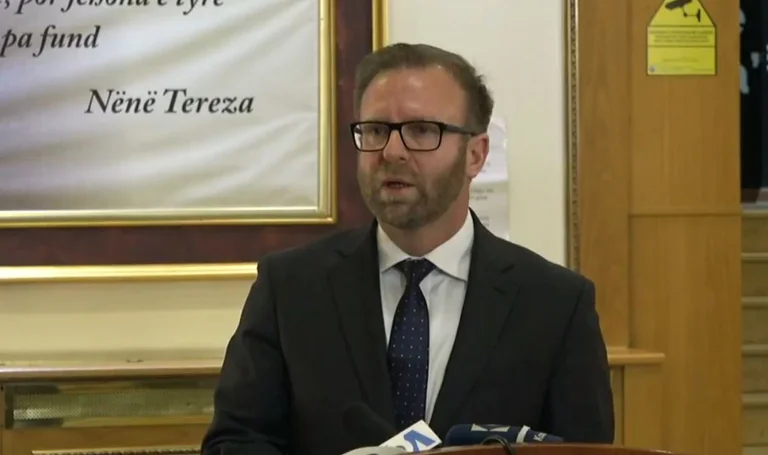
Hakki Abazi reacts to the Energy Strategy: Kosovo lacks thermal energy, not electricity
Periskopi(3 years ago)
(3 years ago)Kosovo has lack of thermal energy, rather than electricity”, so the MP has praised by the Vetevendosje Haki Abazi Movement. Abazi has further said the Energy Strategy is the wrong move that, according to him, leaves Kosovo bad as it has been over the past 20 years. “The Energy Strategy brought yesterday to the Parliament [...]
Abazi has further said the Energy Strategy is the wrong move that, according to him, leaves Kosovo bad as it has been over the past 20 years.
“The Energy Strategy brought to the Parliament yesterday and the insistence on approval today is the wrong step and action and has fallen into the trap of narrow interests from past” structures, the MP has written on Facebook.
Below, you can read the deputy's full post from Vetevendosje Movement, Hakki Abbas.
After failing to approve the so-called energy strategy document on December 23rd, 2022, today they are trying to bring approval back to the Assembly, with no change.
Here is the argument I have made on December 22nd, why this strategy is wrong and leaves Kosovo as bad as others have for 20 years:
Green or brown
The Energy Strategy brought yesterday to the Parliament and the insistence on approval today is a step of wrong action and has fallen into the trap of narrow interests by past structures.
The equation of the problem is simply wrong. Kosovo lacks thermal energy and not electricity. The strategy also leads us to the wrong way that will harm productive businesses by discriminated against because of the carbon tax that will begin to apply in October 2023 to the EU and any production that uses fossil-generated electricity and will be taxed.
The vision of this document brought to the assembly does not include: Cleanness, efficiency, designation, and neither transition to renewable energy sources that are also reconfirmed in sequence of strategic objectives that are fundamental and contrary to what has been promised:
The first objective lacks the main target that is the minimum reduction of energy effects on public health.
The target is missing for transforming transport into clean transport and eliminating combustion cars as Europe is doing. In addition to leaving us behind in support schemes and benefits from international funds, Kosovo made a haven of cars and trucks that exit the market there and behave here as massive air polluting and everything in our environment.
The particular problem with this strategy is that there is no specific objective of the BE's percentage, but specifically it is aimed at restoring the existing capacities that actually, as a statement, indicate the devilishness of hiding the truth. Kosovo A is an ecological bomb and we all know that. It cannot be revived, except that on its foundations and in the walls of some of those buildings, generators and turbines of a new thermal power plant can be hidden from lignite.
The fact that the first objective speaks of new capacities from lignite and the second from decarbonization shows lack of technical logic and deep contradiction. On one side, you want to add new capacities to the lignite that is now in most months in the capacity of 95%, as well as on the other talk of defuelisation.
The word that this strategy aims to provide energy at affordable prices for citizens at best is gullibility if it is not deliberate fraud. What you're saying in this strategy is that lignite is the freest source and that we have it nearby, at the Obic and Shipilza base, the advisors of RIINVEST once in past governments have had crazy ideas to open the Kline base. It's a disaster that they again do the same to you when they advise you and you listen to them as they heard those in the opposition today and left the system degraded and unstable.
But what's important is that lignite is not freer, but rather it's very expensive, that costs directly to public health worth up to 200 million a year, the irreversible destruction of agricultural lands that are worth billions of euros, the cost of water for cooling turbines and technological processes, this water that is once in the water of drink and water for a cultivated and organic agriculture, which is also billions of euros. Ask the Netherlands how much you earn annually from organized agriculture and regenerative cleans?
Pollution and contaminant of groundwater from ash and chemicals released as a result of remains after burning, destruction of biodiversity as a result of the destruction of land surfaces in areas where lignite mines open. These make the electricity produced by the linen much more expensive.
The only free thing is the form of the benefit of KED by buying out the free flow in production and not to worry about that long list of environmental damage and costs caused by energy production.
But that's exactly why the state and science, to calculate the whole and every factor and for that reason everything that's entered this strategy, would have to have a feasibility study already because we have 20 years of trying to build a coal thermal power plant that will never be done and I guarantee you that it won't be done or if someone does it will still shut down because this form is also against EU policies.
In the second objective, you talk about promotion and not about the correct set of percent of the BRE and not efficiency. This tells a lot about governments who made promotions and there is no strategy for achieving certain goals. Promovation makes associations, while the government plans and implements plans.
If its capacity by 2031 was 1600 Me and that's according to strategy that 1600 This is 35% of the contribution, tell us how much total of the 2031 level generation will be around 4600. More, where will 3,000 come from? Any more coals?
3 / 1 Even in the strategic objective of five, no word is spoken about the limits to conservation of the environment and public health. This should actually be the main issue because what energy we need if we have a sick, tired nation, what we need development that is a killer for citizens and generations to come, and for the environment that we have the most degraded in Europe and I believe even wider.
Will logging be forbidden? Will the construction in national parks be banned? Will there be law on the building code? When the law will be done, why hasn't the law been made on the code of energy training and efficiency?
When will the misuse and destruction of rivers be banned from the harsh exploration of sand?
Look at the picture No. 1 on page 13 of the strategy and you realize that in fact no interconnection has any strategic objectives, in the first strategic target not even included, but also the definition of renewable Designation and Energy Promoting is out of any technical and logical definition.
On page 21 of this strategy, you talk about transportation by not associating at all with any of the objectives, and here it shows the total incompatibility of the energy strategy with the EU Green Agency, citing it as another reference document and not as a primary document leading Kosovo's orientation in the same line as developments.
Two other national, transport and industry strategies are discussed on page 33 in this document. Only poor and non-vision countries deal with dozens of sectoral strategies and strategies that are not done in time and full co-ordination.
For example, setting energy efficiency as targets without the law on change and building code is in vain.
On page 15, it says, quote: This strategy is based on the design of the power sector by applying international fuel markets (gas, coal and oil). Imagine the result at the end when you use these modeling parameters, except green, not just efficiency, and no public health. These parameters and design result in profit and pollution.
But let me end up referring to the methodology of this document that is in complete conflict with the philosophy of sustainable development and promises made. What others have done for 20 years, that we changed in the last elections, the same, exactly the same you did with this strategy.
Based on the people that the coal sees as the source of rescue, who have privatized the distribution network and you through the Energy and Influence session you've released the culprits for scandalous privatisation, and which is the most important thing about the promise we're going to put science and knowledge into the centre of strategies. Pristina University professors, people of the academy are considered consultative parties in a framework made by a so-called expert. It means it's a complete failure to mobilise local knowledge and resources and we've ended up in a document that I would never vote on unless it's harmful, it's irreplaceable and with enormous ideas and hybrid vision: Speak green and act brown!
The speech in the Parliament on this subject.