21 minutes ago
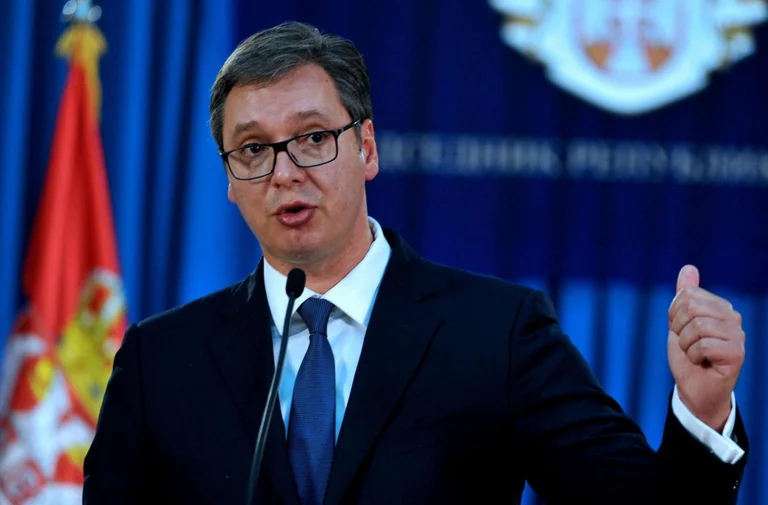
Vucinac announces victory in the election
Periskopi(2 years ago)
(2 years ago)The Serbian Progressive Party's list “Aleksandar Vuciq ♫ Serbia cannot stop” has won 46.6 per cent of the vote in the December 17th elections, meaning 129 seats in Parliament, according to polls by the non-governmental organisation, the Centre for Free Elections and Democracy. In second place is the opposition coalition “Serbia against violence”, with 23 [...]
The Serbian Progressive Party's list “Aleksandar Vuciq ♫ Serbia cannot stop” has won 46.6 per cent of the vote in the December 17th elections, meaning 129 seats in Parliament, according to polls by the non-governmental organisation, the Centre for Free Elections and Democracy.
In second place is the opposition coalition “Serbia against violence”, with 23 percent of the vote, or 63 seats.
In third place is former Serbian Foreign Minister Ivica Dacic's Socialist Party, with 6.9 per cent of the vote or 19 seats.
Dacic has expressed readiness to co-operate with Vuciqi's party.
According to polls, from the communities' lists, Shaip Kamberi has secured a seat of the Albanian community, the Alliance of Hungarians in Vojvodina is expected to win six seats -- the coalition of Vojvodina Croats, three seats, and a seat has won the Russian Party.
Serbia has held extraordinary parliamentary, local and district elections Sunday.
A total of 18 parties and alliances have competed to win the support of 6.5 million people -- eligible for representation in Parliament with 250 seats.
The threshold for entry into Parliament is 3 percent.
Serbian President Aleksandar Vuciq has said his party has increased by 10 per cent in all polls, compared to past elections.
He has claimed his party has won in Belgrade.
Serbian Prime Minister Anna Brnabiq, a member of the Serbian Progressive Party, has also declared the party's victory.
Brnabyk has dismissed statements by media, opposition and non-governmental organisations for election irregularities, naming “brutal lies”.
Predrag Mitrovich from the opposition coalition “Serbia against violence” has said the results are good, acknowledging the ranking in second place.
It is clear that the large number of voters from the Republika Srpska [of Bosnia and Herzegovina] who have voted illegally in the capital, because they did not have residential addresses there, has had an effect on the overall score”, he said.
According to Mitrovici, the vote count for local elections in Belgrade has just begun, but that the group “has the basic basis for confidence in good results, meaning victory in Belgrade”.
“We believe in victory in Belgrade”, he has said, among other things.
The polling stations have been open between 7: 00 p.m. and 8:00, in addition to the voter row waiting at polling stations.
By 7:00, 55.5 percent of citizens voted.
Serbia's Electoral Commission Chairman, Vdalmir Dimitrijevic, has said all polling stations have been opened over time -- a total of 8,273.
The votes for Parliament are initially counted, later for the provinces and local ones.
Election Process Overload
Rasa Nedelkov, director of the nongovernmental election survey organisation CRTA, has claimed that observers of the organisation have been physically attacked and their cars are severely damaged in the municipality of Ozjaci in northern Serbia.
Police have arrested a suspect in connection with this incident during the day and have said that investigations are being conducted.
Nedelkov has added that there were voters who were carried by buses from Bosnia and Herzegovina's Serb entity to vote in Belgrade.
The Monitoring Mission for Democracy and Free Elections founded in Belgrade in 1997 has reported that it has seen “repeat disrespect” of election procedures in some polling stations and presence of “propagandistic material”.
US Ambassador to Serbia Christopher Hill has said he has visited several election centres in Belgrade.
The US “Embassy has 14 teams scattered across Serbia and Belgrade”, he has said, while commenting on the presence of foreign observers in these elections.
Sunday's elections have been monitored by 5,587 domestic and foreign observers record numbers of observers, compared to preliminary elections.
These are the fifth elections that have been organised in Serbia since 2012, and have been held only 18 months after organising the last election process.
The elections have been prompted by the public's growing anger for this year's massive shooting and continued opposition demand for new election processes.
The two mass shooting attacks of May, which have left 18 people dead, including nine students and teenagers, have resulted in street protests for weeks.
Opposition parties, and human rights observers, accuse the ruling party -- Serbian Progressive Party (SNS) of the current president, Aleksandar Vuciq -- of restricting media freedom, supporting violence against opponents, corruption, and links to organised crime.
Vucinac, and the Allies, reject these charges. / REL