15 minutes ago
The EU voices concern over irregularities in Serbia's elections: Election Process Needs Improvement
Periskopi(2 years ago)
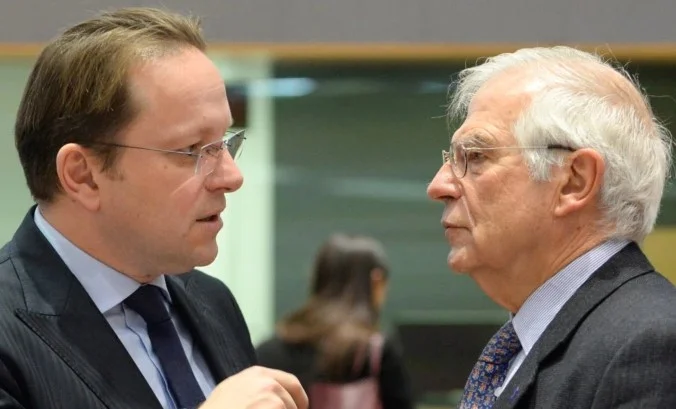
(2 years ago)The European Union expects Serbia's authorities to review transparently reliable reports of irregularities in the December 17th elections. Through a joint statement to the media, EU diplomacy chief Josep Borrell, and Enlargement Commissioner Oliver Varhely said that amid irregularities during parliamentary, local and district elections in [...]
Through a joint statement to the media, EU diplomacy chief Josep Borrell, and Enlargement Commissioner Oliver Varhely said that among the irregularities during parliamentary, local and district elections in Serbia are those reported in the Serbian capital, Belgrade and other municipalities.
“We take into account the preliminary findings and conclusions of international observers of the Organisation for Co-operation and Security in Europe and the Office for Democratic Institutions and Human Rights for Serbian parliamentary elections. In light of these findings, with concern we come to the conclusion that the electoral process needs further improvement and reforms, as the proper functioning of Serbia's democratic institutions is the essence of Serbia's EU accession process”, said in the joint statement of Borrell and Varhey.
The two top European officials urged the Serbian political leadership to ensure a constructive and comprehensive dialogue across the political spectrum.
President Aleksandar Vuciq's Serbian Progressive Party (SNS) has declared victory at all levels.
But opposition coalition parties “Serbia against violence” have called for cancelling local elections in Belgrade, arguing that due to numerous irregularities, the election results do not reflect the will of citizens.
Opposition coalition parties “Serbia against violence” have said there have been many irregularities in Belgrade, and that the results do not reflect the will of citizens.
Even by Serbian election observer CRTA, they have declared that the results in Belgrade do not reflect the will of citizens.
According to the Republican Election Commission's preliminary results, the “election list Aleksandar Vuciq { Serbia dares not stop” has won 46.71 per cent, made from the “list. Serbia against violence” with 23.58 per cent.
Third row is “Ivica Daciq prime minister of Serbia” with 6.57 per cent of the vote. Next comes “Hope for Serbia” by 5.03 percent and “We Voice of the People” by 4.69 percent.
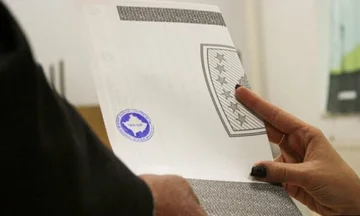
In the December 17th elections, Kosovo Serb residents have travelled towards Serbia to vote. This, since voting has not been allowed to be held on Kosovo's territory, compared to years ago.
They have been able to vote in four towns south of Serbia in Vranje, Kursumli, Raska and Tutti.
The Kosovo government had demanded that Serbia's state make a direct request for holding elections, but official Belgrade has not done so since it does not recognise Kosovo's citizenship.
The last parliamentary elections, which Serbia has also organised for the Serb community in Kosovo, have been those on 21 June 2020.
Those elections are held according to an earlier practice, where the mission in Kosovo of the Organisation for Security and Co-operation in Europe (OSBE) has collected votes. Those votes, later, have been counted in Rashka and Vranje, two border towns in Serbia. / REL