15 minutes ago
EC report on Kosovo seeks implementation of agreements on normalisation of relations with Serbia
Periskopi(3 years ago)
(3 years ago)Talks on normalising Kosovo-Serbia relations and calls for implementation of agreements leading to this normalisation are central to the European Commission's annual report on Kosovo, which stresses that the country has made limited progress in areas related to the progress process towards integration into the European Union. The report expresses regret [...]
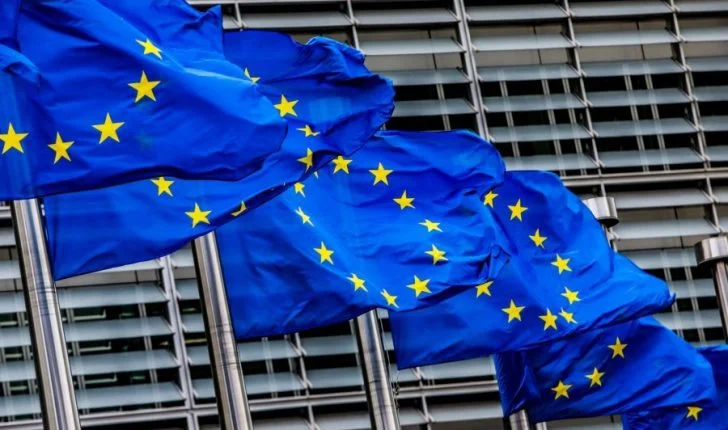
Talks on normalising Kosovo-Serbia relations and calls for implementation of agreements leading to this normalisation are central to the European Commission's annual report on Kosovo, which stresses that the country has made limited progress in areas related to the progress process towards integration into the European Union.
In the Report It expresses regret that Kosovo and Serbia have not yet begun to implement the obligations that come out of the agreement reached in Brussels on February 27th and in Ohrid on March 18th for the road to normalisation.
“In general, Kosovo has remained committed to the EU facilitated dialogue for normalising relations with Serbia, but must demonstrate more serious commitment, invest more efforts and make compromises to advance this process. Kosovo must stick to its commitments and commit to full implementation of all past agreements” and this year's agreement, said among other things in the report, in which its obligation to establish the Association of Serb majority municipalities is stressed.
Kosovo is expected to launch the process, which leads to the establishment of association, based on the October 21st European proposal and Serbia is required to support this process and simultaneously start meeting its obligations by the agreement. Formities, including those related to approval, should not be obstacles to the implementation path”, the report says.
Stressing expectations that Kosovo and Serbia be committed to making rapid and concrete progress, the report underlines that <x0 normalisation of relations is an essential condition on the European road on both sides, and both risk losing significant opportunities in the absence of progress”.
The situation in northern Kosovo is further said to have been affected by several crises of different intensity over a series of issues, with a violent attack against Kosovo police on September 24th 2023, “that constitutes the worst escalation of the last years”.
The European Union expects the authors to be caught and put to justice quickly and Serbia to co-operate fully and take all necessary steps in this direction”.
The report describes developments in 2022 in northern Kosovo especially about car license plates, following the Kosovo government's decision on June 29th 2022 to resume registration of all cars that have old license plates issued by Serbia, as well as developments that followed that decision that led to roadblocks and Serb exits from Kosovo institutions.
The report estimates that local elections in northern Kosovo, which were held on April 23rd, were in line with the Kosovo legal framework, but their boycott by Serbian parties testified they did not offer long-term political solutions.
The necessary “commands to restore a situation where Kosovo Serbs actively participate in local governance, police and judiciary in northern Kosovo. Early local elections should be held as soon as possible in all four municipalities, to be inclusive, and with unconditional participation of Kosovo Serbs”, the report said.
It emphasises that the punitive measures imposed on Kosovo due to tensions in the north, “are temporary and completely reversed, depending on steps taken to reduce tensions in northern Kosovo. Kosovo has taken steps in the right direction, but still remains to do”.
The report finds limited progress in developing a functioning judicial system. A limited progress has been achieved in the fight against corruption, which remains issues of concern, the report says.
“While last year parliament adopted significant anti-corruption legislation and the legal framework for confiscating criminal property has advanced, much remains to be done to implement anti-corruption legislation. Despite improvement in the work of the Agency for Prevention of Corruption, prevention tools against corruption defined in legislation have not yet been fully exploited. Kosovo should step up efforts for more active investigations, final judicial decisions and final seizure of assets”.
Kosovo is further said to be at an early stage in the fight against organised crime, and limited progress has been achieved in investigating and prosecuting organised crime cases”. The report underlines that the fight against organised crime in northern Kosovo continues to be challenging.
Kosovo remained active in fighting terrorism and fighting and preventing violent extremism. The legal framework for antiterrorism is partly in line with EU requirements and international standards. The law on combating money laundering and financing of terrorism has not yet been changed”, it says, underlining that “authorities should be more effective in their efforts to fight money laundering”.
Kosovo's legal framework provides wide protection of human rights in line with European standards, the report says, but while the capacity to monitor policy implementation and legislation has improved, further efforts are required to effectively implement fundamental rights.
The Commission estimates that Kosovo has a good framework for protecting the rights of non-US communities, but further actions are needed on old issues such as the lack of equal access to education and employment, and lower representation in public institutions, including the Roma community and Ashkali.
Kosovo has a level of preparation in terms of freedom of expression. Limited progress has been made in addressing recommendations in the previous report. Concerns remain over physical attacks and threats, public slander campaigns, and hate speech. Particularly disturbing is the lack of freedom of expression in northern Kosovo”, the report says.
As for economic criteria, Kosovo has made some progress in developing a functional market economy, the report emphasises, under which Kosovo's economic recovery decreased significantly in 2022, largely due to the reduction in investments and the slowdown in household consumption as a result of high inflation, especially after Russia's aggression in Ukraine began.
Limited progress has been found even in the areas of public procurement and financial control.
In trade policy regarding foreign relations, limited progress has been made during the reporting period. Kosovo has made progress in implementing the Joint Regional Market Action Plan, especially by ratifying three “agreements of the Berlin process” for free movement and mutual recognition of qualifications.
“However, the government continues to block decision-making mechanisms within CEFTA due to disagreements over Kosovo's representation. Kosovo has not yet ratified the additional CEFTA protocols for facilitating trade and service trade. Moreover, with the deployment of temporary operational security measures in June, blocking the entry into Kosovo of Serbian goods, Kosovo appears not in line with its pledges according to CEFTA. The measures also contradict the spirit of the Stabilisation and Association Agreement”.
The report stresses that Kosovo has continued to condemn Russia's aggression in Ukraine and support Ukraine's independence, sovereignty and territorial integrity. The government has continued to adopt packages of restrictive measures against Russia and Belarus, reflecting those imposed by the EU and the United States of America.
The report's text also notes that the Vetevendosje-led government still holds a solid majority in parliament and continued to progress with its ambitious reform agenda towards the EU. But the ongoing lack of interparty co-operation and disagreements within the majority were proved a challenge to reforms. Moreover, Serbian List deputies boycotted the work of parliament”.
However, the report concludes, the reporting period witnessed significant legislative achievements, including electoral reform in the country.