9 minutes ago
Kadare for the Italian magazine speaks of the book “Dream Table: I thought I was gonna be arrested.
Periskopi(3 years ago)
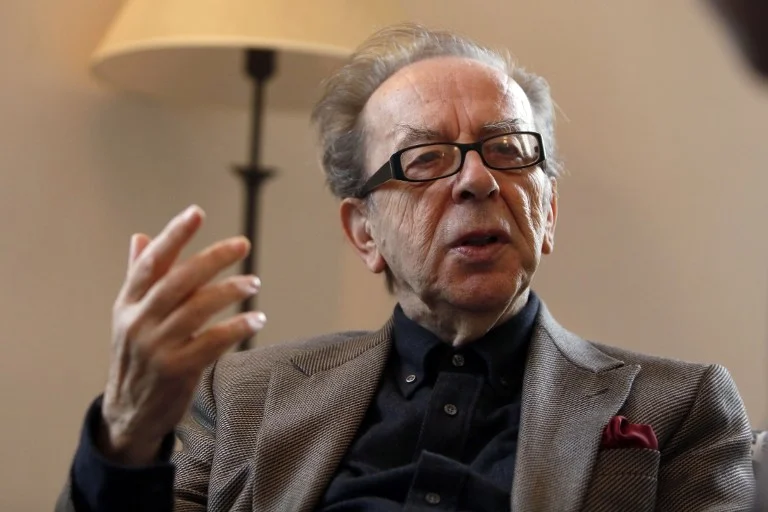
(3 years ago)Renowned writer Ismail Kadare returns to Italian libraries with a novel written some 40 years ago. “Dream table” preserves all the power and coolness of the present. In an interview for “La Lettura” of Corriere della Sera, the writer speaks of the time when the novel was written, the relationship with Enver Hoxha, the fugitive in France [...]
“Dream table” preserves all the power and coolness of the present. In an interview for “La Lettura” of Corriere della Sera, the writer speaks of the time when the novel was written, the relationship with Enver Hoxha, the fugitive in France to technology and the fear that the latter is controlling our minds.
The time it was written was absolutely current. But even now it's current, but over 40 years, nothing has lost out on its qualities. I joyfully repeat those thoughts to today's public. It makes the present critical, unbelieving spirit that it has had since been very harsh. I'm glad I had such a radical view of time. This severity has not diminished over time. Pressure, bans, criticism were placed on the book in those years. For the first time after this novel was released, I thought I would be arrested, as the anti-system spirit on it was visible”, says Kadare.
Dear Mr. Kadare, I thank you first so much for accepting this interview. This interview is being conducted on the case of the Italy edition of your work “Dream palate”, published in Albania in 1981. What is your current view of a book that you wrote more than 40 years ago?
It's a book written for that time. Albania was a totalitarian country, and as a writer, I felt that the size of communism and its power over the individual was becoming absolute. The whole atmosphere described in this work is not much different from the oppressive totalitarianism of Enver Hoxha Albania at that time. In my head, all the sadness I could express was true, and today I rejoice that I have been able to express it. Literature gives you the opportunity of life and such conditions. This was my destiny, my life with literature.
By the time it was written, it was absolutely current. But even now it's current, but over 40 years, nothing has lost out on its qualities. I joyfully repeat those thoughts to today's public. It makes the present critical, unbelieving spirit that it has had since been very harsh. I'm glad I had such a radical view of time. This severity has not diminished over time. Pressure, bans, criticism were placed on the book in those years. For the first time after this novel was released, I thought I would be arrested, as the anti-system spirit on it was obvious.
And what is your view of the man and writer Ismail Kadare of 1981? You think you've changed a lot? And if so, how?
I don't think I've changed. In literature things change very slowly, in the writer's mind as well, and that's something positive. In 1981 my views on totalitarianism required to configure a European Albania just as its roots were. I have defended this view by my actions, naturally, by believing in an early European affiliation of this people who lived one of the most vicious communist systems. All my work is trying to guide the reader to an internal wake-up, but so beautiful that literature can give, and why in those years it seemed impossible.
For a person like me, who today reads for the first time the “Dream pallatium”, this novel is surprising because it's very current. You thought you were writing above all an allegory of the Albanian communist regime? Or were you already aware of the universal and eternal expansion of the novel at that time?
The writer feels so strongly about the things he writes and lives, that being the time they are at once eternal. Fortunately, this subject that develops in this novel is eternal. The work is a satyr of totalitarianism, crossing local and national boundaries. The tradition of this novel is written in one of the novels that I wrote in parallel at that time. Maybe at “Corferman” I have the idea of a character leading to the dream. Later, that thought would reflect on me when I heard about a few thefts in Tirana. Strange thefts, burps, in the first place, but they woke up in me the design of hell. I had long been seduced by the design of a scythe. I've shown this and in the book “Time for History”, a conversation with an Albanian scholar where I say that “I knew it was difficult, if not impossible, to write such a work. Only after writing the first two chapters of the work did I feel that I was accomplishing what had seemed impossible - hell. There was a kind of realm of death where, if not, we ourselves were sleeping and dreaming, part of our life that was across, while we were around. Roman reflects the tension between national and imperial ethnicity for an individual and dynasty whose fate is related simultaneously to national and international politics. I was aware of the fatality that this book could bring me but was so convinced of the universal power of this subject.
Is the power of dreams in novels similar to the power of information in today's world?
Powerful images and almost surreal logic made Roman Mark Alem often powerless in the face of the power of dreams. The human world has the ability to describe and repeat itself in many ways, to find ways to survive obstacles. The Alliance of “Dream Palatti” in the new cultural, social contexts, or a world that is already facing stronger conflicts such as the two causes of new wars, which are bringing a threat to stability, turns attention to the need of human wisdom. The power of modern - day information is restoring another totalitarianism, the power of culture. Maintaining culture in these powerful waters of information is a duty of writing people.
What do you think about technology efforts, which are functioning everywhere in the contemporary world, from China to Silicon Valley, and they're trying to digitize everything, and therefore maybe one day can be achieved to the extent of human thought?
This is an impossible attempt.
What role did the “Dream Table play about your situation in Albania and the decision you made to live in Paris?
This novel brought me much trouble and trouble. The publication of my works was usually accompanied by criticism at the press, meetings in the Writers League. Everywhere in Tirana it was said that the “book of Kadare was banned and the sentence was expected”. The publication of my works in France has played an extraordinary role in the situation in which I was a writer in Albania. France, the Western reader, has played a role in saving my situation. Later at Coffee Rostand in Paris I met a French journalist who told me he went to our embassy and asked about my condition. Much information came from the West that the foreign press is interested in Kadare, which scared Enver Hoxha. In this case, he acted in the Western defense mechanism. It was the worst time in my life.
My departure to France by leaving my country forever came under the circumstances when I realized this was the only way to change the course of the regime in Albania. The Communist leader of the time did not seem to do so. I left when I thought this move would play a role in the fall of communism in the country.
You were born in the same town, Gjirokastra, with dictator Enver Hoxha. What was your relationship with him?
I had no personal relationship with him. We were neighbors, in Gjirokastra's oldest and largest neighborhood, in the alley that I resurrected the strange name “Stupid Soco of”. In Gjirokastra Enver Hoxha, it was not well - known during the war, since the Gropast homes had many strong identities and did not allow the prominence of dim identities. My early view of Enver Hoxha was not positive. There is nowhere in my work any description of his admiration. This is clearly demonstrated, especially in “Dimri of the great loneliness”, where he is widely described in conversations with others and there is a difference between him and the gallery of the completely negative characters of what was called the Communist bloc.
At 11, you copied the whole MacBeth by hand. Why was Shakespeare so important to you?
Shakespeare's tragedy has taken my mind since I was still a child. Macbeth showed me the world of literature. I gave in to such awe as you give to a religion. Thinking that if you were to copy the book, it would become your author, so I copied it all by hand with a pencil and a letter. This was a strange concept that I don't know where I was born, and I can't explain it, but such an idea went on for a very long time, thinking that since I copied a book, I was also a part of its creation. So after copying part of Macbeth, I lived with him alone. Shakespeare has always been important in my work, and then he is like a master who guides to the gates of great literature.
Unlike other great exiled writers, such as Conrad, Nabokov or Kundra, you have never abandoned your original language, Albanian. Why?
I thought I could give my art in this language. English has given me all the space to express through it my imaginations. I've never felt a barrier in my art from this language, but I'm constantly fascinated by its beauty.