9 minutes ago
Analyst: With recognition “
Periskopi(3 years ago)
(3 years ago)Dialogue between Kosovo and Serbia is currently not primarily aimed at mutual recognition between the two countries. After the last meeting in Brussels of the country's prime minister, Albin Kurti, with five leaders from Europe, Kosovo was asked to establish the Association of Serb-based municipalities, while Serbia recognises Kosovo's “-phacto”. [...]
Dialogue between Kosovo and Serbia is currently not primarily aimed at mutual recognition between the two countries.
After the last meeting in Brussels of the country's prime minister, Albin Kurti, with five leaders from Europe, Kosovo was asked to establish the Association of Serb-based municipalities, while Serbia recognises Kosovo's “-phacto”.
International relations acquaintance, lighto Arifi, explains that the term “de-phacto” is used to show that a country, government or ethnicity is functional and exists in reality, but has not been formally recognised, in this case Kosovo from Serbia.
<x)
And we're sort of sort of solving the problem, we're just moving a step towards the final problem, so this is just a phase, from my point of view, because recognition, you know, is the official and legal recognition of a country, a government”Arifi said.
According to him, for the parties the recognition “de-phacto” does not present legal commitment, but it is a move the countries can make on the basis of their care and attitude towards the current situations, while adding that from recognition “de-phacto” it is more difficult to move towards that “de-jure”.
“From recognition éde-factoʹ it is more difficult to get to official recognition or "youre" because Serbia would buy too much time to achieve a change of attitude and get recognition from you, legally binding”.
“In a way even the West itself is fleeing that obligation, the legally binding agreement, which falls to Kosovo's recognition exhibition, the UN government. I think we are just wasting very valuable time for Kosovo, but not for Serbia. All this waste of time will have been reflected at the expense of the development of Kosovo state”Arifi said.
While, for the connoisseur of political developments, Arbnor Sadik, recognition “de-phacto” is seen as a first step towards recognising the new one, and also represents temporary recognition of a state.
Sadiku said recognition “de-facto”, under the Montevito Convention, is when a state has sufficient control over a specific territory.
The “Based on International Public Law, with recognition, dealt with if a state has established normal diplomatic relations with a new state government. This is done in the form that in this case Serbia makes a statement that the state of Kosovo is effective and exists in practice, but not legal.“.
So, otherwise said, with recognition, Serbia really recognises Kosovo in practice, and trades ambassadors with Kosovo, recognizes official documents, etc. But, you don't recognise Kosovo unless its independence is accepted by Russia, China and their allies, which means that it recognizes the legality of Kosovo's independence, but, not its international legitimacy, so Serbia really recognises, but not literally the Republic of Kosovo, until Kosovo is admitted to UN<1>Sadiku said, announce the Clankosova.tv.
Furthermore, Sadiku said recognition “de-facto” would be new, though it is said Serbia has recognised Kosovo “de-facto” since the Kumanovo Agreement, recognition that, according to him, existed earlier, as SCEka had normal communication between the two countries.
In the case of Kosovo, the condition for recognition of Serbia-factoı is implementation of the Brussels Agreement, and the Ohrid Annex, from Serbia, while with recognition, non-juro -- we imply legal recognition of the sovereign state of Kosovo, and its admission to the UN, with full rights like all its member states”Sadiku said.
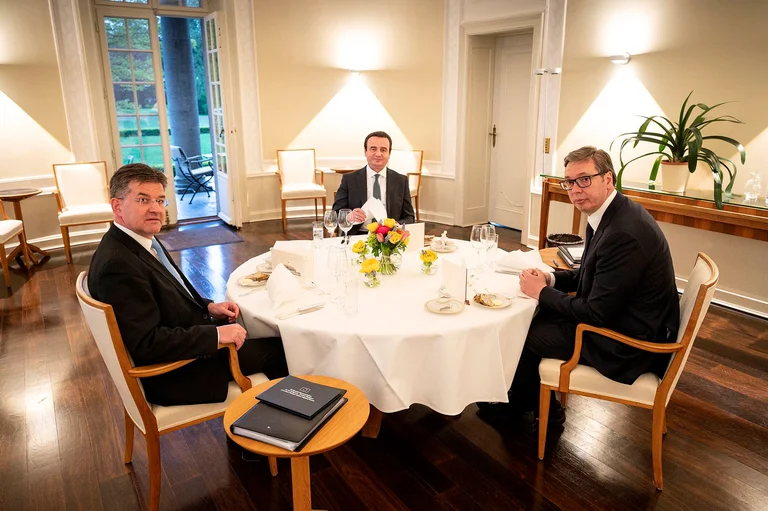
We remember that the country's prime minister, Albin Kurti, during meetings in Brussels that he had with the European five has said he was ready for the signing of the Basic Agreement, Ohrid's Annex and the new European-American plan for the Association draft state.
But, according to him, this did not happen, as it was Serbia's president, Aleksandar Vuciq, who refused to place firms in these documents.