9 minutes ago
Roth: Israel has the right to answer but not do what it wants
Periskopi(3 years ago)
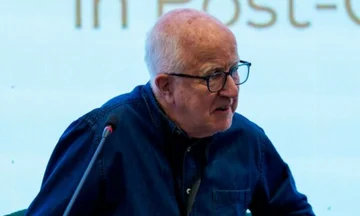
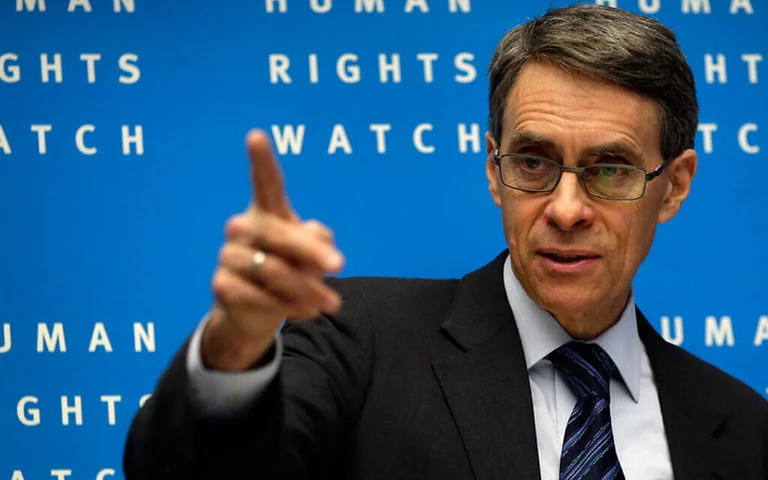
(3 years ago)Both Hamas and Israel are committing war crimes in the current conflict, Free Europe Roth, former executive director of the Human Rights Watch organisation, tells Radio of Free Europe. According to him, both sides are struggling without proper respect for the principles of international humanitarian law. Roth says Israel has the right to respond to <x0-mignorative [...]
Both Hamas and Israel are committing war crimes in the current conflict, Free Europe Roth, former executive director of the Human Rights Watch organisation, tells Radio of Free Europe.
According to him, both sides are struggling without proper respect for the principles of international humanitarian law.
Roth says that Israel has the right to respond to the terrible “of Hamas' ”, but that this “does not give it the freedom to do whatever it wants”.
It criticises Gaza's siege and the failure to allow humanitarian aid to people in need, while condemning the attacks of both sides in civilian areas.
The task of respecting international humanitarian law, not committing war crimes, is absolute task”, Roth says, who has served nearly three decades in one of the world's leading international human rights organisations.
Radio Free Europe: There are reports of more than 500 people killed by an attack on a Gaza hospital. Your first comment?
Kenneth Roth: At first it was believed to be Israel's air strike. The Israelis now deny this and say it was the Palestinian missile. We do not yet know with certainty who is responsible. If it was a Palestinian missile, it was clearly wrong. If it was a Israeli air strike, I really hope he didn't target the hospital.
What we can say at this stage, though, is that it is a tragic loss of lives and should be investigated who was responsible.
Radio Free Europe: Hamas and Israel alike are accused of illegal acts in the current conflict. How do you see their behavior so far?
Kenneth Roth: Clearly, both sides are committing war crimes. Hamas has committed terrible atrocities, killing hundreds of Israelite civilians and taking hostages of about 200 Israelites. These are war crimes, as are his periodic missile attacks on Israeli civilian areas.
The Israeli government has also committed war crimes, indiscriminately shooting at Palestinian neighbourhoods, really hitting entire neighbourhoods in its efforts to track Hamas' targets. But more widely shooting has also attacked large residential buildings, and hundreds of families have lost their homes.
Israel has also placed [Gase] under siege, blocking its food, water, fuel, and electricity. This is a form of collective punishment for the entire Palestinian Gaza population.
So, obviously, there are war crimes on both sides. It is important to note that international humanitarian law does not excuse one side, only that the other does not respect it. The task of respecting international humanitarian law, not committing war crimes, is an absolute task, not conditioned by the opponent's reciprocal behaviour.
Radio Free Europe: So, what are those fundamental principles that both sides are expected to follow according to international law?
Kenneth Roth: They are found in the protocols of the Geneva Convention and international law. The point is, during the war, you can open fire against fighters on the other side, but you can't target civilians, you can't shoot indiscriminately in civilian areas and, even, you can't target a military target if the influence on civilians is unproportionate. And you can't block sending humanitarian aid to people in need.
So these are the basic rules. They're elaborate in many details, but that's the essence of them. And, unfortunately, both sides are ignoring these rules.
Radio Free Europe: Can the parties be held accountable?
Kenneth Roth. In principle, each side is supposed to hold its war criminals accountable. It's obvious Hamas won't do that. The Israelite army also has a terrible record in this regard. So this is a situation where the International Criminal Court really needs (GJNP).
The JNP has jurisdiction over any crime committed by a Palestinian, or committed on Palestinian territory. This, because Palestine has been recognised as a member of the [UN] General Assembly, having the right to sign the Rome Constitution of the International Criminal Court which it has done. So JNP has jurisdiction there.
Radio Free Europe: Let me ask you, are there specific rules to apply to humanitarian and health needs?
Kenneth Roth: The main rule is that warring parties cannot block humanitarian aid to people in need. The United Nations has many humanitarian aid in the vicinity, ready to move from Egypt through the Rafah border, to Gaza. But this is not allowing.
It seems that Israel and Egypt are blocking it. It's not quite clear what's going on. But no aid has entered [The Gaza]. Israel is, of course, the main offender here. Egypt has been a partner in holding the Gaza blockade for the past 16 years. So the question is not whether there is help in the vicinity. Help. The question is whether those aides can get people in need in Gaza.
Radio Free Europe: And the attacks on civilian areas?
Kenneth Roth: Even if we assume that humanitarian aid entry is allowed, the question, as you suggest, is how it can be distributed safely when there are bombings. That's the problem.
Although the Israeli government has ordered 1.1 million Palestinian civilians to evacuate from the north of Gaza and go south, there have been numerous cases when people either go south of Gaza or settle somewhere there they've been bombed and killed.
I think an important dimension of this is that the Israeli army should offer guarantees that humanitarian aid can be safely distributed to the civilian population.
Many people see Hamas' terrible attacks and say Israel has the right to respond. That's true. But the right to respond militarily does not give you the freedom to do whatever you want.
And what authority do other countries have to intervene?
Kenneth Roth: At this point, I don't see any other government volunteering to intervene in conflict unless the American government probably threatens Hezbollah in southern Lebanon, if Hezbollah starts shooting Israel. But the question of whether a government is allowed to enter a war is really political judgment.
The reason why we see so many civil deaths is that both sides are struggling without proper respect for the principles of international humanitarian law.