13 minutes ago
Daniel Serwer cites dangerous scenarios of Serbia, Russia
Periskopi(3 years ago)
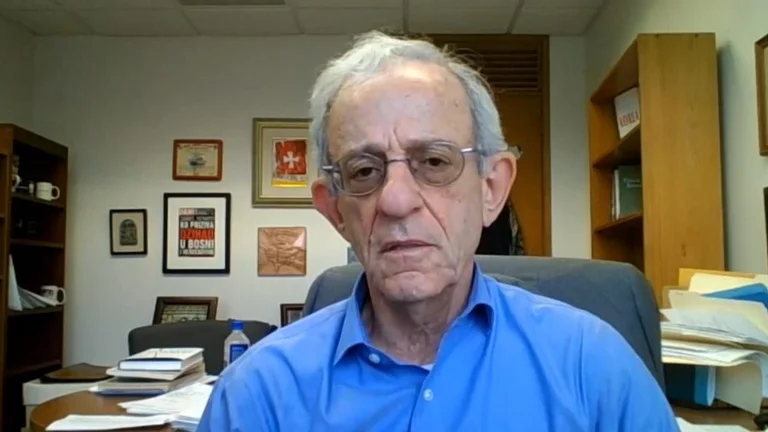
(3 years ago)American professor Daniel Cerwer, who is a good connoisseur of the Balkans, has said Serbia's efforts to destabilise Kosovo so that it can claim control of its Serb-run north that is now visible to all. Serwer says the issue of license plates last year, [...]
American professor Daniel Cerwer, who is a good connoisseur of the Balkans, has said Serbia's efforts to destabilise Kosovo so that it can claim control of its Serb-run north that is now visible to all.
Serwer says the issue of license plates last year, boycotting municipal elections in the spring, subsequent riots against elected non-Serb leaders, the attack on NATO peacekeepers in May, the kidnapping of Kosovo police were the pre-emptive of the failed Vucich uprising.
However, the American expert considers that the US and the EU have so far failed to draw the necessary conclusions, adding that they continue to call for dialogue without consequences against Belgrade.
The American Ambassador to Belgrade has even found it reasonable to suggest that Serbia should join NATO. The vast majority of Serbs oppose that prospect. Their government's recent behavior makes it not only irrational but also meaningless”.
Within the EU, holding Serbia accountable is difficult because it requires unanimousness. Victor Orban's pro-Russian Hungary is the common destroyer. The outcome of yesterday's elections in Slovakia will make Bratislava Moscow's future best friend”, says Cerwer.
The other adds that in the US, it is the strong and fruitless bid of the Biden administration's goods to turn Serbia towards the West, which, however, is blocking any serious reevaluation of Balkan policy. Advertisement
But it stresses that officials in question simply do not want to admit failure, “at continue to pursue domesticity, blind to Belgrade's wrongdoing”.
It's not just Kosovo
This blindness will have consequences. Serbia, like Russia, sees the West as split and weak. Belgrade may temporarily withdraw to Kosovo not to provoke a serious reaction. But Serbia will continue to pursue identistic goals in Montenegro and Bosnia and Herzegovina.
The formation of the government is blocked in Montenegro. The new president there wants pro-Russian parties in the coalition. The appointed prime minister is resisting, under pressure from Washington and Brussels. But he also refuses co-operation with the former Western-oriented ruling parliament. The country is in dangerous oblivion. Belgrade, working with the Serbian Orthodox Church, could create chaos there, as it has repeatedly done in recent years.
In Bosnia and Herzegovina, the International Community High Representative has made a series of foolish decisions that have damaged his position. It cannot enter more freely at 49% of the country's territory, known as Republika Srpska (RS). Its leader has taken entity within a few brief steps of secession. He only expects Moscow and Belgrade's approval to declare independence and jury. He has already separated RS from the country's judicial and executive authority.
What is further received?
The Ukraine war will be an important factor in what will happen next in the Balkans. Signs are not favourable in any of the possible scenarios.
If Russia were to lose in Ukraine, Moscow could try to receive compensation in the Balkans. The method would be destabilisation, not naked aggression. Serbia can be given green light and secret aid to create chaos in northern Kosovo, to force the installation of a pro-Russian government in Montenegro to NATO member and allow RS to declare full autonomy if not independence.
If Russia wins in Ukraine by being held in Crime and at least part of Donbas, the precedent will reinforce Serbia's push for at least de facto if it is not given control of the Serb population in Kosovo, Bosnia and Montenegro.
If the war in Ukraine continues another year, Moscow could decide to refocus in the Balkans and create a precedent there for what it wants in Ukraine.
All these scenarios would bring great losses to the US and the EU. They can be prevented. But only if current policies are to be re-evaluated now and taken a much tougher approach to combat Serbian irredentism”, says Cerwer in PECACEFARE./Telegraph