12 minutes ago
Turkey: 100-year-old Democracy with successes and failures
Periskopi(3 years ago)
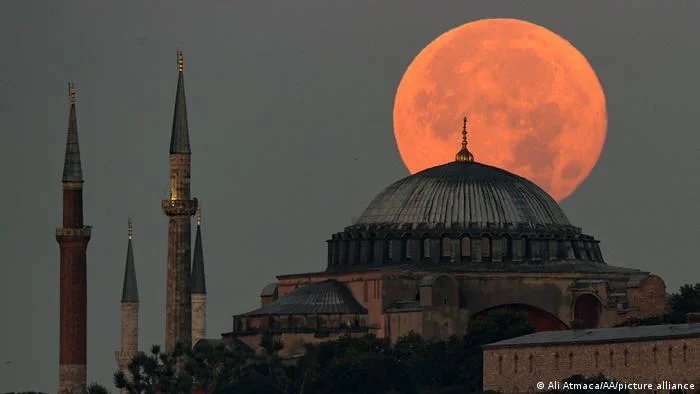
(3 years ago)Turkey's 2023 elections, which is also the year of the centennial of the creation of the Republic of Turkey, can mark the turning moment in the country's history. The Republic of Turkey was created 100 years ago. Since then, the country has experienced many events, beginning with the transition from the one - party system to [...]
The Republic of Turkey was created 100 years ago. Since then, the country has experienced many events, beginning with the transition from the one-party system to the multiparty, the 1960 military stamp, street violence that lasted more than a decade in the 1970s, followed by another stamp and by several coalition governments that have been unstable in the 1990s, as well as the takeover of power by Islamists in 2002.
Despite these small and large failures, the Turkish state -- created according to Western ideals such as democracy, equality and rule of law and secularism -- has survived and will celebrate its centennial next year. How stable are Turkey's democratic institutions now turning a hundred years old?
One of the most disappointing examples
Under the direction of Recep Tayip Erdogan, Turkey has removed its focus from the West by turning east. It has become more linked to Islamic values, has made new friends and allies in the Arab world, and has been militarily engaged in other countries, including Somalia and Qatar, where Turkey's presence is welcome. These developments have not satisfied all Turks because it has all been associated with increasing authoritarianism.
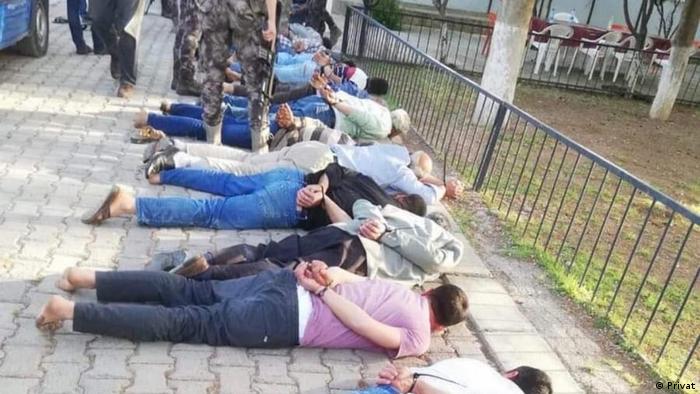 Experts talking of increased authoritarianism in Turkey
Sinem Adar, an expert on Turkey at the Centre for Turkish Applied Studies, CATS, in Berlin, makes a negative summary of Turkey's developments in running Erdogan. “Today, Turkey is an example of increasing authoritarian practices,”, she notes. Since the end of 2000, the country has increasingly strayed from rule of law and effective division of powers. ”
Adar is particularly disappointed with the direction the developments have taken at a time when conditions have been favorable for marking progress. In view of the experience achieved in seven decades, with multiparty elections and integration into Western institutional architecture, the failure of Turkish democracy can be said to be one of the most disappointing examples in global trends,”, it says.
Islam has taken on political power
One of the republic's basic values has been secularism, or secularism, one of the basic concepts of the French model of division of power between state and religion. Ottoman California was created in 1924, about a year after the republic was created. In fact, Dirigetti, the so - called Director of Religious Affairs, was created to give the State greater control over the political influence of Islam.
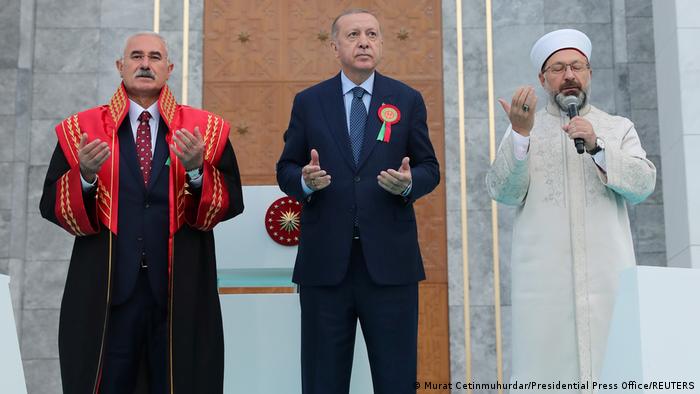 President Erdogan, Diaries chief Ali Erbas and Chairman of the Cassation Court pray during the inauguration of this new court building
It is not wrong to say that thanks to Erdogan's policies and discussions, religion plays today in Turkey greater political role than 20 years ago. Adar stresses that since the republic's creation, there has always been a thin line of division between religion and politics in Turkey”. But, in the past 20 years, years of the rule of justice of Erdogan and his party, the AKP, the Development Party, have brought major changes in the respect of “enlargement and depth of the intervention of religion in social life -- interventions that are done with state aid --” says Adar.
During the AKP government's time, Dirigetti has become a major political actor, explains Adar. “Dyannet has taken power as never before by increasing political weight and access to resources. Especially after the failure of 2016's stamp, Diyarnett has taken on a key role in daily narrative reproductions, under which the Turkish leading elites led by Erdogan embody the will of the people and advocate the country's authentic values and national values, as well as the territorial integrity of the state,”, it says.
Could Erdogan lose?
On June 18th 2023, Turks will go to the polls to elect the next president. Some polls say Erdogan, whose policies are not indisputable for all, could be lost if the opposition manages to compete with a single candidate. This issue is still pending. The so-called sixth Table, which concerns the six opposition parties that have joined, has not yet revealed the candidate or candidate until now. The sixth table seeks to restore the parliamentary system and impose restrictions on the power of the president, who has been greatly increased under Erdogan, helped by major constitutional changes made in 2018.
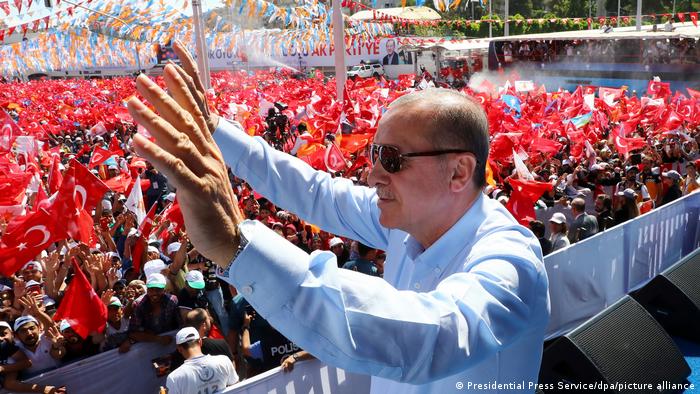 On June 18th, 2023 Turks elect future president
Unlike widespread trust, even in Turkey itself, the country still has functioning democratic institutions, providing up to a certain amount of free and fair elections. The year 2019 gave a message of hope to those who want to see another government: In local elections, opposition candidates won over AKP candidates in the country's two largest cities -- Istanbul and Ankara. This shows that Turkey still has democratic institutions operating and elections can currently be won by opponents of those in power, which does not happen in other authoritarian regimes, such as Russia.
But does the opposition really have a chance to win the June elections? According to Adar, the opposition now has the opportunity to present itself as a credible and strong alternative against the ruling party, especially if you consider the <x0nd) achievement of social outrage in the face of the government crisis, coupled with the deep economic crisis and worsening relations between elites and Turkey's ruling coalition. ”
In order for elections to be honest, however, there are power changes. “To win the elections, [the opposition first needs] to create [...] security at polling stations,” says Adar.
What if Erdogan loses?
But what path will Turkey take if power passes into other hands? The AKP is proud of developments designated as the international success of fears produced in Turkey, Bayraktar TB-2. Turkey has made plans to produce its own fighter aircraft as well as electric vehicles. What will happen to these projects if the opposition comes to power?
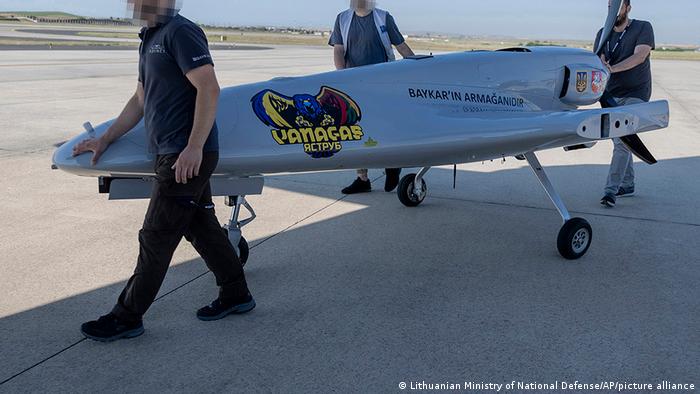 Dronet Bayraktar TB-2 produced in Turkey succeeds internationally
According to Adar, a new government will be able not only to continue with these projects but also to develop them further in practical and democratic terms. “Aspirat to create a local defence industry and in general an economy to rely on technological innovations and recent news will probably continue under another government,” says.
Another government, however, is most likely to be more realistic and clear in the assessment of Turkey's capabilities, and relations between the defence industry and foreign policies will be better institutionalised, regulated and more accountable so far. ”
Where is Turkey's future?
Given Turkey's current developments, it could be said that the country's europin future is uncertain.
The year 2023 is a crucial year both for Turkey and for Turkey- The EU, says Cigdem Ness, secretary general of the Istanbul-based Economic Development Foundation, the main institution dealing with Turkey- The EU.
If the opposition wins, it will focus more on returning the parliamentary system, and this process also includes the democratic agenda. With such a scenario, we can expect the revitive of Turkey's European perspective,”, it says.
Nass stresses that the possible return of an EU reform agenda to the post-election period “could bring speed-up Turkey's relations - The EU, through modernisation of the customs union, and greater co-ordination in trade, energy, foreign security policies and immigration policies. ”
She says man must be realistic: “Having no significant change in Turkey's EU agenda, efforts to shift reports from the perspective of a candidate country to a partner based on interests will become more visible. ”
Turkey remains important
Turkey may not be a member of the club, however, remains an important partner, a privileged partner. Nass says that “despite freezing EU membership talks, Turkey remains part of the expanded European architecture as an important partner for European security. ”
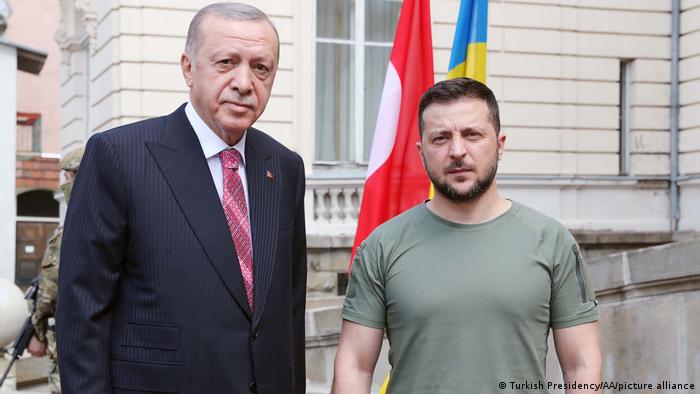 Ankara has taken on media role in Russia-Ukrainian conflict
Turkey is part of NATO's southeastern arm and has the second largest army within the Alliance, turning this country into important security creators. Especially in current conditions, when NATO seeks to have maximum unity to deal with potential aggressors like Russia and China, no one in the alliance would like the loss of such an important member.
While it does not appear that Russian aggression against Ukraine will end, Ankara's role as a media player, the role with which some success has so far, is expected to bear diplomatic fruit for Turkey in the 2023 electoral year. /dw