10 minutes ago
It is time for the establishment of Serb majority municipalities' association
Periskopi(3 years ago)
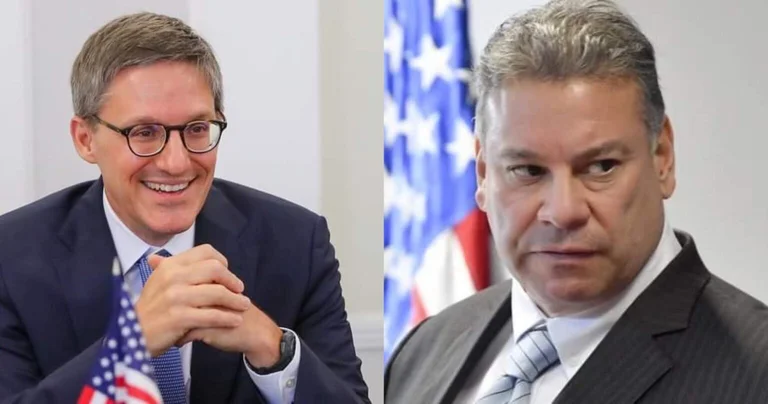
(3 years ago)From: Derek Chollet, American State Department Adviser and Gabriel Escobar, US Special Envoy for the Western Balkans United States and the European Union have put new emphasis on the integration of the Western Balkans into the transatlantic family. In February 2022, President Biden and Chancellor Scholz declared they are [...]
From: Derek Chollet, American State Department Adviser and Gabriel Escobar, US Special Envoy for the Western Balkans
The United States and the European Union have put new emphasis on the integration of the Western Balkans into the transatlantic family. In February 2022, President Biden and Chancellor Scholz stated that they are committed to “closing the issue of the integration of the Western Balkans... to finally realise a whole, free and peaceful Europe”.
Among our most important goals in the Western Balkans is to help create conditions for healthy, peaceful and stable relations between Serbia and Kosovo. Over the past weeks, along with France, Germany, Italy and the EU, we have travelled to Belgrade and Pristina to encourage both sides to accept the EU's proposal for both countries to normalise relations, disrupt the cycle of crisis and confrontation and to push forward with determination their European integration. This is a historic possibility that we believe both sides should exploit.
Among the most critical tasks remains implementation of the agreement for the Association of Serb majority municipalities. There's been a lot of discussions about association and it's time to make it clear what this association is and what it's not. In general, the association would be the structure for municipalities with ethnic Serb populations to co-ordinate issues and services such as education, health care, urban and rural planning and local economic development, in other words, functions for which all municipalities in Kosovo are responsible. It is a way of improving the daily life of citizens, building trust between ethnic Serbs and central government, ensuring better ties between the north and the rest of the country, and establishing mechanisms for Serbs for greater participation in Kosovo's social life. Equally important, implementing the agreement on Association is the remaining, legally binding, international obligation for which action is required from Kosovo, Serbia and the EU and the existing commitment of the United States to support the EU-launched dialogue.
Kosovo's pledge to create the Association does not violate its Constitution, nor does it threaten its sovereignty, independence or democratic institutions. We strictly oppose the creation of any ethnicity that resembles the Serbian Republic in Bosnia and Herzegovina (BH); The international community is not seeking to impose a solution. Instead, we are asking Kosovo to offer its vision to this Association and are willing to provide political expertise and support to ensure that it functions in the best interest of Kosovars. The EU's Special Representative has noted that there are 14 similar arrangements within the European Union. None of them violates the European systems of effective governance. Within the framework of EU facilitated dialogue, Kosovo may reject options that threaten its legal structure, but cannot refuse its pledges. As the most controversial country in the world, the United States of America is committed to supporting the people of Kosovo to ensure that its constitutional and legal structure is not violated.
What would the Association look like? Common interest, language and culture communities could work more efficiently together to address common challenges in providing public services, through the economies of the scale and exchange of better practices. For example, municipalities will be able to draft Serbian-language curriculums for local schools in some municipalities and not operate in vacuum and doing double work. Such co-operation is in line with the 2015 Constitutional Court's decision to pledge association and principles of good governance exercised in other countries in Europe.
What wouldn't be the Association? It would not add to the Government of Kosovo a new layer of executive and legislative power. This important principle dates back to Ahtisaari's proposal. The municipalities co-operate in co-manageing jurisdictions within Kosovo institutions and legitimate structures. Allowing certain municipalities to more effectively exercise the competencies they already have, it would help prevent the need for Kosovo citizens to seek services from illegal parallel structures as many now do and preserve the transparency and legality of the new structure under and within Kosovo law. And any support and assistance Serbia would offer the Kosovo Serb community would have to be transparent and go through these legitimate and allowed channels.
It is also important to note that an association of Serb majority municipalities would not be unethnic. These would be majority Serb municipalities where ethnic Serbs live, but other groups of Albanians, Bosniaks and others whose rights must also be secured and protected. Association members would be local officials currently elected as representatives of all residents in their municipalities. Among the main concerns of the Constitutional Court of Kosovo was the question of how to ensure that the association remains open to all ethnicities and to be fully within the structure of the Kosovo legal framework, and it called for the initial proposal to be adjusted and not rejected, as well as stressed the commitment to establishing such association under the Brussels agreement.
As Kosovo's closest friend and ally, we believe that by working for the establishment of association, Kosovo will meet a critical element needed for building its right future as a sovereign, multiethnic and independent state, integrated into Euro-Atlantic structures. We are willing to support Kosovo to fulfill this pledge and we will stand by your country at every step. The future of Kosovo and Serbia ʹ and of its youth who are now looking to foreign countries for opportunities may be bright in a full, free and at peace „Europe. All it takes is to use this moment together.
This column is published in the “Koha”