25 days ago
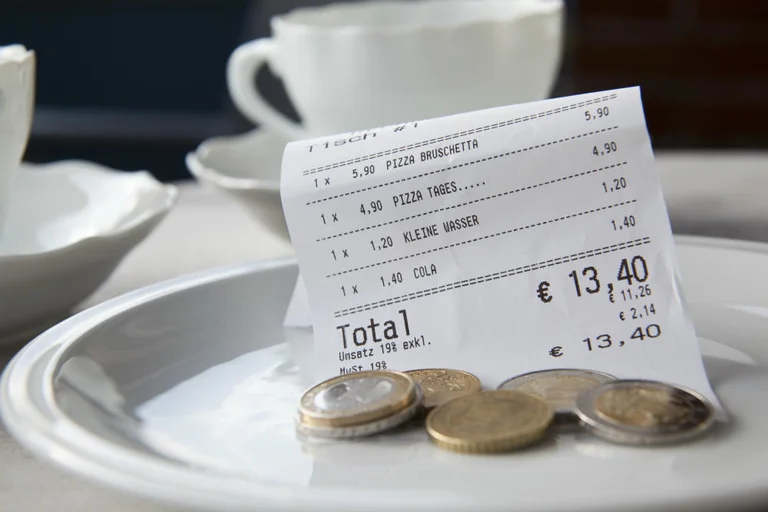
One-million-dollar question: How much tip should we leave?
Periskopi(3 years ago)
(3 years ago)A universal answer to one of the most embarrassing questions in the world has finally been found. How much tip should we leave on the table? The TripAvisor guide has made some general estimates about the amount of tips left in restaurants, taxis or even hotels worldwide. An interesting obsession is the fact that it is offensive [...]
The TripAvisor guide has made some general estimates about the amount of tips left in restaurants, taxis or even hotels worldwide.
An interesting observim is the fact that it is offensive to expect a tip in countries like Australia or Japan.
Bakshishi in Europe and the United States
Meanwhile, according to the latest TripAvisor report we left behind in 66 countries, many in Europe, 10 %s is a standard tip for the restaurant, 20 %s is a standard tip to eat at a restaurant in the United States. Also, US taxi drivers expect more tips than their counterparts anywhere else. This could also be one of the reasons why the digital platform that Uber has started to populate so far across the Atlantic and not alone.
If the United States ranks as the country with the highest tip rates, in the United Kingdom, Germany and Holland they tend to be about 5 to 10 %s.
When you dine in European restaurants, it is the rate for a tip to be given using spare coins or by increasing payment to the nearest round number.
In the United States, however, the tip is most often viewed as a fixed bill percentage, and this percentage has been growing.
In the early 1970s, the tip increased from 10 to 15 %s in the best restaurants, it seems to be 20% nowadays.
Digital machines inviting customers to pay tips are becoming increasingly common not only in restaurants but in objects where the tip was not previously expected, such as cafes and bread ovens.
Similar tenders can be seen for tips among hotel staff, where tips are not expected in Australia, Japan, Norway and Sweden, but in the US and Canada are expected at the highest tip of $2 to $5.
U.S. taxi drivers are expected to receive tips of about 15 %s, while across Europe the rate is closer to 10 %.
Pandemia also caused a change in the rates and expectations of the tip because customers were encouraged to give generous tips to help maintain open restaurants and shops.
The beans are embedded in the American economy and society as a whole, as waiters in 43 countries receive sub-minim wages, according to a report by PayScale.
But digital payments are also changing the way tips are distributed to waiters and employees.
Whatever is paid on the digital interface goes directly to the company's account, and depends on the company and any contracts they have in force that will determine how much of that money will be shared with the employee,” says the report.
Moreover, companies that process these payments also receive a percentage. Square, one of U.S.'s best-known payment systems, taris 2.6 % plus 10 cents per transaction when a customer knocks or slides his card during a digital transaction.
Bakshishi in South America
In Argentina, Mexico, Nicaragua and Peru, waiters have learned little, 10% reward is the rate in these countries, and should not be forgotten that prices are also lower in these countries.
Most restaurants in Brazil, Chile and Costa Rica include a 10% fee for table sit as part of the total bill (referred as Cubano in Chile). In these cases, no one expects a tip, but don't hesitate to place an additional 5-10% in cash, as waiters may not receive their share at the end of the day.
Bakshi in the Middle East and Parts of Africa
In Qatar, Saudi Arabia and the United Arab Emirates, waiters have learned to get a 15-20% tip. Even in countries like Dubai, which requires that the bill be added to a 10% service fee, restaurant employees expect an additional 15-20% reward for their efforts.
In countries like Jordan, Morocco and South Africa, the waiting staff will expect at least 10-15% tips. The most beautiful restaurants in popular tourism sites like Egypt and Israel will also add a service fee to the bill, so be careful to prevent double tip.
Bakshi in East Asia and the South Pacific
In short: Outside tourist areas, countries in East Asia and the South Pacific have little tip culture, so the tip is not expected and may even be rejected.
In China, Myanmar, Singapore and Taipei, the tip is considered unnecessary; however, some modern restaurants in China have started accepting tips, so who knows what the future holds?
Other Asian countries, such as Japan and Nepal, strongly believe that good service is simply part of the job, so the tip should reward only good service. In Japan, some waitresses may even kindly reject your tip.
Because of the influx of tourism, countries like Cambodia, Indonesia, Thailand, Vietnam, and parts of Turkey are becoming more open to obtain tips; however, the tip is still not considered common there, so it is not a mistake if you do not leave one.
In Australia and New Zealand, waiters and taxi drivers also do not expect tips, but appreciate it if you round the bill at the end.