14 minutes ago
Warming up with the most polluting air alternative
Periskopi(4 years ago)
(4 years ago)The Kosovo Government's recommendations that citizens save electricity, fears of frequent power reductions and high price of wood have postponed the Affliction (the truly well-known editorial identity) from Pristina to buy from illegal coal vendors for heating during the winter. He said that in August [...]
He said he bought five cubic metres of wood for heating in August, but they are insufficient to appear at the end of the winter season. For a cubic metre of wood, he said, he paid 75 euros, which compared to last year, is more expensive for about 25-30 euros. This, according to him, has been a reason to provide about six tons of coal.
We got two coal trucks. It means, they have cost about 300 euros”, said the refrain.
He stressed that he is aware that he has bought the coal from the illegal seller and that burning coal is one of the main air pollutants.
The state requires us to save power (ironic). On the other hand, forest care is required so as not to be damaged. Also, it is required that coal be not taken in immoral ways. But we too have no choice during the winter season. We need to warm up with something. If the state were to provide another solution for us, then neither would we as citizens, we would act that way”, said the rapper.
Kosovo's government has warned that in the winter season there will be energy reductions due to lack of production capacities to cover the price and price of electricity import. The executive has called on citizens to save the electricity during the winter so that the level of reductions will be reduced.
Kosovo Energy Corporation (KEK), with two thermal power plants -- Kosova A and Kosova B -- can produce energy up to 800 megawatts per hour, while consumer needs -- per winter day -- reach up to 1,300 megawatts per hour. The other gap is provided by import.
Illegal sale of coal “for survival”
Under the Law for Mines and Mines, the license for the Kosovo coal explosion has only Kosovo Energy Corporation (KEK). Consequently, no one else has the right to detonate and sell coal without license of exploitation.
But, in many countries in Pristina, coal for heating is sold in unlegal form. He is loaded in small trucks with covered trailers.
Radio Free Europe has contacted one of these vendors, who asked to remain anonymous to the public but his identity is known for the editing.
He said that anywhere in Pristina, he could bring a truck with about three tons of coal, at the price of 120 euros. He relates how he secures the coal for sale.
<x) I buy it in Jilioda and then I distribute it. All those people who pull the coals 10 to 20 meters [10 to 20 m] underground are poor and hold families”, said this coal salesman.
He added he is aware that the work he does is illegal, but, according to him, it is the only way to ensure survival for his seven-member family.
I have five kids I keep. I'm family. Let me get paid, let me get hired and I leave this right away. I'm unemployed. I live in Obilic. What do you think, if I stop this job and my kids die of hunger or what?
He added that requests for coal have been added, given that the price of firewood for burns has been rising high in proportion to last year.
Wood of 65 to 100 euros
The price of wood is now about 30 to 40 percent more expensive than last year, confirmed by a wood dealer named Xhafer.
He told Radio Free Europe that they can rarely even be found on the market at last year's price - up to 45 euros, but those timbers have been cut in unleg form. The price comes from 65, 70, 80 euros (over cubic metres), depending on the quality of the wood. It has up to 100 euros. It is estimated that those at the price of 75 euros are mostly sold”, Xhaferi said.
Radio Free Europe has been addressed to the Ministry of Agriculture, Forestry and Rural Development, with the question of what this was about this year's activities.
The prevention of illegal wood trading, as well as the eventual quantities seized this year by competent inspectorates. But until the publication of this text, this ministry has not returned answers.
This year's price hike has taken place. A ton of this fuel last year has cost about 200 euros, but in August of this year cost up to 450 euros.
Environment Ministry: We stopped the illegal explosion at five locations.
Free Europe Radio has been addressed to the Ministry of Environment, Space Planning and Infrastructure, with the question of how much the Ministry's Inspectorate has managed to fight explosion and illegal selling coal.
In a written response to this ministry, the Inspectorate, along with the Kosovo Police “, has conducted several activities about preventing the explosion and selling of coal”.
“Five locations in the Vushtrri and Obilic municipalities have been inspected and these activities are blocked, several heavy tools with which activity has been carried out, such as trucks, excavers, as well as a series of coal”, are said in the response of this ministry, which has added that activities in this direction are continuing and will continue in the coming days “until the complete prevention of this phenomenon<x>
Free Europe has been addressed to the Kosovo Police, with the question of how many cases of illegal blasting and selling coal and cutting and selling illegal wood have been prosecuted this year. But until the publication of this text, there has been no response.
Bektash: In the event of an energy crisis, air pollution will increase
Agron Bektashi, an expert on environmental issues, said most citizens in Kosovo continue to warm up with diapers, wood and coal, taking into account the energy crisis, which is being presented not only in Kosovo.
He took Pristina as an example, where, according to him, only 30 percent of citizens are locked into the city's heating network, Thermokos, while 70 percent of them are heated in alternative forms, some of which pollute air.
Consider, as he said, that the price of diapers and heating wood has been raised, for citizens it has become unbearable to buy them. They are now oriented to secure coal because the price is affordable to citizens. In addition, according to him, many objects also use oil and burnt oils for heating.
All of this, according to him, is at risk of polluting the air.
I'm afraid that if a crisis comes, as it is predicted, we may have increased air pollution and decreased quality, precisely because of burning coal, as well as other suspicious materials, which populations and individual homes will use to warm”, Bektash said.
He added that air pollution, compared to the last two or three years, could be much higher. This was because during the coronary pandemic, the air quality had improved because large industrial activities had been banned, the flow of cars at certain times, and especially at night.
Restore “
By 2018, the Kosovo Energy Corporation has given the coal as a gift to the workers of this corporation. In that year, the Ministry of Economic Development has made the decision to ban coal giving as a gift to KEK workers.
Recently, Economy Minister Artane Rizvanolli has stressed that he has abolished this decision so that workers can be helped overcoming the crisis.
The World Health Organization estimates that millions of deaths each year are related to human exposure to external air pollution from various elements.
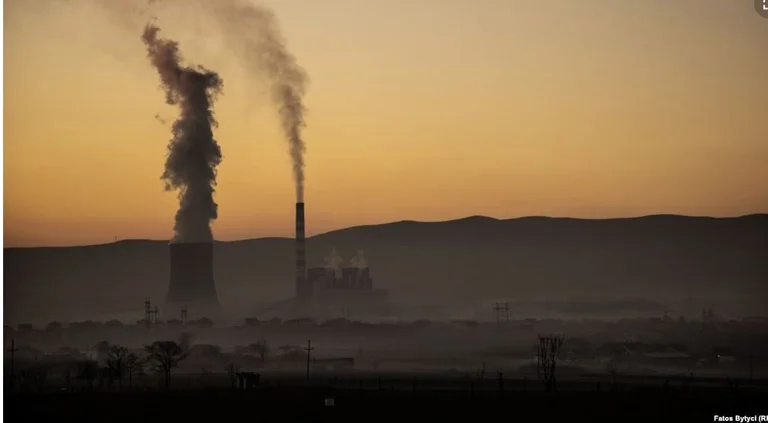
In measurements of various organisations, Kosovo is often ranked among the countries with the most polluted air in the world. The biggest air producers in Kosovo are considered thermal power plants, which burn coal for electricity production.
Last year, the World Health Organization has said that air pollution causes the premature death of seven million people a year.