6 minutes ago
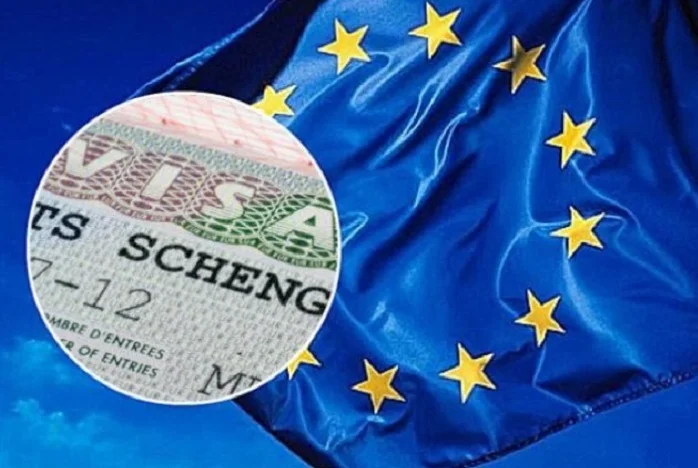
Visa liberalisation in line of days in the EU on 13 October
Periskopi(4 years ago)
(4 years ago)The issue of visa liberalisation for Kosovo will be in order of the day at the European Council's Co-operative Group meeting on 13 October confirms EU diplomatic sources in Brussels, the Czech EU Presidency has already sent letters to member states as a warning for discussions on the topic. Radio Free Europe has [...]
The Czech EU presidency has already sent letters to member states as a warning for discussions on the topic.
Radio Free Europe has secured access to this document, and it clearly expresses Czech desire for all EU member states to reach internal consensus to support visa liberalisation for Kosovo.
In this letter, Chekhia is also called in, reportedly, the foreign policy reasons for visa liberalisation for Kosovo, recalling that the European Commission has confirmed and is expected to reiterate that Kosovo has met the conditions.
“After the Czech Presidency thinks the reasons related to foreign policy for visa liberalisation for Kosovo are convincing, it hopes all EU member states will achieve internal political reconciliation on this issue”, the document says.
The EU's geopolitical approach to the Western Balkans is necessary. The region needs clear signal that the EU enlargement process is reliable and that the EU is ready to reward the reform efforts the Western Balkan countries make”, the letter said.
The Czech presidency cites precisely visa liberalisation for Kosovo as an example of how the EU can increase credibility in the region.
“Visa liberalisation is a key element in Kosovo's EU integration process, which is already too late. Kosovo is the only Western Balkan country (and one of the few countries in Europe) that has not yet secured the visa-free regime with the EU. This fact has a considerable negative impact on the domestic atmosphere and on the attitudes of Kosovo citizens about the EU's accuracy and credibility”, it says on paper.
There, as well, Kosovo's journey towards meeting conditions for its citizens' free movement is recalled.
The European Commission has launched a visa liberalisation dialogue with Kosovo in 2012, while in July 2018 it confirmed that Kosovo has fulfilled all criteria. The European Parliament has consistently confirmed that it supports visa liberalisation for Kosovo”, said on paper.
The Czech EU presidency stresses that it expects the European Commission to confirm the positive opinion on visa liberalisation for Kosovo.
The Czech presidency is in close contact with the European Commission. We agreed to a technical update of the visa liberalisation guide that would cover the period from the report released in 2018. This technical update is supposed to be presented as the visa processing group in October”, the letter is also said.
According to her, the Czech Presidency believes this update will be positive and that it will confirm the results of the Commission's findings in 2018.
The Czech Presidency's “ambition is to build support among member states and initiate the relevant legislative procedure, which will result in the relaxation of the visa regime for Kosovo”, the letter stresses.
Through it, Cekya says she understands even some EU member states' concerns about the implications it could have visa liberalisation for Kosovo for their internal security.
For this reason, the interior affairs ministries of member states are more reserved to approve visa liberalisation than the ministries of foreign affairs.
Cekia, however, is called on in the European Commission's assessment of addressing these concerns.
The European Commission is convinced that granting visa liberalisation to Kosovo poses no danger to member states in the form of immigration wave”, the Czech Presidency says, adding that Kosovo has also taken measures to address these concerns.
“Vlent also stress that the Parliament of the Republic of Kosovo has adopted the visa liberalisation resolution on August 3rd. With this resolution, Kosovo institutions pledge to implement all reforms, to ensure rule of law, including those dealing with the fight against corruption and human rights protection. The Czech presidency praises the adoption of this resolution, which is an important testimony to the dedication on the part of Kosovo”, said on paper.
The first discussion in the Council's visa liberalisation group for Kosovo is expected to take place just a day after the European Commission adopts and publishs the annual enlargement package, which will also be accompanied by individual progress reports on countries involved in the process.
Even the European Commission has confirmed it will report positively on meeting the criteria on Kosovo's part, as regards the visa liberalisation issue.
Diplomatic sources in Brussels see Czechia's goal to launch the procedure for the visa liberalisation decision as evidence that there is already great support for it in the Council.
But, despite that, they are reluctant to cite deadlines when the decision would be adopted and when visa liberalisation for Kosovo citizens would come into effect.
Of the six Western Balkan countries that remain outside the EU, only Kosovo citizens cannot freely move to European countries, or what is known as the Schengen zone.
Kosovo, as well as Bosnia and Herzegovina, has only a Stabilisation Agreement with the EU, which is the first step towards membership in the bloc.
Montenegro, Serbia, Albania and Northern Macedonia, meanwhile, have opened negotiations for EU membership. / REL/