13 minutes ago
The testimony of survivors of the Deliu family massacre at the Upper Desna
Periskopi(4 years ago)
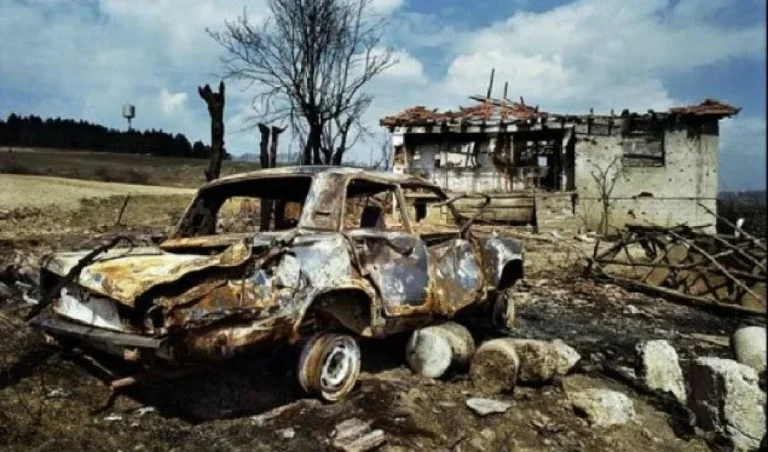
(4 years ago)With her mother's clothing in her hands at the place where she died, Besnik Deliu begins the confession of experiences during his family massacre. Not only is it evidence of the mother of the faithful man but this mountain is filled with Deliu family clothing. Facts about Serbia's crimes at the Upper Abria, one of the most massacres [...]
Facts of Serbia's crimes at the Upper Abria, one of the most dire massacres that this man, he experienced at the time, five years old.
The “people who escaped the promotions started moving to this part of the mountain. Some of my right side, someone on the left side of this stream is behind me. But Serb forces were too close to killing our families”, claims Besnik.
As in other massacres, Serb forces after the infantry promotion made sure they did not leave a living witness. From a six-week-long baby to the oldest 94-year-old, 23 Deliu family members were killed. Faithful, I don't know how he survived.
Serbia's “Forces have taken us, and they have taken us a mile from the site of the massacre. We've been taken to a house to an old man and an old woman here near”, he says.
With trauma and pieces of grenades in his body, this was just the beginning of his suffering.
I know in the third day that my uncle has come to visit us, because he's been late to figure out where we are. I don't know what uniform it is, and I'm left unconscious. And then I know that when my self came to me, I woke up in the hand of a riddle. Four months ago, journalist Julius Strauss came to Kosovo after 22 years and visited us. In this place where we are I've heard the true event from my Mix1>, the survivor of the massacre concludes.
With journalist Julius Strauss, then as a translator was Lemane Kamberi-Murqi. It shows that her colleague, from international media Daily Telegraph, was left with trauma after the massacre.
“Gazetari that I translated for later left journalism, there was trauma or posttraumatic dissert stress (PTSD), and he left the profession. The journalist has left the case of Obria”, the translator declares during wartime.
Muriqi, in the quality of the translator, has experienced it severely but not as well as the first persons to see her dead bodies.
God has saved our consciousness and memory, me and I. He was faced with the situation and cared for the bodies, I wasn't able to help and capture the bodies, because I was afraid of”, indicates Union Deliu, relative of the massacres.
Among the dead bodies was a baby in the womb. Shortly after she was found, she too died. Witnesses and family members say the prosecution has never been interested in justice. That fact adds to the pain of family members, especially in the anniversary of today. / RTVD Dukagini