17 minutes ago
Where Special Court Archive Will Remain
Periskopi(4 years ago)
(4 years ago)So far, dozens of sessions have been held. And close to a million documents have been produced in them. But none of these documents will end up in the Kosovo archive. This is because the Kosovo court on Dutch soil, after the end of the mandate, will not hand over its archive State Agency. [...]
So far, dozens of sessions have been held. And close to a million documents have been produced in them..
But none of these documents will end up in the Kosovo archive.
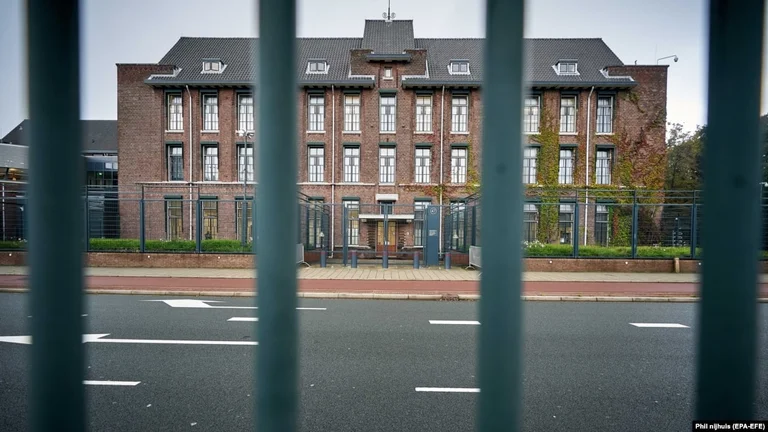
This is because the Kosovo court on Dutch soil, after the end of the mandate, will not hand over its archive of Kosovo State Agency.
Where the Specialised Chambers Archive will remain, from The Hague has told of Tv1 in a written answer.
“Noni 61 of the Law for Specialised Chambers and Specialised Prosecutors predicts that the archives of Specialised Chambers, the Specialised Record and Prosecutor's Office are the property of the Specialised Chambers and the Specialised Prosecutor's Office, and will be held in a separate warehouse outside Kosovo”, said in response to the Specialised Chambers.
The Special did not provide details of where the documentation will be stored after the completion of the Special Chambers mandate.
While adding that the documentation of confidential status cannot be published without permission from the Specialised Chambers Judge and Special Prosecutor, even after the court's dismissal.
And they have not welcomed it to the State Agency of the Archives of Kosovo.
“During their work, the Specialised Chambers will create a considerable amount of material, but since this is related to the responsibility that ASHAK has, to preserve the fund-creator, they are established, in Article 62, are not bound and deprive us of the right to consider this documentation as the state of Kosovo”, said Bedri Zyberaj, chief executive chief at ASHAK.
But in what cases might access to the record of specialized rooms be required?
This for Tvjet1, the attorney accredited by the Special Court, Artan Kerkin, has shown it.
“Catement in this documentation may be required only for the needs of a criminal procedure that will take place or take place in Kosovo, but in the last instance, specialised rooms will decide whether to allow full or limited access to interested persons”, Qerkeyni said.
In 2015, with 82 votes, 5 against and 1 abstention, Kosovo Assembly deputies voted on constitutional changes, which paved the way for the founding of the Special Court.