14 minutes ago
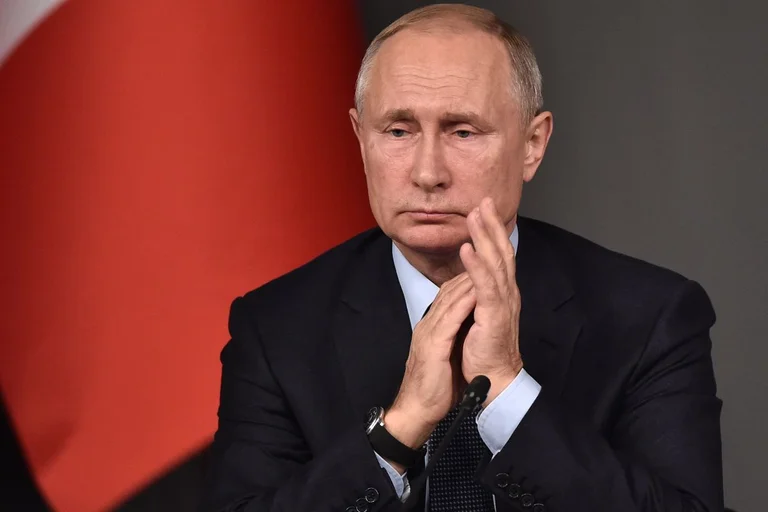
Putin's grand speech is expected today: Where to Focus
Periskopi(4 years ago)
(4 years ago)The last great talk Russian President Vladimir Putin delivered directly came in the early hours of February 24th, when he announced that he was ordering tens of thousands of troops to invade Ukraine in what has become the biggest war in Europe since World War II and the greatest test [...]
His next speech, scheduled for September 30th, comes at one of the most critical moments in his four mandates as president.
The planned talk is given on the same day as the Kremlin's warning of formal annexation of four Ukraine regions, which are partially occupied by Russian forces.
Putin will hold a <x0fjaminal volume” at a ceremony at the great Kremlin Palace, spokesman Dmitry Peskov said. Leaders installed by Russia in Ukraine's regions who will sign agreements to make these regions in the eyes of Moscow, parts of Russia, will participate.
Putin's planned speech also comes nine days after his pre-recorded speech, through which he announced partial military mobilization.
The mobilization announcement has also sparked a wave of protests across Russia, during which hundreds of people and Russians from their country have been arrested.
About 260,000 Russians have left the country since Putin declared mobilization on September 21st, according to Russian media reports.
Putin “found himself in a situation from which there is no good access, so it is not possible to guess what he will [say] ” in his speech, said Abbas Gallyamov, a former publisher of Putin's speeches and political adviser, now living outside Russia.
“will probably [say]... that the purposes of our operation have been achieved and we suggest the other side stop the fight”, he said in a message to Radio Free Europe. And if they continue, we will use nuclear weapons”.
Here is what you should consider in Putin's speech.
Annex
As of May, less than three months after the invasion, Russia's puppet administration in the southern region of Herson announced it was intended to seek annexation and union with Russia.
At the time, war was already in phase two, as Ukrainian forces prevented a Russian attempt to invade the capital, Kiev, and Russian commanders withdrew and moved troops east to an offensive in Donbas.
Most of Herson and a part of the neighbouring region, Zaporija, meanwhile, had been captured and occupied by Russian troops. During the summer, Russian government officials repeatedly travelled to the regions, signaling they were aiming to make referendums early in September.
Ukraine, however, intervened. Strengthened by high-powered Western missiles and artillery, the commanders began targeting Russian forces on the west bank of the Dnieper River, and Russia moved a considerable number of units from Donbas to the south in preparation for a Ukrainian counterensive.
Russian officials later announced that referenda expected to be held in Herson and Zaporizhja would be postponed until last week, when authorities suddenly announced that the vote would begin in those two regions, plus the two main areas of Donbas: Luhansk and Donjeck.
The Russian authorities' attempt to seek sovereignty over the four regions in highly suspicious circumstances reflects the capture of Crime. In March 2014, Russia sent unidentified soldiers to the Ukrainian peninsula, armed men took control of regional administration officials and independent media were shut down. Authorities later held a vote that was rejected by most countries worldwide, and Kremlin now considers Crime part of Russia.
In this case, the process is even more biased: Among other things, so-called referenda were held amid fierce fighting, and Russian forces control only one of the four regions, Luhanskun.
When Putin speaks, listen carefully to how he describes the war that Moscow still formally calls a <x0 military special operation”
Furilization Intrigues
Defence Minister Sergei Shoigu said that Putin's mobilization order required that up to 300,000 men be brought in to join the war in Ukraine; at least two Russian-language media { Novaya Journal and Meduza Qaeda have actually reported that authorities are seeking to collect about a million or more.
Either way, it's a military personnel mobilization on a scale Russia has not experienced since World War II or even since 1904, when the Imperial Army launched a partial mobilization as Russia fought and lost a war with Japan.
Judging by the flood of news reports, posts in social media and interviews, and the flow of Russian men trying to leave the country has been chaotic and random. It has also faced growing resistance in some countries, such as Dagenstan in the Northern Caucasus and in Yakutsk in the Far North.
The chaotic nature of the call has sparked some criticism from prominent public figures, such as pro-rus television host Vladimir Solovyov, who blamed local recruiting officials.
“The sudden appointment of mobilization and its difficult execution reflect the poor situation within Putin's fight machine”, said Kevin Ryan, a retired US Army Brigadier General who is now a member of Harvard University school.
Nuclear Deception
In his speech when he announced the mobilization, Putin also claimed without evidence that Western countries had made nuclear threats against Russia and he posed clear threats.
I want to remind you that our country also has different means of destruction”, he said. And in the event of threats to our country's territorial integrity, we will certainly use all the means we have available to protect Russia and our people. This is not a” fraud.
This is not the first time Putin or other Russian officials played the nuclear drum. In fact, Putin has repeatedly threatened to potentially use nuclear weapons under certain circumstances since the prosecution of Crime.
However, underlining his “statement is not a” fraud, for many observers this served as a reminder that Putin's past threats were viewed mainly as empty.
The “Ide was probably to reinforce the message” of Russia's nuclear power, said Pavel Podvig, expert on the Russian strategic armed forces working at the United Nations Institute for Disarmament Research”, but it is difficult to know if it worked”.
Dmitry Medvedev, former president and prime minister who has become a combative public commentator later echoed threats, repeating how Russia's nuclear doctrine justifys the use of weapons -- if the existence of the Russian state is under threat.
Pentagon officials said last week that the United States had not seen any Russian movements that would cause a change in the US nuclear position.
However, military experts point out that while American intelligence is likely able to detect a movement, let's say, an interc mount ballistic missile from its silo, it would be more difficult to detect preparations for a nuclear nuclear weapon “tactic”, which are destined for small-scale use on the battlefield.
See if Putin repeats nuclear threats, escalates his rhetoric, or worse still orders an apparent kind of deployment of nuclear forces. / REL/