25 minutes ago
International package, former Ambassador Chaney: Kurt will accept or leave power
Periskopi(4 years ago)
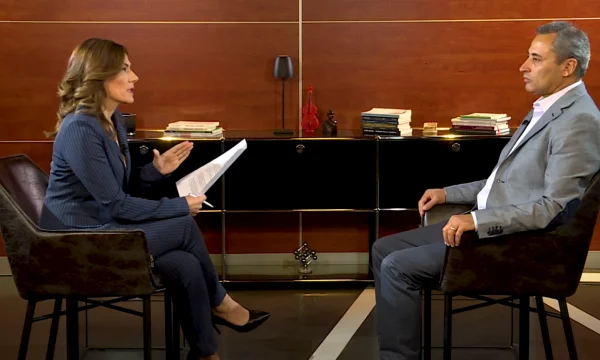
(4 years ago)The package prepared by international experts, which will be presented to Serbian President Aleksandar Vucic and Kosovo Prime Minister Albin Kurti for approval, requires commitment and concessions from the parties. That thought divided into the interview with Merita Hakljan, former Albanian ambassador to Kosovo Arben Ceyku, under whom Kosovo is located in dramatic stagnation, where it is not exercising [...]
That thought divided into the interview with Merita Hakljan, former Albanian ambassador to Kosovo Arben Ceyku, under whom Kosovo is located in dramatic stagnation, where it is unable to exercise full sovereignty in the north as well as in the international arena. Under these conditions, Ceyk emphasises, Kosovo must make concessions.
What I can say is that it's about a package prepared by international and local experts, and this would be presented to Kurti and Vucic to approve. It doesn't matter whether you know Vucic, but the important thing is to know Serbia. This package requires commitment by the parties, especially from Kosovo, that should make concessions. Be responsible for the challenges, and it takes a conversion of energy to meet this challenge. Kosovo is an independent state, but it is unable to exercise full independence in both the north and the international arena, where there is recognition stagnation and no further advancement in international relations. These are two realities we must accept. While this process has stalled dramatically, then Kosovo must be prepared to take further steps. Kurti is the leader who has come with rhetoric against independence and Vienna talks, his rhetoric has been clear and his objections to what he has considered as Zajednica. The Serb municipalities' community in Kosovo is within the Ahtisaari package, and Kosovo has become a state, with the Ahtisaari package based. An admission is required because the entire problem of relations with Serbia is stuck there. It's very simple stuff. Vucic said: We can accept Kosovo, but we must get something in return, even then they were close to a solution. In my knowledge package contains recognition of Serb municipalities in Kosovo”.
For Chaney, the constitutional Court's reasoning is an excuse, for when international solutions are required, the state's interest in it should be interrupted.
“Justification is in the argument of the Constitutional Court, but when called, international interest in the Constitutional Court presupposes. If the future of the state of Kosovo is threatened, who is worth the Constitutional Court? The Constitutional Court can re-admission a new act of judgment if the package is revised by parliament and the Constitutional Court can issue its verdict. It's not the full obstacle of Constitutional Court”.
And under these conditions, the former ambassador says Kurti is in a difficult situation like former Macedonian Prime Minister Nikola Gruevski, when he was politically invested against compromise with Greece and offered to choose compromise or leave power.
Would Kurt be able to step between himself with the investment he made? We're in parallel between Gruevski and Kurt. Gruevski was heavily invested against compromise with Greece and made known investments Skopje 2014. He was involved in dialogue with Greece, but he never accepted the name change, and when offered to accept the agreement or leave power; leaving power was the best solution otherwise would destroy the entire political heritage. Kurti is in a difficult position to invest against Zajednica and if he accepts opponents he will be thrown against. I think Kosovo's political class will look beyond Kurt if asked to compromise that does not violate Kosovo's citizenship, but secures Kosovo citizenship. If there is a problem in the functioning of the most difficult state today, it is booking of countries for Serbs who are always threatening to the stability of Kosovo that have fallen victim to the dialogue and relations of Serbian representatives in Kosovo at the command of Belgrade have withdrawn their support, and these governments have fallen, just as the government Kurti” might fall.
Chiek suggests politicians in Kosovo to outdo themselves and unify in their positions in the interests of the state.
Kosovo has accepted some painful compromises. Should it be more transparent with the talks, Kurt must share the burden of challenges with others and achievements. Kosovo has not started as a state when Kurti entered the office, Kosovo is the biggest project. These politicians outrun themselves. Kosovo is the first victim, we should encourage it and not put it in the ring and give it the shots. Kosovo leaders fight for the power of the state of Kosovo. I remember Rugova making painful compromises for Kosovo's future. I'm sorry to see the opposition ambush to find Kurt in the wrong and bring him down. A leader will definitely come out to sign a deal. Kosovo in this status quo is not making progress, and international pressure is that each should give something of itself to achieve compromise and everyone can receive a cost. Acts on behalf of the state and the public are longer than those for a set of elections”.
At this point, an active role must be made by President Osmani for unifying political factors at this historic moment for Kosovo.
I would suggest that President Osmani play a pro-active role in unifying political factors in Kosovo. It is there at a historic moment for Kosovo, but a comprehensive transparency dialogue with leadership must be in place to share responsibilities. Kosovo has shown that when the political class is together it had products. Today is the time for the Kosovo political class to be unified, even in dialogue with Serbia, behind Mr. Kurti must all have the leadership of Kosovo. Kurti cannot unilaterally make talks and then seek support. I consider the challenge”.
Asked what would be the solution for municipalities in the north in order to avoid Bosnia's scenario, Ceyku stresses that Kosovo's UN membership would downplay any municipal structure within Kosovo's territory and give Kosovo power to exercise sovereignty.
The “municipalities in the north are operating outside Kosovo's jurisdiction. Kosovo has not extended sovereignty throughout the territory in the northern part, these municipalities maintain ties with the rest of the Serb authorities on the other side of the border. Kosovo formally seems to have control over them for taxes, but is far from managing northern municipalities. The recognition of the state of Kosovo by Serbia and Kosovo's membership in the UN would downplay any municipal structure within Kosovo territory. It would give it power to exercise full sovereignty in the entire territory of Kosovo and end discussion on borders and other solutions”.