14 minutes ago
Family Services
Periskopi(4 years ago)
(4 years ago)At the entrance of nearly every clinic of the University Clinical Centre in Kosovo is the schedule of visits by patients between 2: 00 p.m. and 14:30. At this time doctors also include consulting the patient's condition. However, it is ignored, and visitors can be seen every hour even at night. [...]
At the entrance of nearly every clinic of the University Clinical Centre in Kosovo is the schedule of visits by patients between 2: 00 p.m. and 14:30.
At this time doctors also include consulting the patient's condition. However, it is ignored, and visitors can be seen every hour even at night.
We can't stay home with a gaille. Only one cannot take care of a sick person, partly motionless”, says Teuta Tashol, whose father is lying in the Clinic of Neurology.
It shows that family members help it and other personal needs.
During the day we come many, we're a large family and we're wandering around times”, Tasholli says.
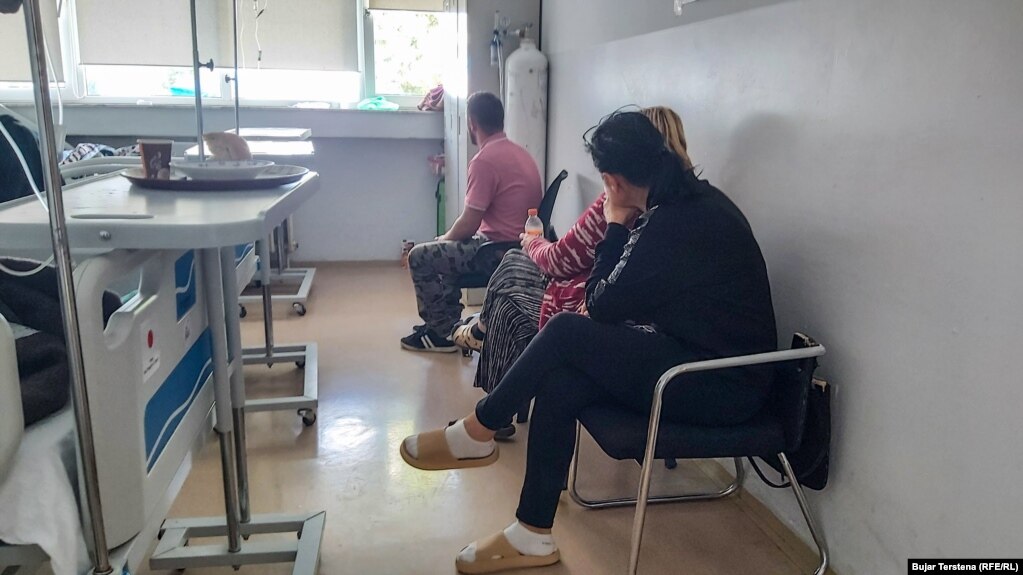
Besides health personnel, family members care about their relatives lying in one of the QKUK clinics.
The leaders of this clinic agree that in the absence of nursing staff, they need the help of their families but not a large number of them.
There are certain needs that we cannot cover and family members, in such cases, are presented as help. We need a family member, but there's three, four, five... ”, says the director of Neurology Clinic, Edmund Common, for Radio Free Europe.
Subtitles by visiting family interfere with work... Everyone wants to get information on patients directly from the doctor. It is not enough for us to inform only one family member”, he says.
At the clinic run by the Comon, 26 doctors and about 70 nurses are working with shifts and custody. The clinic has seven suites with 49 rooms.
The community says that according to standards, a nurse would have to care for 4-5 patients, while in Neurology a nurse would likely care for 16 patients.
“does not know who the patient's visitor is”
Similar family bubbles can also be seen in the Cardiology Clinic, located tens of meters away from Neurology.
The REL team stood there on September 15th, where, in addition to others, it saw visitors in dusty clothes who had apparently come directly from their jobs.
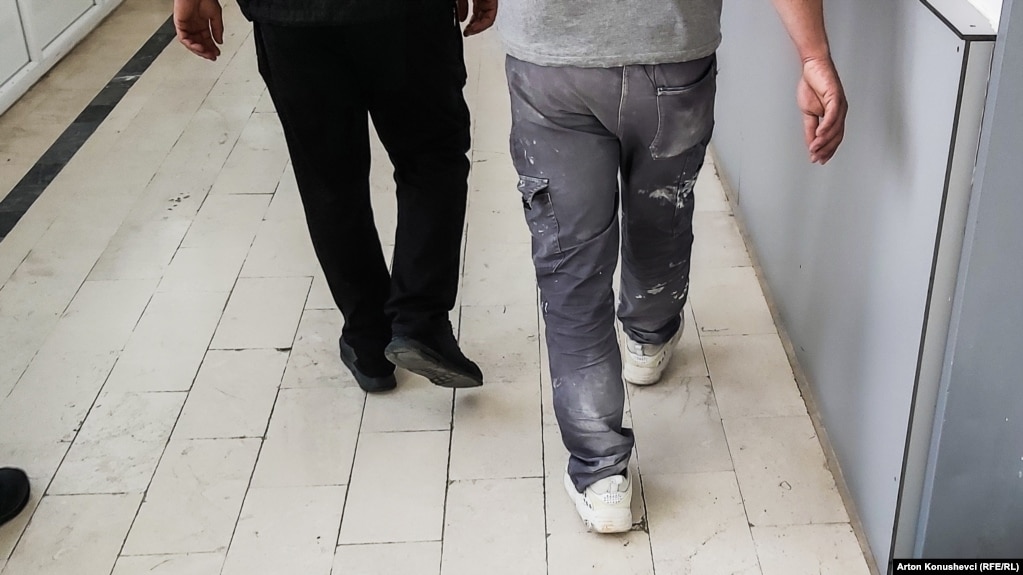
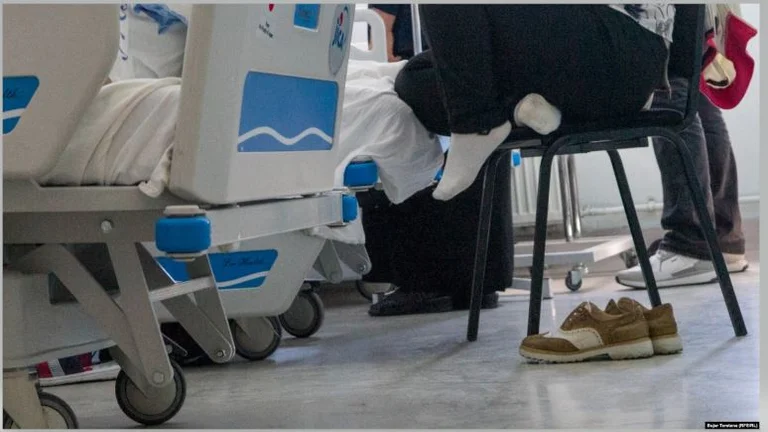
Visitors to patients lying in one of the clinics at QKUK.
The Cardiology Clinic works 41 doctors, 63 specialists and 48 nurses.
One nurse admits that the staff cannot succeed on its own, but adds that the presence of many visitors to a room makes work difficult.
There is never a room that doesn't have visitors during the day”, says this nurse, not wanting to be identified.
At QKUK, for the safety of the facility, a private company is engaged. Her workers are at the entrance of clinics, but they do not always stop visitors.
Company representatives tell Radio Free Europe they are making efforts to reduce the number of visitors, but, according to them, the issue depends on the institution's leadership.
We can bring the decision to close the doors, but we can't, because we need family, both for medicine and for food”, Kamber says, adding that the number of visits must be reduced.
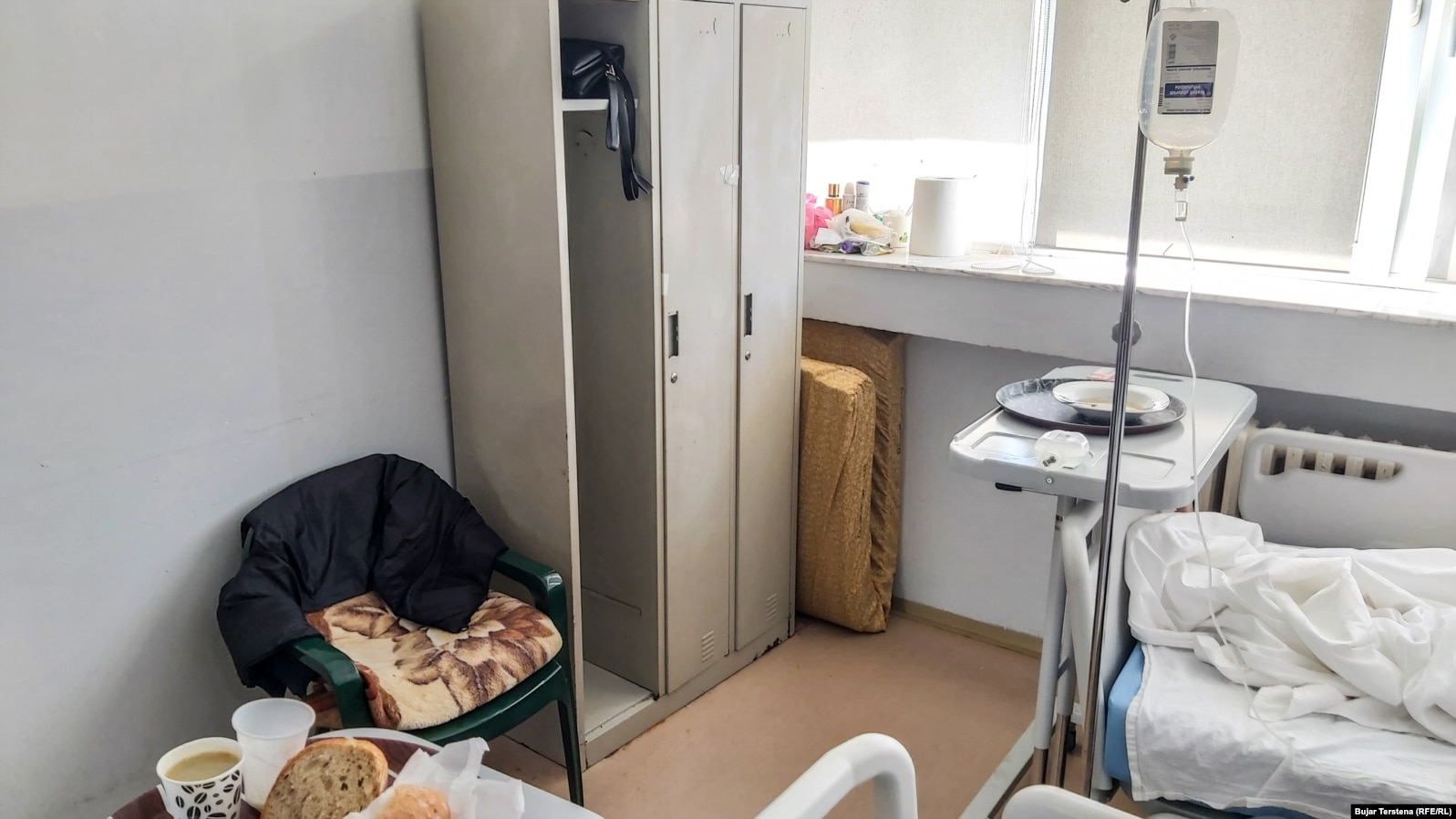
A room of patients with family items standing there, September 2022.
The Cardiology Clinic works 41 doctors, 63 specialists and 48 nurses.
One nurse admits that the staff cannot succeed on its own, but adds that the presence of many visitors to a room makes work difficult.
There is never a room that doesn't have visitors during the day”, says this nurse, not wanting to be identified.
At QKUK, for the safety of the facility, a private company is engaged. Her workers are at the entrance of clinics, but they do not always stop visitors.
Company representatives tell Radio Free Europe they are making efforts to reduce the number of visitors, but, according to them, the issue depends on the institution's leadership.
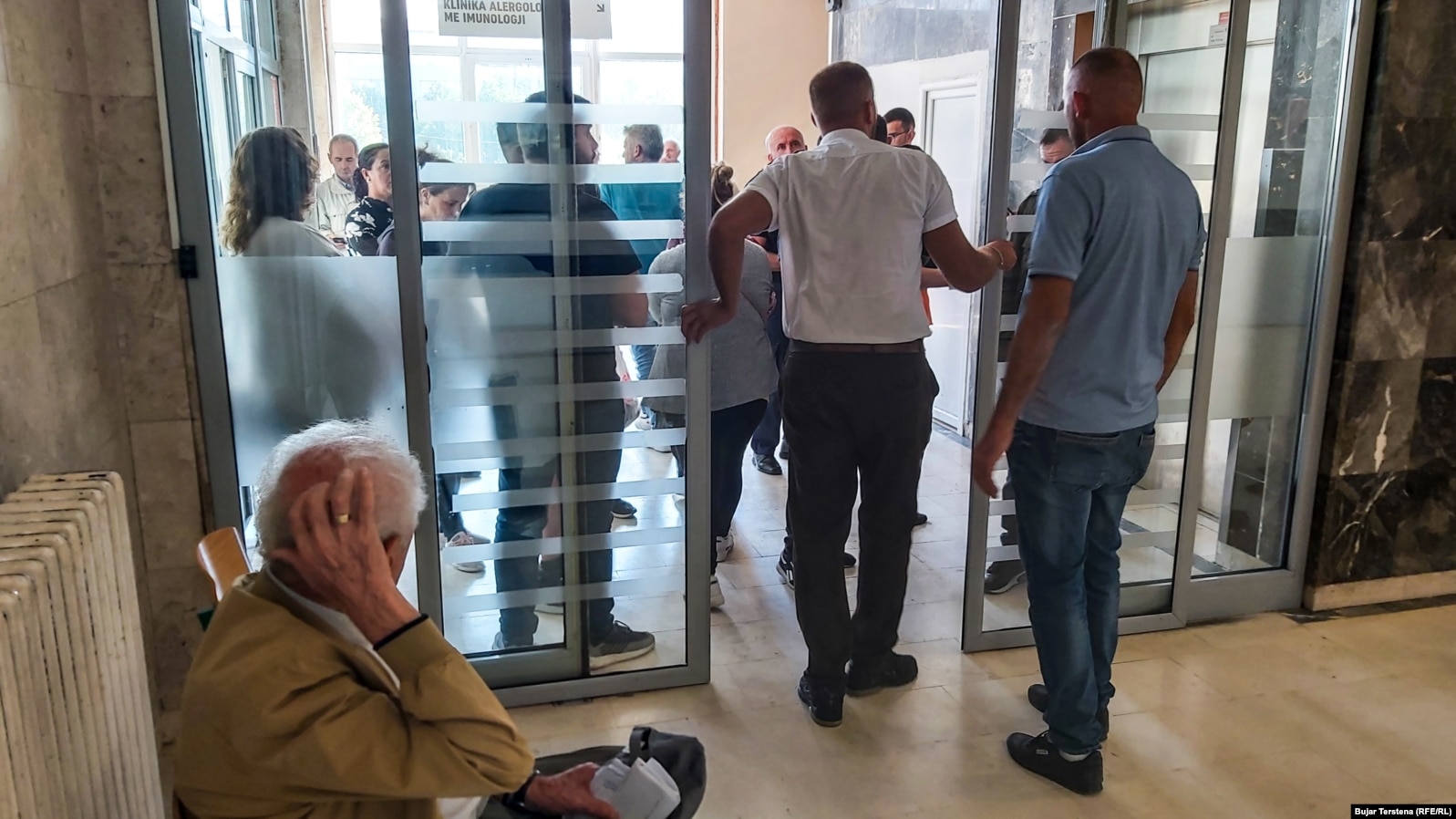
That's what the corridor at the Cardiodrogy Clinic looked like on September 13, 2022.
The Directorate of the University Clinical Centre of Kosovo says that, very soon, a new <x0-phasis of information” of patients and family members who visit them will start, but do not give details about how this might affect and can it affect the reduction of the number of visitors.
What are medical capacities?
Kosovo's health personnel comprise more than 14,000 people, including more than 3,200 doctors of all profiles and over 7,000 nurses.
According to the Union Health Federation, Kosovo's health system needs over 4,000 additional nurses.
Kosovo, for years, has faced evacuation of medical staff.
According to Kosovo Medical Oda data, 580 doctors have left Kosovo in the period 2018-2021. Nurses also leave mainly to European Union countries.
Servers “unnecessary” target Europe
The fugitives complain mainly about working conditions, including salaries.
The gross salary of doctors in Kosovo is 630 euros, while nurses are around 400 euros. Last week, the Government of Kosovo has formed the Executive Commission for Health, which will be led by Prime Minister Albin Kurti.
The responsibilities of this commission are said to include the development of the public health sector.