16 minutes ago
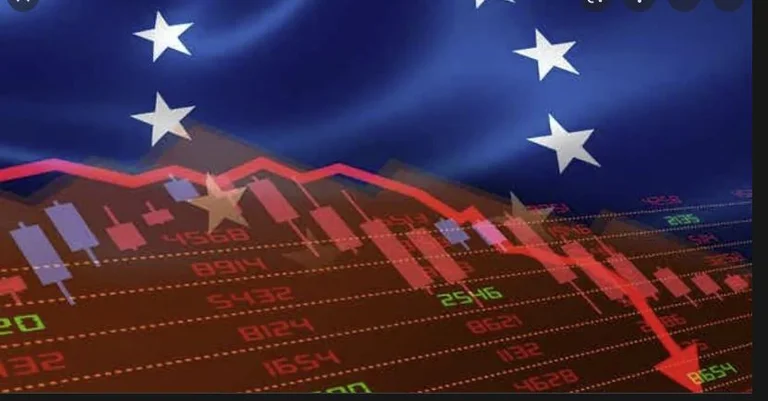
Europe is moving towards recession. How heavy will it be?
Periskopi(4 years ago)
(4 years ago)The impact of inflation is coincided with an economic downturn, writes The Economist warning signs are already visible. Russia's war on Ukraine, the uneven recovery from the Covid-19 pandemic, and the drought in most of the continent have together created a serious energy crisis, high inflation, supply cuts and uncertainty [...]
The inflation shock is coincided with an economic downturn, writes The Economist
Warning signs are already visible. Russia's war on Ukraine, the uneven recovery from the Covid-19 pandemic, and the drought in most of the continent have together created a serious energy crisis, high inflation, supply cuts and great uncertainty for Europe's economic future.
Governments are trying to help the most endangered. Amid this nervous confusion, everyone agrees about something: recession is approaching.
The fact that the decline will be severe depends on how the energy shock will continue and how policymakers respond.
Finally, energy prices reached once unimaginable peaks: more than $290 ($1, U.S.) for megat/h) for standard gas, which would be distributed in the fourth quarter of the year (the common price before pandemic was about $30, and more than 1200 per inch for electricity, for the same quarter in Germany (from about $60).
Because gas is shale fuel in most European electricity markets, it also stipulates the price of energy.
The European economy entered the crisis, in a relatively strong position. The labour market is still relatively healthy, with unemployment at 6.6%, which means, according to European mediocre standards, that the economy is close to full employment.
Raising wages will certainly increase in the coming months, as long-term contracts will be renegotiated. Consumers' confidence fell at the beginning of the war, but not consumption. The expectations for inflation are somewhat reduced.
The Dark Prospect
However, things will be much more grim in months, for three reasons. First, the industry is under pressure. In the spring, the leaders of Europe's largest producers argued that cutting off Russian gas supplies would soon bring economic crisis to the continent.
Despite high prices, industrial production has so far remained strong. A part of the reason is that firms are still working on the remaining orders from the past”, says Michael Hüther of the German Economic Institute.
But these factors will not last forever, and some important far - reaching indicators are bleak. The new “zones have dropped significantly”, says Robin Brooks, of the International Finance Institute, which represents institutional banks and investors.
The decline reflects the weakening of the global economy and, in particular, the Chinese economy. As Mr. Brooks notes, the decline can mark a turning point in the economic cycle.
The worst affected industries will probably be those east of the Rin River. Recent surveys of industrial chiefs in Germany and Austria indicate a contraction is expected. Germany's heavy dependence on Chinese buyers risks lowering the demand for goods throughout the teutonic supply chain.
The Italian industry appears to be experiencing free decline. Poland and the Czech Republic, both outside the Eurozone, are also at risk.
Exception makes Hungary, where production is expanding at a healthy rate, thanks to battery investment, electrical vehicle boom, and long-term energy contracts (even though some of them will soon be shut down).
The second reason for the grim prospect is that consumers' spending on services will hardly be able to sustain the continent's economy.
Driven by a strong tourist season in France and the south of Europe, as vacationers used their savings in abundance during the pandemic, tourism rose greatly over the summer. But this trend will decline as consumers start saving to prepare for a long, cold winter.
Services will likely be blocked in the coming months, and real estate and transportation will face serious difficulties, according to the S&P Global shopping manager index.
Finally, in Europe, the energy shock will coincide with an increase in interest rates. Downplaying price hikes, like many other central banks, the ECB is now determined to restore annual inflation to the 2% target, from the alarming 9.1% figure, registered in August. Isabel Schnabel, a member of the bank board, warned that the economy would suffer even more pain.
ECB Response
Economists expect the ECB to try to strengthen credentials in the fight against inflation, with significant growth of interest rates at the next meeting on September 8th, perhaps increasing rates by three quarters of a percentage point.
Meanwhile, the Wields of short and long-term European bonds have increased over the past month. Despite that, the euro has continued to decline, equated with Dolar for the first time in two decades.
This reflects a serious perspective on Europe's economy and risks global investors being directed elsewhere for security.
It is also concern that a weaker currency promotes inflation through more expensive imports, hitting real incomes and therefore consumption.
All this shows that it is certain that the European economy will enter recession, where more will suffer Germany, Italy and Central and Eastern Europe.
Analysts at Bank JPMorgan Chase envisions annual growth rates of -2% for the Eurozone as a whole in the fourth quarter of this year, -2.5% for France and Germany, and -3% for Italy.
Italy's high problems and debts could cause concern in Europe's bond markets. European politicians, so far, have spent much time thinking about how they should react to rising energy prices. Soon, they may face an even greater crisis. /montor.al/