19 minutes ago
Crisis for Anesthesiologists and Nurses
Periskopi(4 years ago)
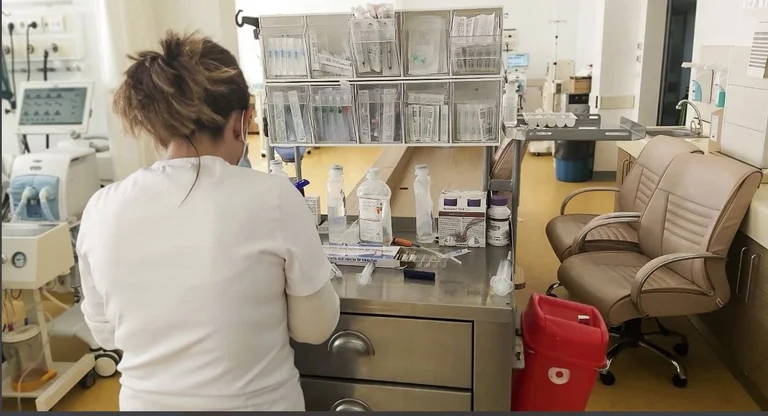
(4 years ago)Lacks of anesthesiologists and nurses are the most observable at the University Clinical Centre in Kosovo, and, according to all likelihood, they will not be addressed soon. This centre has over twice as few anesthesiologists as it would have to have, respectively, 48 ʹ while, based on needs and requirements, it would [...]
This centre has over twice as few anesthesiologists as it would have to have, respectively, 48 ʹ, while, based on needs and requirements, it would have to have 120.
The reason for this situation is the continuing evacuation of medical staff from this public health institution.
Myzzie Kryeziu, anesthesiologist, is one of those who made such a decision this year. After more than 15 years of work at the Gynecology Clinic in KKUK, Kryeziu left this month to start work at a private clinic in Pristina.
“I didn't leave because of my salary”, it tells Radio Free Europe.
I'm so tired and tired that I can't... count it every third day, 24 hours at work, says Kryeziu.
Under normal conditions, an anesthesiologist would care for, on average, once every eight days.
The mayor describes the QKUK as “crisis”.
“Normically, it's a crisis when for 700 operations [in months] 48 anesthesiologists --” work, she says.
We have complained and discussed each meeting, but no one has ever dealt with us... The state is not tired of us for nothing, for no simulation”, Kryeziu says.
The gross salary of a doctor in Kosovo is 630 euros.
Ten anesthesiologists have left QKUK this year
According to the Kosovo Medical Oda data, 580 doctors have left Kosovo with 1.7 million residents in the period 2018-2021.
Plerata Sejdiu, chairman of this office, tells Free Europe Radio that, until now this year, over 60 doctors have emerged from QKUK and regional public hospitals. According to him, in the first nine months of this year, 10 anesthesiologists have left KKUK.
The fugitives, he says, complain mainly about working conditions, including salaries.
KKKUK's Anesthesiology Clinic Director Gazmend Spahija says the lack of anesthesiologists has made it extremely difficult to coordinate with operating halls.
We're working on emergency cases, so patients don't suffer... We have announced this situation very early at the Minister [of Health], even at the Kosovo Clinical and University Hospital Service Directorate, but, unfortunately, there are no expectant anesthesiologists who are out of work”, Spahija tells Radio Free Europe.
Forty-eight anesthesiologists at QKUK are committed to conducting operations in over 30 operating halls, in intensive centres and in the QKUK emergency.
Radio Free Europe has reported in the middle of this month that, in the absence of anesthesiologists, patients are expected for months or years for surgery.
Spahija says other anesthesiologists can leave soon.
Anyone who gets an offer can be seduced. They're going for a few reasons, here's our low salary and frequent maintenance”, Spahija says.
It takes five years for a doctor to specialize in anesthesiology.
Next year, only one will be ready to start work, while others are in the second year of specialization.
In a brief statement to Radio Free Europe, the Kosovo Ministry of Health says <x0 potential will be priorities in sharing new specialisations that are being prepared”.
Kosovo with over 500 nurses less
In addition to the lack of these experts, the situation at QKUUK is weighing down on the number of nurses.
The chairman of the Kosovo Nurses' House, Nasser Rousstemaj, announces to Radio Free Europe that only this year, more than 500 nurses -- from the public and private sector -- have asked for documents from this age to leave Kosovo.
“Job conditions, undignified wages cause even those who have worked for 20 to 30 years to flee”, says Rrustemaj.
According to him, the QKUK operates with about 2,400 nurses, while there should be over 3,000.
The basic salary of a nurse in Kosovo is about 400 euros a month.
The “Paga we receive is a joke”, says Muhamet, a 25-year-old nurse who has quit his job at KKUK and is preparing for transfer to Germany.
The nurse's salary in Germany is about 2,400 euros a month, and the doctor's salary is about 4,000. Germany has become a destination for many doctors and nurses from Kosovo.
Enlirat Duraku, KKUK nurse and deputy head of the Health Workers Union, says that option is being considered.
“Since March I've been starting with planning, but I'm procrastinating, because I'm hoping things will change”, Duraku says.
A new wage bill, envisioning growth for public sector employees, is currently in public consultation procedures, which will last until 6 October.
The Kosovo government has said this bill will come to approval soon. If it passes, it will take effect eight months after approval.
This month, the Kosovo government has announced it has also formed the Executive Commission for Health, which will be led by Prime Minister Albin Kurti.
The responsibilities of this commission are said to include the development of the public health sector.