 15 minutes ago
Even China is being distanced from Russia
Periskopi(4 years ago)
(4 years ago)In view of the great Russian losses in eastern Ukraine, Moscow's distance of Beijing is becoming increasingly visible. However, China will not let Russia fall, Aleksandar Gerlach says in an authorial text published in Deutsche Welle. What is the true status of friendship between dictator Vladimir Putin and Xi [...]
In view of the great Russian losses in eastern Ukraine, Moscow's distance of Beijing is becoming increasingly visible. However, China will not let Russia fall, Aleksandar Gerlach says in an authorial text published in Deutsche Welle.
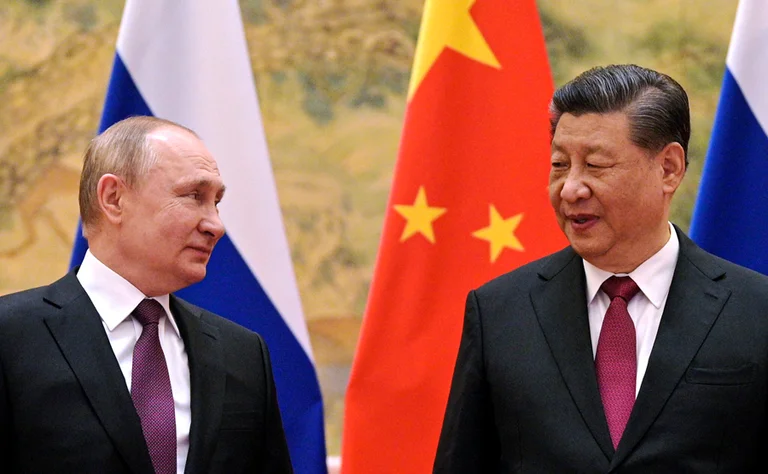
What is the true status of friendship between dictator Vladimir Putin and Xi Jinping? The relationship between the two who promised their friendship in February is currently changing every day.
Before meeting in Samarkand, Uzbekistan, last week, it was now clear that Beijing was leaving Putin. The site of Russian aggression in Ukraine has already returned and Kiev has already recovered many lost territories. Xi, who came to Uzbekistan to show China and the world that he, as ruler, could dominate entire regions, did not want to be photographed with the loser Putin on that occasion.
China's Divorce From Russia
However, this is not the only reason why Beijing's distance is increasing every day after that meeting. China can support Putin in Ukraine because there are no interests in that country. The same goes for Putin, who at a low price sided with Xi when it came to Taiwan. Now that Putin appears to be losing the war, he is threatening to use the most drastic measure, nuclear attack. China is not comfortable with global destabilisation that could be expected from such nuclear attacks, the first since the end of World War II. At the same time, Beijing takes less care of its sales markets in Europe, and more for Central Asian countries, which were united under Moscow's auspices within the USSR.
The Shanghai Co-operation Organisation, at whose meetings Xi and Putin met, serves Beijing to expand its influence on the territory of the former Soviet Union. If Russia threatens Ukraine with a nuclear attack, then Central Asian countries fear that Moscow could threaten them too. The distrust that thus arises in the region makes any deeper co-operation impossible.
Surprisingly, Putin does not show the anger China is doing in Central Asia just what the Kremlin accuses the free world of doing in Ukraine - the invasion of Russia's orbit and the usurping of its influence there. But Russia has become completely dependent on China and Xi can dominate Putin at will. Therefore, Putin must remain silent. This became clear after Xi had to invest in Samarkand to declare he understood the “questions and concerns against China's” concerning the war in Ukraine and said that, of course, he would answer all these allegations.
An arms race on China's threshold
Beijing will not reject Moscow, as imports of oil and free gas help the Chinese economy at a time when gas and electricity prices worldwide are rising. Instead, Beijing Foreign Minister Wang Yi indicated China's growing influence on Russia when he called for negotiations in the United Nations. At the same time, Wang ignored the fact that China also uses imperialistic rhetoric and is ready to launch its army against all those who do not act according to Beijing's will.
Russian nuclear weapons use would shake Asia's geopolitical structure as a whole, because in Cambodia, Thailand, or Vietnam, one might think that only nuclear weapons can protect against a Chinese invasion. And Beijing doesn't need such an arms race on its doorstep. Countries such as India, the Philippines, and Taiwan have already increased their defence expenses and established or intensified military alliances to arm in the event of an ever more aggressive attack by China. /DW/












