5 minutes ago
Warnings for a very uncertain winter “”, are you going back to the wood?
Periskopi(4 years ago)
(4 years ago)Because of fears that there may be reductions, but even rising electricity prices, the Beka family from Pristina has decided to warm up this winter with firewood. Adelina Beka, in her late 30s, tells Radio Free Europe that her six-member family, living in the capital's Kolovica district. [...]
Adelina Beka, in her mid-30s, tells Radio Free Europe that her six-member family, living in Kosovo's capital's Kolovica district, had been warmed up with electricity for years.
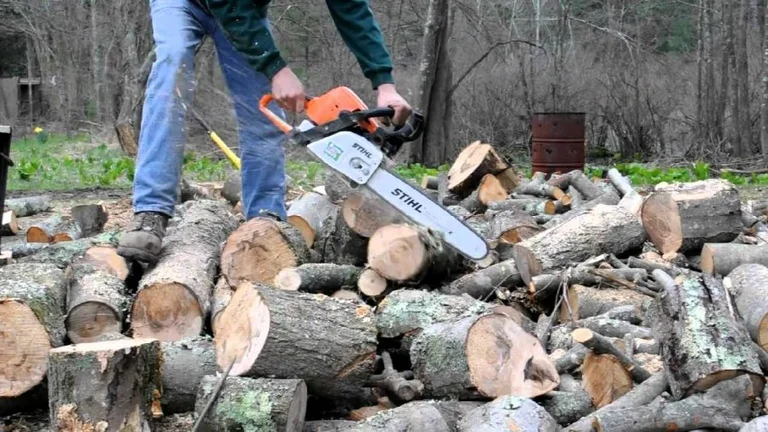
For six years we've had electricity heat at home. This year we bought a stove and firewood. I don't know how many meters we bought, but I know it's 50 euros. We bought the trees in May. It's going to be a challenge because with heater we've heated all the rooms in the house, there's only one” now, she says.
Warnings for a very uncertain winter “”
Double the price of energy in international beads during July, but even limited capacity for domestic production, Kosovo authorities have urged Kosovo authorities to call for energy savings.
On July 27th, the Electric Energy Distribution Company in Kosovo (KEDS) has warned a very uncertain “ “ ” winter, while on 9 August it has requested from the Energy Regulatory Office, (ZRRE) the price of electricity tariffs.
On February 8 of this year, Z. The RRE has already approved the most expensive electricity tariffs, which were said to be in effect by 31 March next year.
That expensive, however, has only affected consumers who spend over 800 kilowatts per hour over a month.
Kosovo Energy Corporation (KEK), with two thermal power plants -- Kosova A and Kosova B -- can produce energy up to 800 megawatts per hour, while consumer needs -- per winter day -- reach up to 1,300 megawatts per hour. The other gap is provided by import. According to the ZRRE, Kosovo last year has imported 1,311,461 megawatts of electricity.
In addition to raising the price, Economy Minister Artane Rizvanolli has declared that in the coming months it is expected that some European states will stop exporting fuels and electricity.
According to estimates by the Institute for Development Policy in Kosovo (INDEP), during the winter season, 75 percent of electricity consumption is spent on heating.
According to data from the Kosovo Statistics Agency, over 50 percent of the household sector uses biomas (fire and diapers), while electricity is spent more by the business sector and services.
And that citizens' interest in buying firewood for heating has increased, confirms Pristina product retailer Jakup Halili, about 60th. But it also says that prices have increased.
The interest is too, too big, because there is no security for electricity. There are no options, and people have no chips without buying wood. During a day of up to 50 metres of wood, much more than the next”, Halili says, adding that one metre of wood this year is being sold for 60 to 70 euros, while last year the price was about 40 euros.
What are the options?
Since some citizens are choosing to be heated with wood because of the risk of lack of electricity, others have no alternative because of living in collective dwellings.
One of them is retired professor Adem Berisha, who along with his wife lives in a Pristina residence.
“In the flat, except the current has no choice, because the chimney apartment does not. I'm gonna buy a less power-exposed radiator or a heater that accumulates the power at night and uses the day. The other one doesn't know what to do”, he says.
INDEP energy policy expert Dardan Abazi tells Radio Free Europe that the removal of the State Value Tax (TVSH) for solar panels, for diapers, subvention of solar panels and heating pumps for businesses and households would help consumers get through winter more easily.
He adds that favouring the heating collar and subsidizing this fuel would reduce the demand for thermal heating.
Currently, about 94 percent of Kosovo's electricity is produced from coal burning, while about 6 percent from renewable sources, such as hydro power plants, windmills, and sunny panels.
In the event of a lack of electricity during the winter, homes should also be invested in isolation, but also in thermal pumps or central heating furnaces.
But, for all of this, the government has to share a lot of grants, says Hamdi Malushaj, director at the “company. Europe's” company, which deals with analysis and research of energy issues in the Kosovo and Germany market.
The thermal pumps are the main devices of radiators serving for heat. These pumps consume less electricity.
Malushaj, however, says that it is difficult for citizens themselves to solve this problem. Besides spending the electricity, according to him, they must provide firewood or diapers, and these represent additional costs.
Fuels also contribute to air pollution.
The government must act quickly on providing grant-shaped financial means for the isolation of houses”, Malushaj says, adding that some of the money would have to finance the Government and the rest of the citizens themselves.
“Can also remove T VV for thermal pumps, customs duties, so we have a milder winter. We are late to make safe decisions, but to reduce the consequences, there is still room”, he adds.
In 2018, over 43 percent of households have not been able to warm their homes, the ASS data says.
Meanwhile, in the latest report of the regional initiative “Balkan Foundation” says that “a nearly a quarter of households in Kosovo have a problem with basic isolation in their homes.
From this figure, 22 percent of households have roofing problems, walls, floors, wet foundations, window frames, and rotten floors.
What heating products will the government subsidize?
Amid warnings of a very uncertain winter, on August 4th, the Kosovo government adopted several emergency measures for electricity supplies.
These provisions mention support for citizens with the goal of securing heating during the winter. But we do not specifically mention the measures involved.
The REL has asked the Ministry of Economy what support measures will be for citizens, but until the publication of this text by this institution, no response has been given.
However, Minister Rizvanolli, after the government's meeting on August 10th, said the executive would subsidise thermal pumps, coatings, while special attention would be given to families receiving social aid, while subsidising firewood.
This list of measures in the coming days will be sent to the Ministry of Finance, to see the funding opportunities for which extent it can be financed”, Rizvanolli said, as he added that the country is hosting a difficult winter.
Saving Ways
Because of the price of tariffs and the need for electricity savings, Z. The RRE came up earlier this year with some recommendations.
“Targeting clothing washing machines, as well as those for washing dishes at night, with low tariffs, is just one of the methods of saving”, says one of the ERE recommendations.
This institution has also recommended that heat accumulate by heating thermos be done overnight, when electricity tariffs are low, while painter is used only when needed.
The power price movement has initially started due to the coronary pandemic, but the situation has deteriorated even further after the launch of Ukraine's Russian occupation in late February, which has caused the energy crisis to engulf the entire world.